


Phantasmagoria by Guido Giacomo Preparata examines the ✌🏼War on Terror✌🏼 as a deliberate construction — a geopolitical spectacle engineered by Western intelligence, corporate media, and financial elites. Preparata, an economic historian trained in the forensic study of empire, argues that what the world witnessed after September 11 was not a natural sequence of wars and reactions but a continuous performance built to direct perception, consolidate power, and generate profit. The video dissects this claim through historical precedent, specific cases, and the book’s core concept: Geo-Hollywood, the fusion of geopolitics and cinematic illusion.

Constructing the Show
Preparata begins from a statement attributed to a Bush administration official: “We are an empire now, and when we act, we create our own reality.” This assertion defines the book’s structure. Reality, in Preparata’s analysis, operates as an artifact of power.
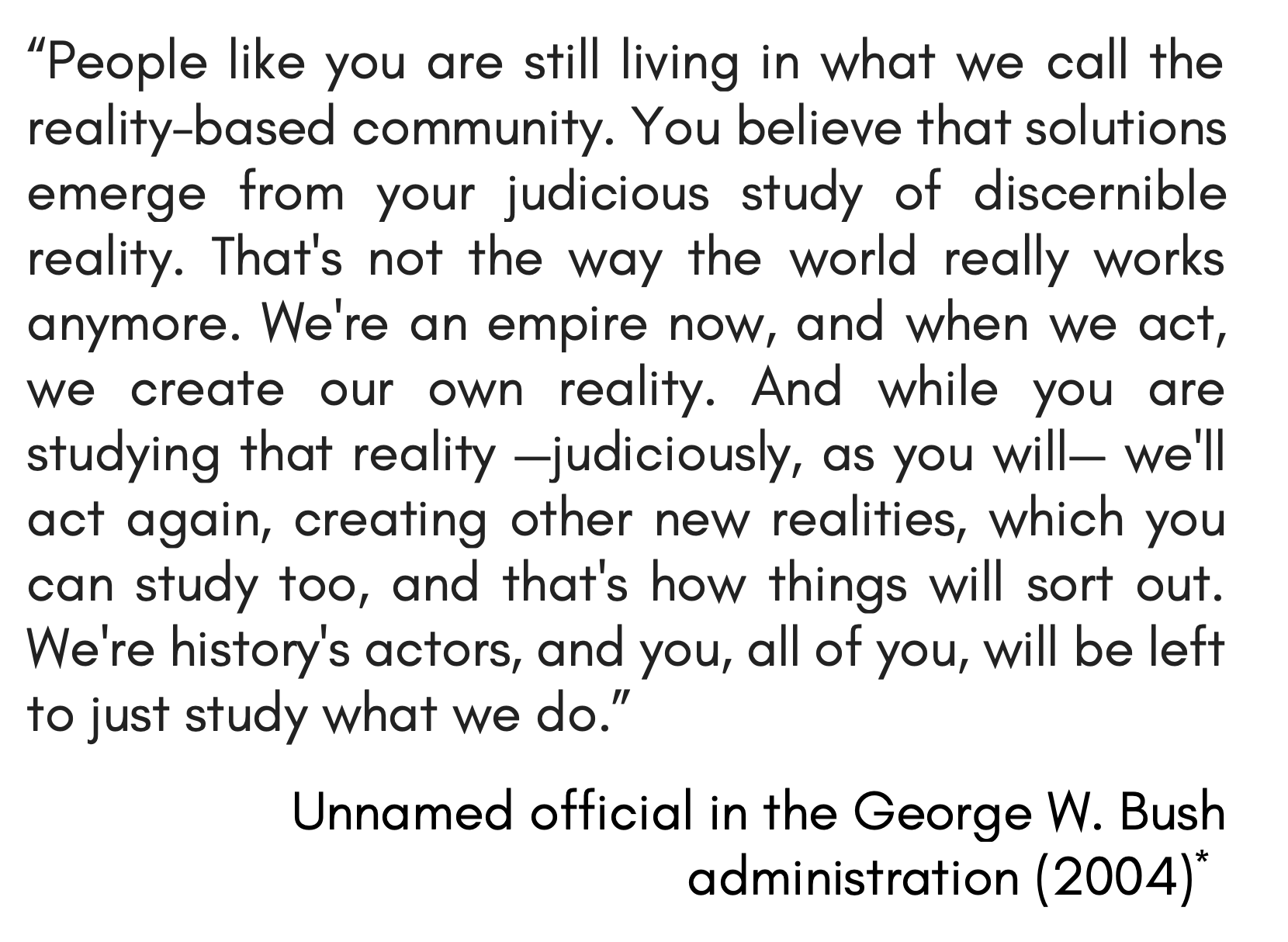
✌🏼The War on Terror✌🏼, under this logic, functioned as a system of controlled imagery—an immense “phantasmagoria,” a term drawn from early light shows that used smoke and projection to summon ghosts. Governments, he contends, mastered this optical art in political form. They produced a visual field of terror so overwhelming that audiences mistook it for unmediated truth.
The official chronology — Soviet invasion, Mujahideen resistance, Al-Qaeda, 9/11 — appears in the video only to be dismantled. Preparata identifies threads that link supposed enemies and allies into one network of mutual utility: the business relationships between the Bush and Bin Laden families through the Carlyle Group, the reported contacts between CIA officers and Osama bin Laden months before the attacks, and the alignment between Western intelligence and regimes accused of sponsoring terror. These connections, presented as anomalies, form the hidden scaffolding of the phantasmagoria.

Engineering the Enemy
Preparata situates this pattern within a longer imperial method. Drawing on Churchill’s colonial doctrine, he argues that great powers sustain their dominance by mobilizing “retrograde forces”—movements that appear to resist modernity but, in fact, preserve the global hierarchy. Radical Islamism, in his view, became the perfect tool for this purpose. Intelligence agencies infiltrated militant networks, supplied selective resources, and steered conflicts that would consume nationalist energies and prevent regional autonomy. The enemy was not discovered; it was assembled.
The Explainer illustrates this theory through the example of Algeria’s civil war in the 1990s. Preparata calls it the prototype of state-engineered terror. French and Algerian intelligence services, he argues, created “False Maquis,” or fake resistance cells, to simulate insurgency and justify authoritarian control. The process followed four steps: agents penetrated genuine militant circles; the state provoked outrage through violent repression; intelligence operatives assumed leadership within insurgent hierarchies; and the resulting atrocities supplied political license for further militarization. This structure, tested in North Africa, migrated into a global application after 9/11.

Geo-Hollywood and the Global Stage
Preparata’s most original concept, Geo-Hollywood, defines the new mode of empire. After World War II, confrontation between major powers gave way to the management of perception. Wars became serialized productions staged for mass consumption. Television, film, and digital media transformed geopolitics into spectacle. Each military operation or terror incident became an episode in a continuous drama of civilization under siege. The coherence of the narrative mattered more than its factual integrity.
The video presents Geo-Hollywood as a collaborative machine. Intelligence agencies provide scripts, militaries execute the scenes, financial institutions fund the production, and media networks distribute the imagery. The public becomes both consumer and subject, drawn into the emotional rhythm of fear, vengeance, and patriotic affirmation. The system sustains itself through the circulation of images, capital, and sentiment.
The Economics of Illusion
Preparata links the War on Terror to financial mechanics. The U.S. occupation of Afghanistan, he argues, achieved three objectives: control of the heroin trade, infusion of drug profits into global finance, and psychological unification of a fragmented American society. After 2001, Afghanistan’s opium output surged. The proceeds, funneled through offshore accounts and reinvested into speculative markets, supported liquidity in the same financial institutions underwriting defense contractors. War and banking merged into a single circuit of profit.
The video underscores this economic dimension. The trillion dollars spent on the war did not vanish; it circulated through privatized logistics, weapons manufacturing, and narcotics flows. The system fed on crisis. Every escalation guaranteed further investment, sustaining both the illusion of necessity and the machinery of return.
The Politics of Emotion
Preparata interprets post-9/11 unity as psychological design. The attacks, by collapsing the boundaries between civilian and combatant, created a collective identity bound by grief. The ensuing military campaigns offered catharsis. In this sense, the War on Terror functioned as ritual theater, transforming trauma into loyalty. The emotional management of the population—through memorials, media coverage, and patriotic imagery—became a form of governance.
The Architecture of Belief
Phantasmagoria exposes how modern power operates through visibility. Control depends on defining what can be seen and what cannot. Preparata argues that the war’s legitimacy derived from saturation, not secrecy. Continuous images of violence exhausted skepticism. Overexposure achieved what censorship once did: the foreclosure of alternative interpretation. Citizens, immersed in the narrative flow, ceased to question the source of the story.
The Explainer’s narration mirrors this insight by maintaining the tension between revelation and performance. It portrays Preparata’s analysis as a deconstruction of the screen itself—the literal and figurative surface through which history now unfolds.
Power as Production
Preparata concludes that twenty-first-century empire functions as an entertainment economy. Governments stage conflicts as global broadcasts. Media corporations convert them into profitable content. Financial markets monetize the uncertainty they generate. The system’s survival depends on perpetual production; without spectacle, authority loses coherence. The War on Terror thus represents a template for continuous governance through crisis.
The Question That Remains
The video ends with Preparata’s most provocative question: if those in power can fabricate reality, how can society discern truth from performance? The inquiry is less philosophical than structural. It defines the boundary of modern perception. The war machine, once industrial, has become theatrical. Its primary weapon is narrative control. Preparata’s argument positions citizens not as participants in democracy but as spectators within an endless film directed by invisible producers.
Thanks to the generosity of my readers, all my articles are available for free access. Independent journalism, however, requires time and investment. If you found value in this article or any others, please consider sharing or even becoming a paid subscriber, who benefits by joining the conversation in the comments. I want you to know that your support is always gratefully received and will never be forgotten. Please buy me a coffee or as many as you wish.

The Duke Report - Where to Start
My articles on SubStack are all free to read/listen to. If you load the Substack app on your phone, Substack will read the articles to you. (Convenient if you are driving).
Foundational Articles
Podcast (Audio & Video Content)
Palmerston’s Zoo Episode 01 - Solving the Paradox of Current World History (9 Episodes)
Oligarchic Control from the Renaissance to the Information Age
SoundCloud Book Podcasts
I’ve taken almost 200 foundational books for understanding how the world really works and posted them as audio podcasts on SoundCloud. If you load the app on your phone, you can listen to the AI robots discuss the books on your journeys across America.
Duke Report Books
Over 600 foundational books by journalists and academics that never made the New York Times Bestseller list, but somehow tell a history we never learned in school. LINK


