


In this part one, Peter Duke interviews Mrs. Heritage History, traces the formation of Heritage-History.com, and explores her research into the enduring influence of Phoenician maritime culture on later secret societies and global systems of power. Mrs. Heritage History describes her shift from a Silicon Valley engineering career to homeschooling, digitizing early-twentieth-century history books, and developing a project that presents history to students through pre-1923 sources she considers more accurate and instructive.
Part 2:

Origins of Heritage History
Mrs. Heritage History recounts how motherhood redirected her focus from technology to education. She left a cubicle in the Bay Area, moved to the inland Northwest, and began homeschooling five children. Searching used bookstores for children’s history books led her to discover forgotten authors such as Jacob Abbott, whose 1850s narratives of ancient and medieval history inspired her to digitize similar works. She launched the Heritage History website around 2008, organizing a library of public-domain history volumes for homeschoolers and small co-ops. The project, she explains, emerged from the conviction that older historical writing, aimed at moral formation and civic understanding, teaches more effectively than modern textbooks.
Rediscovering the Ancient World
Her work on ancient history drew her toward civilizations that preceded Greece and Rome. She found the Phoenicians — traders, shipbuilders, and transmitters of writing — largely absent from mainstream narratives. Their ports at Tyre, Sidon, and Byblos once controlled trade routes from the Red Sea to the western Mediterranean. Mrs. Heritage History asserts that Byblos, a center of book production, symbolized the origins of recorded knowledge. Yet no original Phoenician texts survive, a gap that she interprets as deliberate erasure. Her interest deepened through the study of Carthage, Spanish coastal colonies, and the diffusion of Phoenician families into Mediterranean elites through strategic marriage and trade alliances.
Secret Societies and the 19th Century
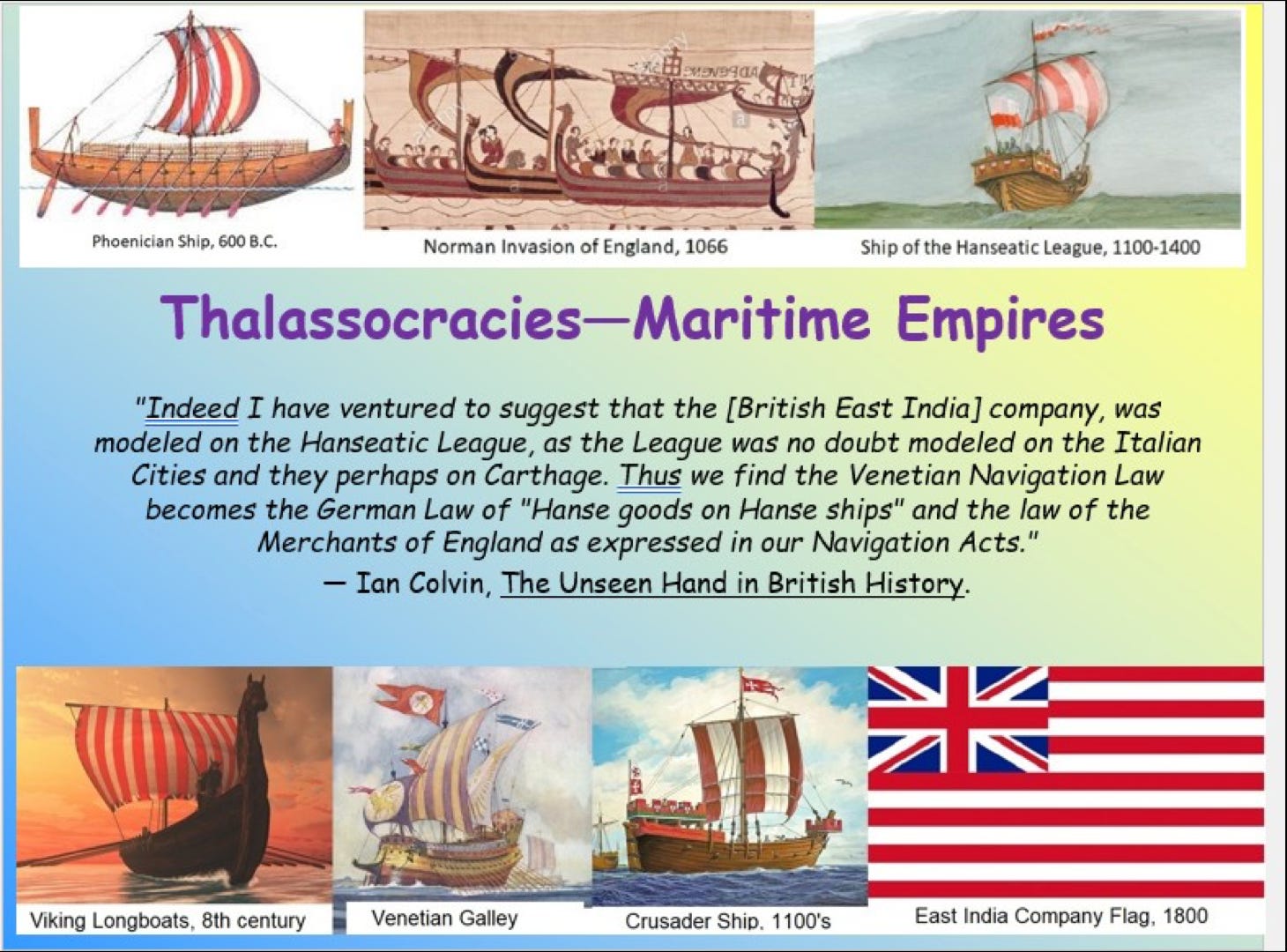
After two decades of reading classical and medieval works, Mrs. Heritage History turned to the nineteenth century, where she identified an overwhelming presence of Freemasonry among political and cultural leaders. She traced the fraternity’s symbols and rituals to what she calls “flagrantly Phoenician” sources — sun and sea iconography, temple architecture, and initiation customs. She observed similar patterns within the British Empire and the East India Company, viewing these entities as extensions of a maritime trade network rather than as isolated historical institutions. Her Catholic background intensified her concern that church historians had ignored the Masonic seizure of property during the French Revolution. She requested curricula from Catholic universities and found little engagement with that history, a silence that reinforced her suspicion of systemic omission.
The Phoenician Continuum
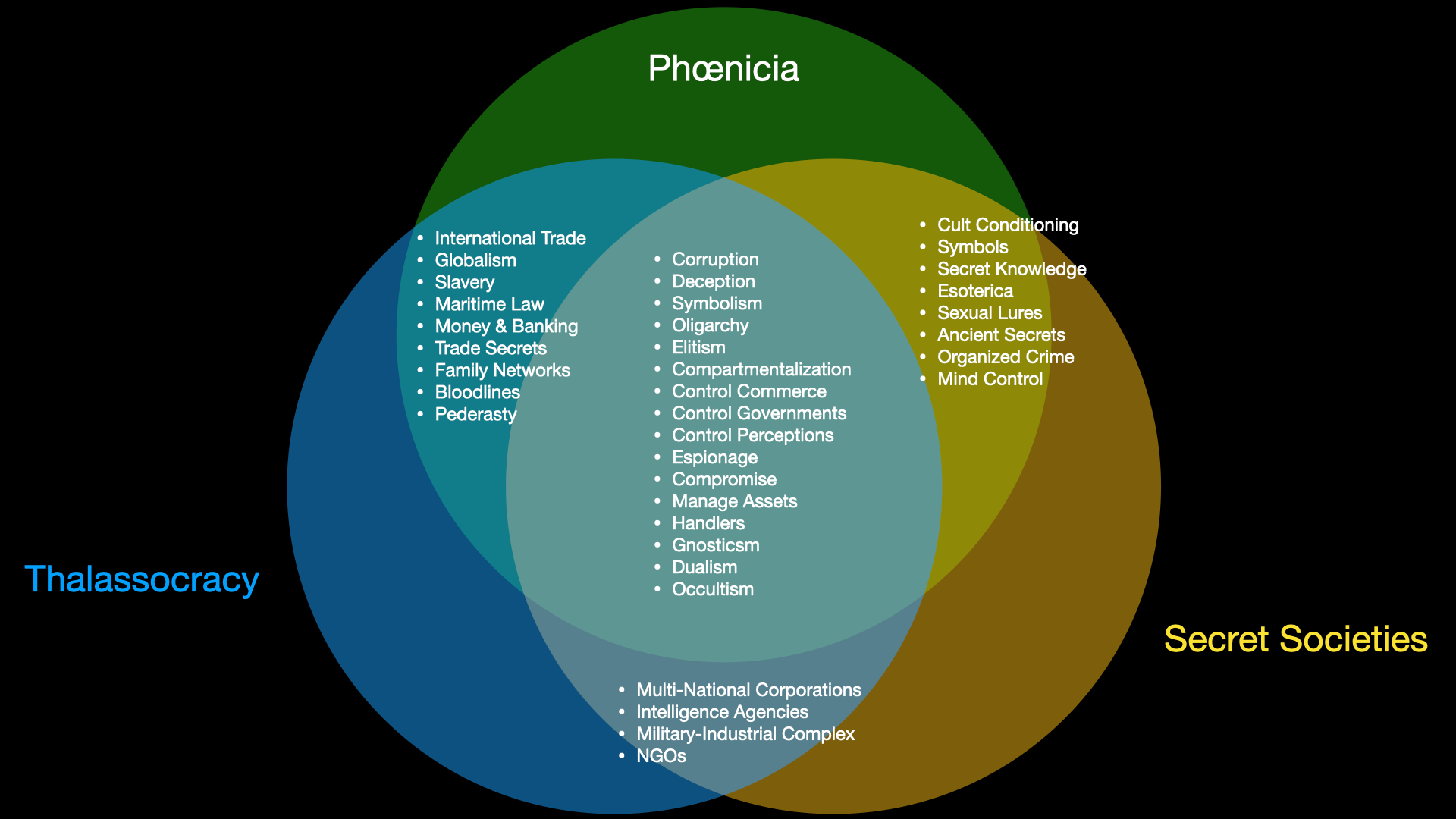
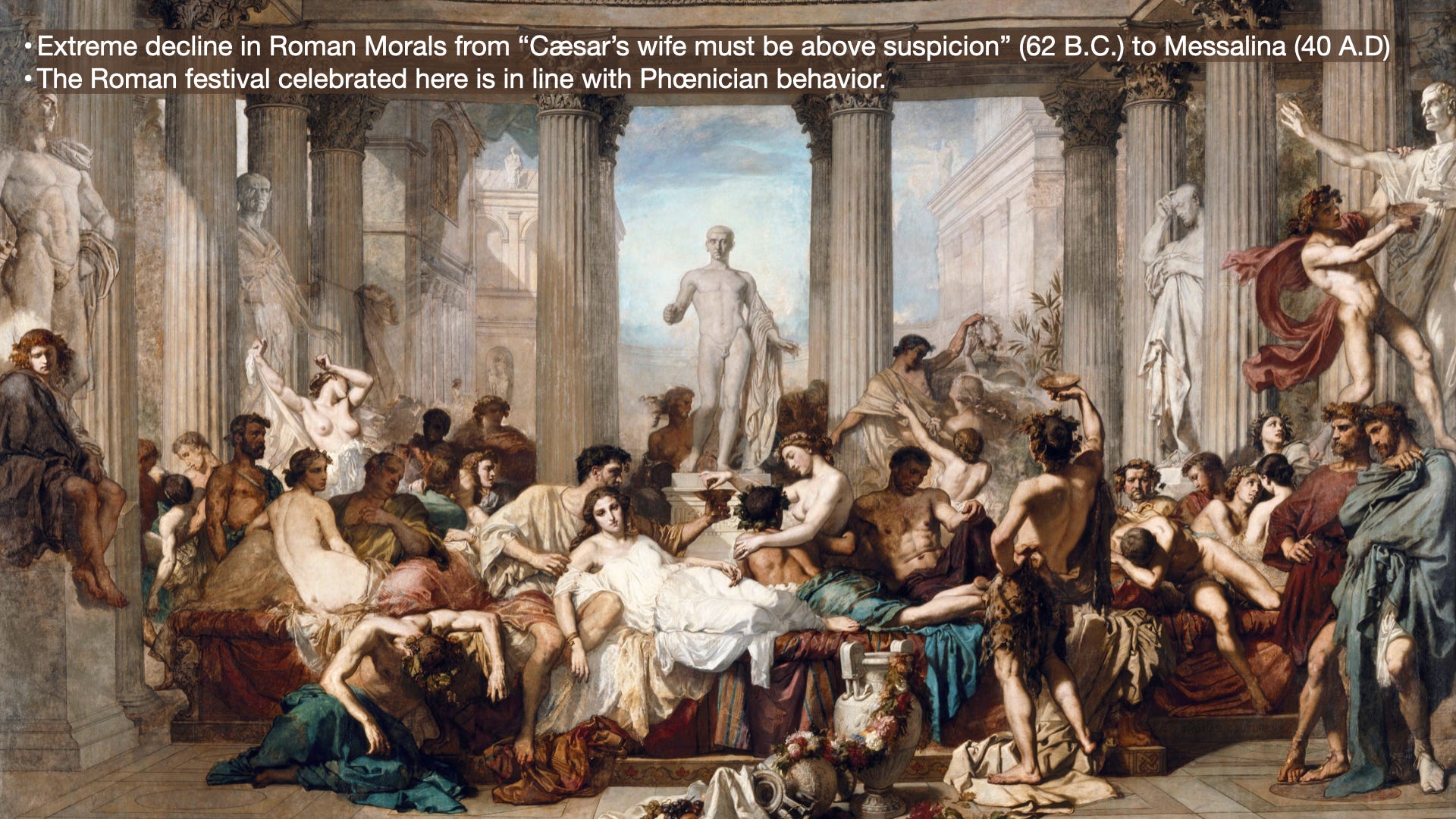
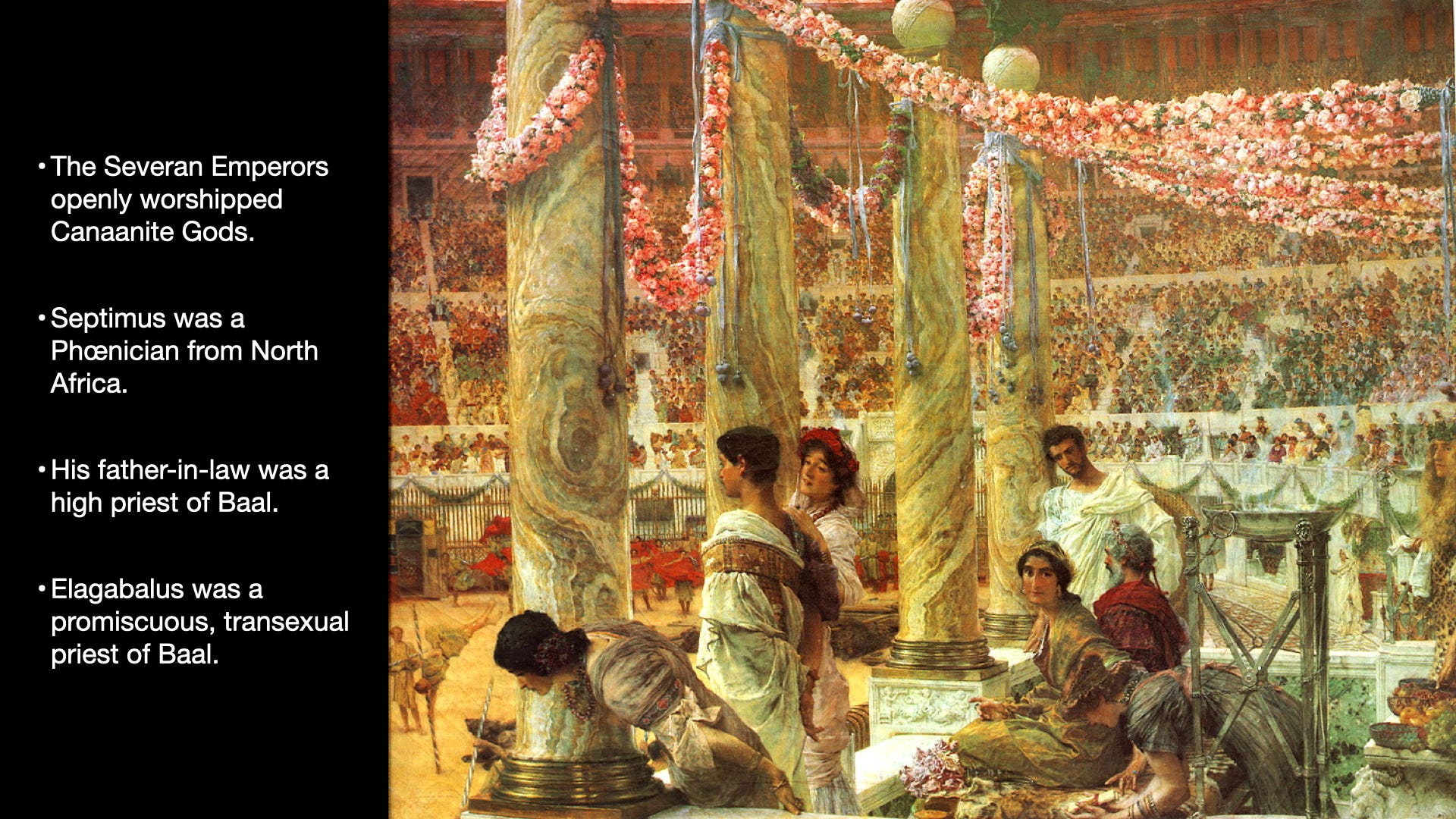
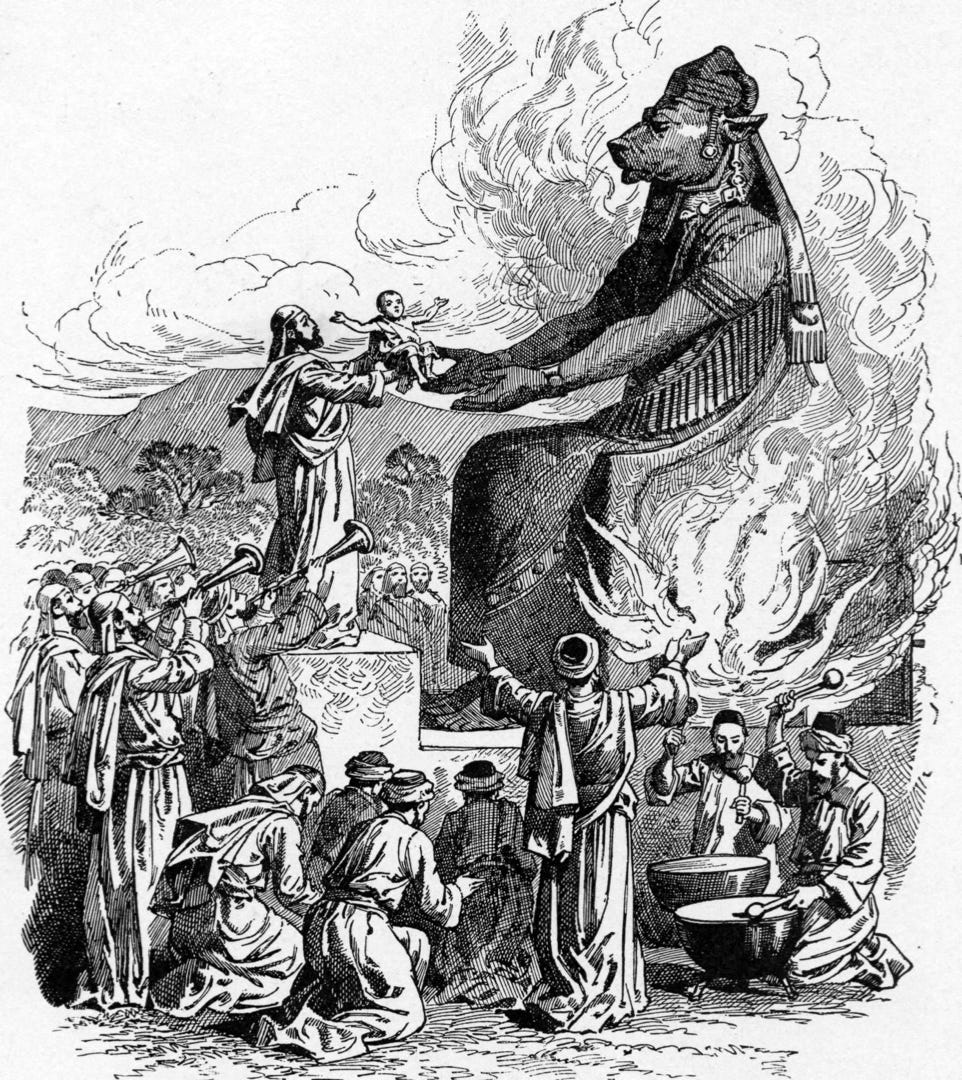
Peter Duke invites her to describe how she came to view Phoenicia as a continuous cult from the Bronze Age to the present. Mrs. Heritage History recounts an epiphany around 2016, when the publication of the Podesta emails by WikiLeaks shocked her into reinterpreting secret societies as a living survival of ancient ritual systems. She describes Phoenician initiation as a form of psychological conditioning that combined sexual exploitation, child sacrifice, and total submission to authority. These acts, she argues, produced absolute control through trauma. Her conclusion reframed ancient myth as the operational code of a transgenerational power structure.
Knowledge and Command Networks
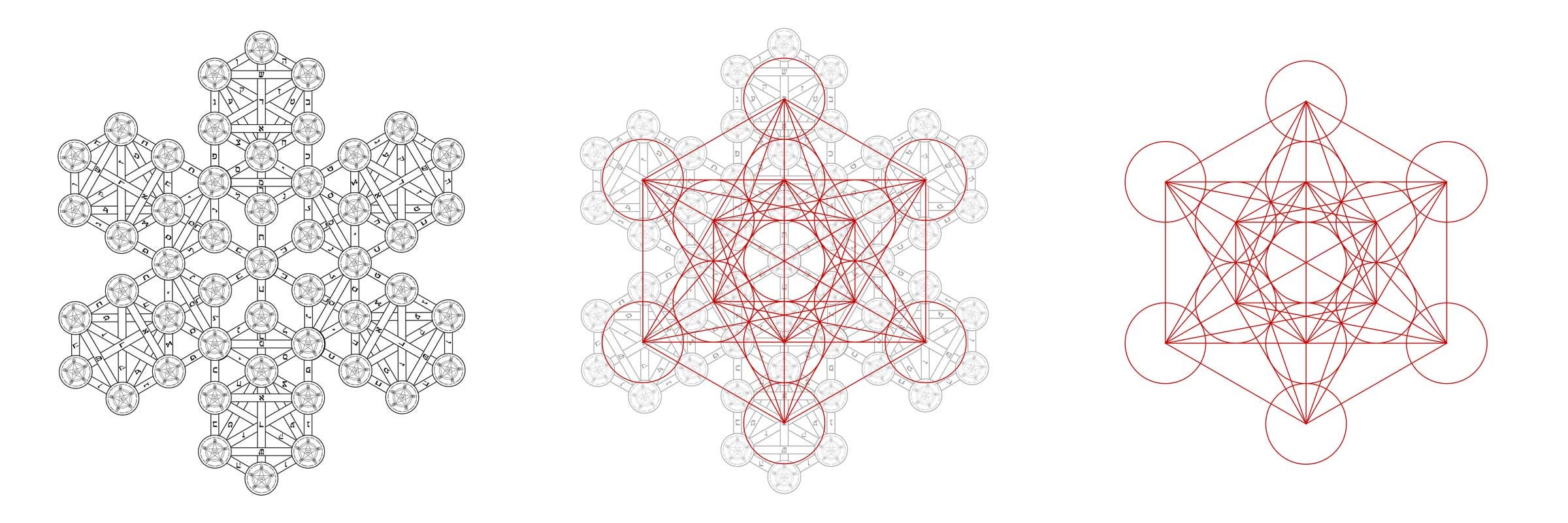
Mrs. Heritage History defines Phoenicianism as both cult and thalassocracy — a maritime rule sustained by secrecy, finance, and information control. She links ancient trade networks to the organizational logic of modern corporations. Duke compares the consolidation of airlines into three major carriers with the unbroken succession of sea powers from Tyre and Carthage to Venice, Amsterdam, and London. Mrs. Heritage History agrees and calls Freemasonry a “meta secret society,” a coordination network connecting smaller guilds, chivalric orders, and mercantile fraternities. She refers to Duke’s “snowflake diagram,” in which six Trees of Life form Metatron’s Cube, as an apt model for hierarchical yet compartmentalized control — each node aware only of its immediate sphere.
Letters and Reactions
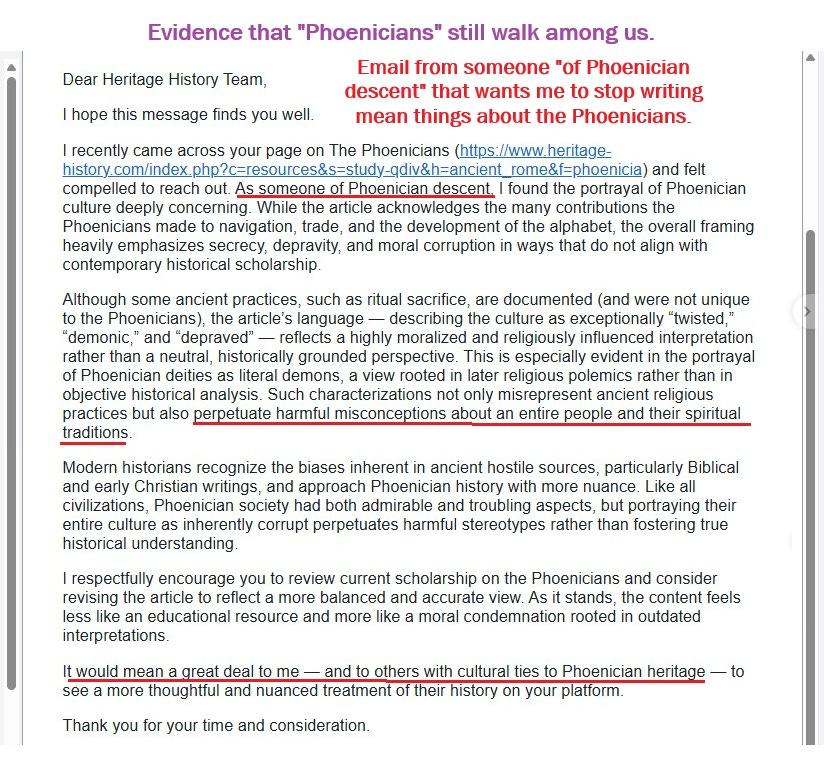
Mrs. Heritage History recalls receiving an email from a self-identified Phoenician descendant criticizing her portrayal of the culture as “twisted, demonic, and depraved.” The writer objected that her summary of ritual sacrifice reflected a “religiously influenced interpretation” inconsistent with academic neutrality. Duke reads the message aloud, observing that its tone resembles institutional defense rather than scholarly disagreement. Mrs. Heritage History notes that the contested passage appeared on a section of her site written for ninth graders, intentionally restrained in detail. She calls it “G-rated history” compared to her private research, insisting that moral clarity, not neutrality, defines historical judgment.
The Lost Science and the Bronze Age Collapse
As the discussion turns to maps of Phoenician trade, Mrs. Heritage History describes how Bronze Age civilizations before 1000 BCE demonstrated technological sophistication in metallurgy, navigation, and cosmology. She cites theories about solar catastrophes, lost continents, and advanced pre-flood knowledge, but grounds her argument in trade continuity. Phoenician merchants, she contends, preserved ancient sciences of energy and biology through initiation schools. She references pre-Socratic philosophers such as Thales and Pythagoras, calling them heirs to Phoenician teachings on electricity and geometry. Modern physics, she suggests, is rediscovering truths long known to these early thinkers about the body’s electrical field and collective resonance among living beings.
The Enduring Maritime Order
Duke and Mrs. Heritage History close by tracing a historical sequence from Phoenicia to Carthage, the Venetians, the Dutch, the British, and contemporary Anglo-American finance. She asserts that this line of continuity demonstrates the persistence of a maritime oligarchy whose cohesion depends on secrecy and intermarriage. The Phoenicians, she concludes, never ruled a single nation. They built a network of ports that governed through trade, information, and cultural absorption. Their descendants, she believes, operate through modern institutions that mirror their ancient model — a hidden sea power sustained by ritual, intelligence, and commerce.
Thanks to the generosity of my readers, all my articles are available for free access. Independent journalism, however, requires time and investment. If you found value in this article or any others, please consider sharing or even becoming a paid subscriber, who benefits by joining the conversation in the comments. I want you to know that your support is always gratefully received and will never be forgotten. Please buy me a coffee or as many as you wish.

The Duke Report - Where to Start
My articles on SubStack are all free to read/listen to. If you load the Substack app on your phone, Substack will read the articles to you. (Convenient if you are driving).
Foundational Articles
Podcast (Audio & Video Content)
Palmerston’s Zoo Episode 01 - Solving the Paradox of Current World History (9 Episodes)
Oligarchic Control from the Renaissance to the Information Age
SoundCloud Book Podcasts
I’ve taken almost 200 foundational books for understanding how the world really works and posted them as audio podcasts on SoundCloud. If you load the app on your phone, you can listen to the AI robots discuss the books on your journeys across America.
Duke Report Books
Over 600 foundational books by journalists and academics that never made the New York Times Bestseller list, but somehow tell a history we never learned in school. LINK


