

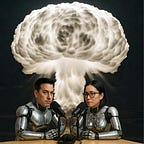

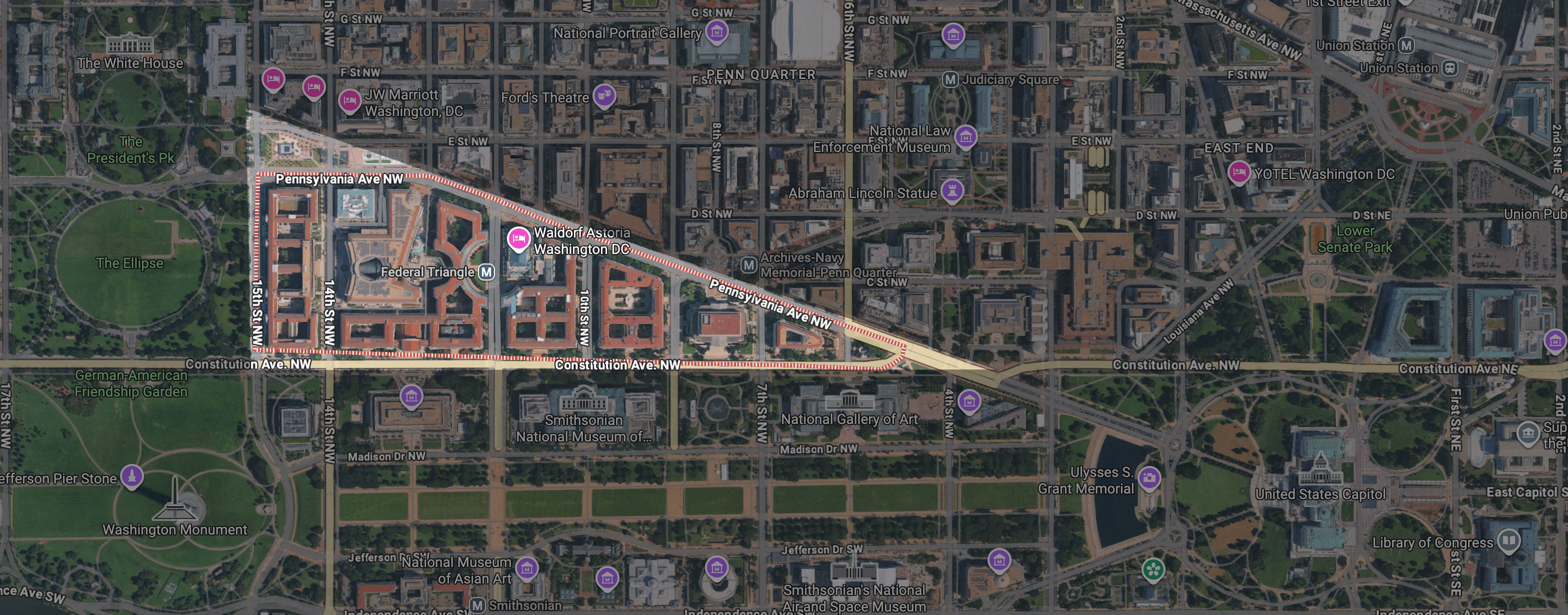
In the SubStack post, Child Sacrifice on Constitution Avenue opens on January 5, 2021, as Washington, D.C., hardens its streets ahead of the Stop the Steal rally and the certification of the Electoral College. Duke walks Constitution Avenue as a working photographer, surveying light, stone, and scale. Power tools cut into pavement. Barricades rise. Police lines thicken. The city prepares its surfaces for a public event, and Duke’s attention shifts upward toward pediments, statues, and inscriptions that dominate the Federal Triangle.

A Method Built on Visual Grammar
Duke frames his inquiry as a comparative visual analysis. He photographs architectural sculpture and places these images alongside artifacts documented in archaeological scholarship, particularly the work of the Oxford historian Josephine Quinn. This approach treats statues as semiotic, visual language, that is, a form of grammar. Meaning is conveyed by virtue of the arrangement of figures, objects, and symbols. Duke identifies repetition across sites that reads as continuity. What organizes these compositions, and why does that organization recur in Washington, D.C.?

The Mellon Auditorium and Androgynous Authority
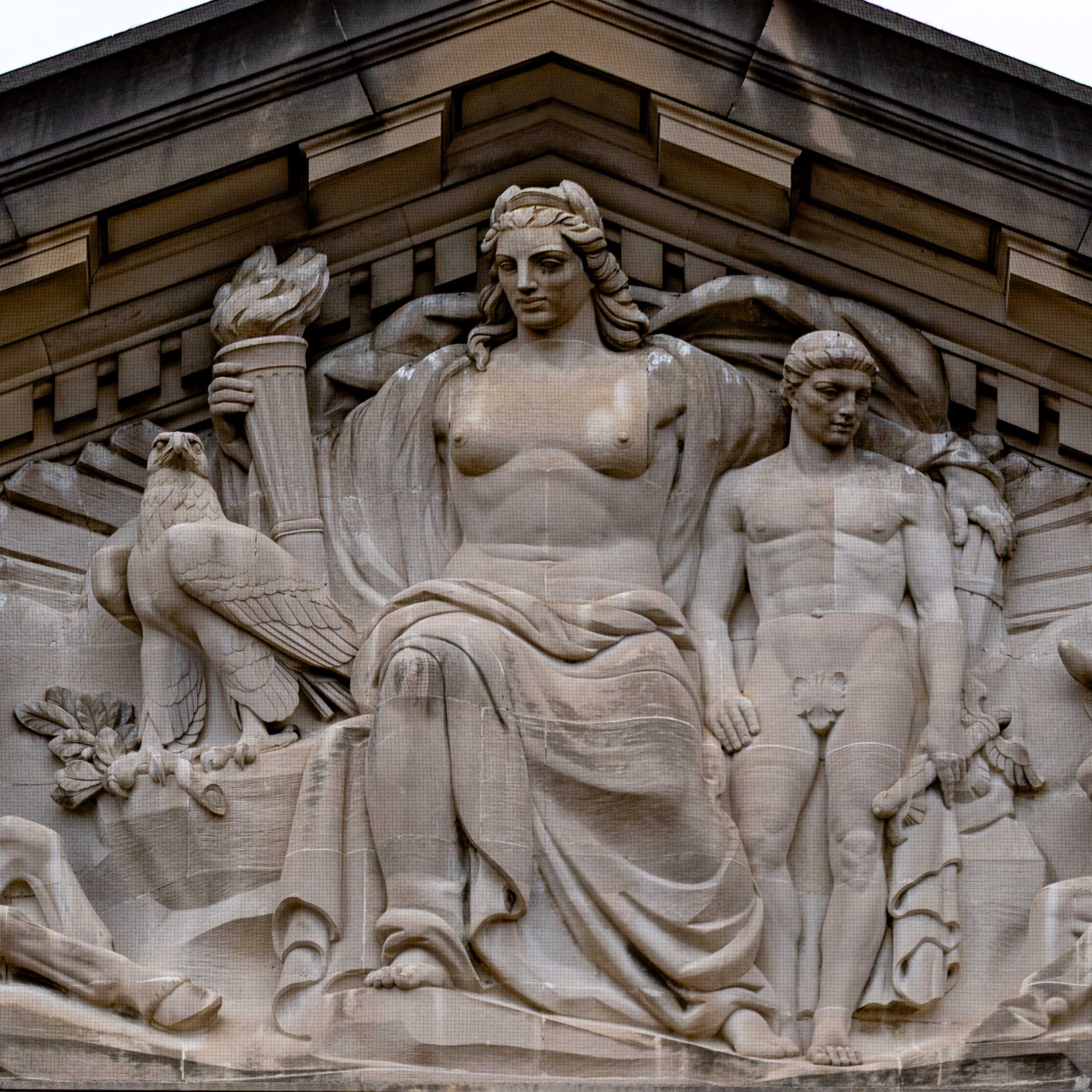
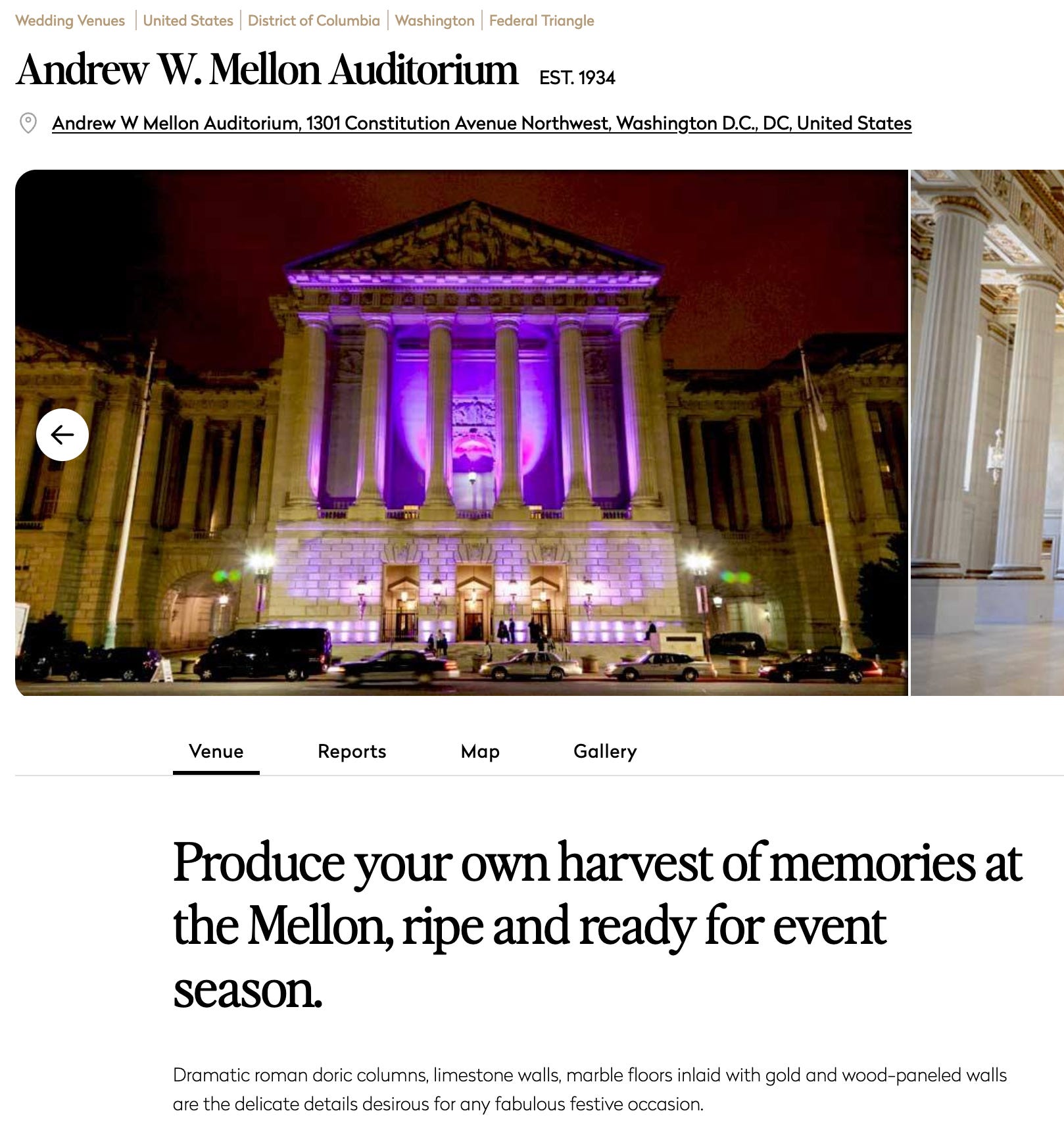
The walk passes the Andrew Mellon Auditorium, a ‘neoclassical’ structure that anchors the Federal Triangle. Duke focuses on the pediment above the columns. A central seated figure displays broad shoulders, muscular arms, and visible breasts. Hermes and Aphrodite appear nearby, which establishes the figure as a hermaphrodite within classical mythology. The form expresses the union of masculine and feminine as a single authority. Duke notes the building’s nighttime illumination in saturated purple, a color historically associated with Tyrian dye, royalty, and priesthood in Phoenician culture. The building’s iconography presents power as transformation and synthesis.

The Heritage Statue at the National Archives
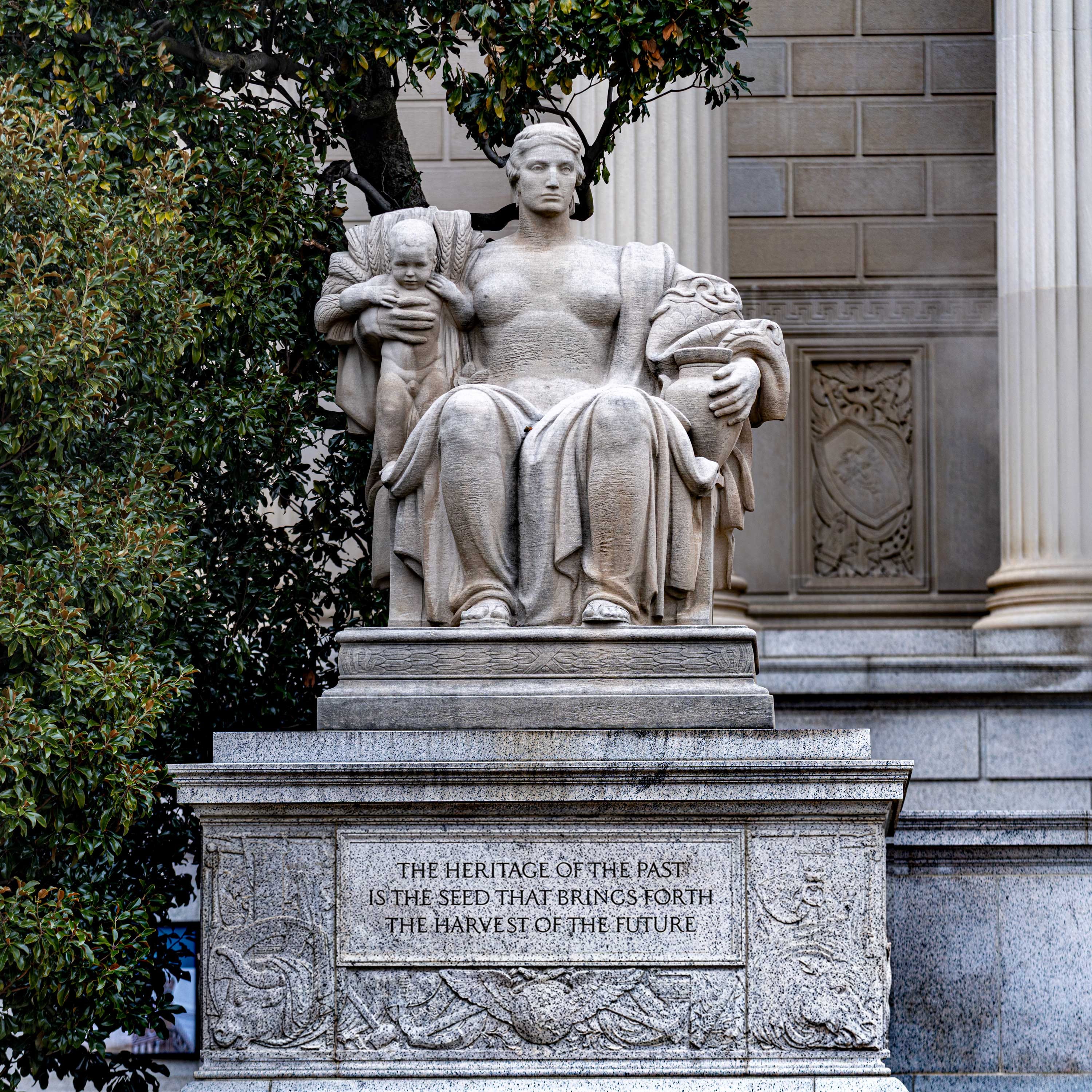
Outside the National Archives stands the statue titled Heritage. Duke uses this sculpture as the core of his argument. A massive, seated, androgynous figure grips a child wrapped in a sheaf of wheat. On the other hand, the figure holds a urn topped with a coiled snake. The face recedes beneath a hood. Duke identifies the vessel as a Tophet urn, based on its form and proportion. Quinn’s research characterizes Tophets as Phoenician open-air sanctuaries containing urns containing the cremated remains of children offered as votive sacrifices.
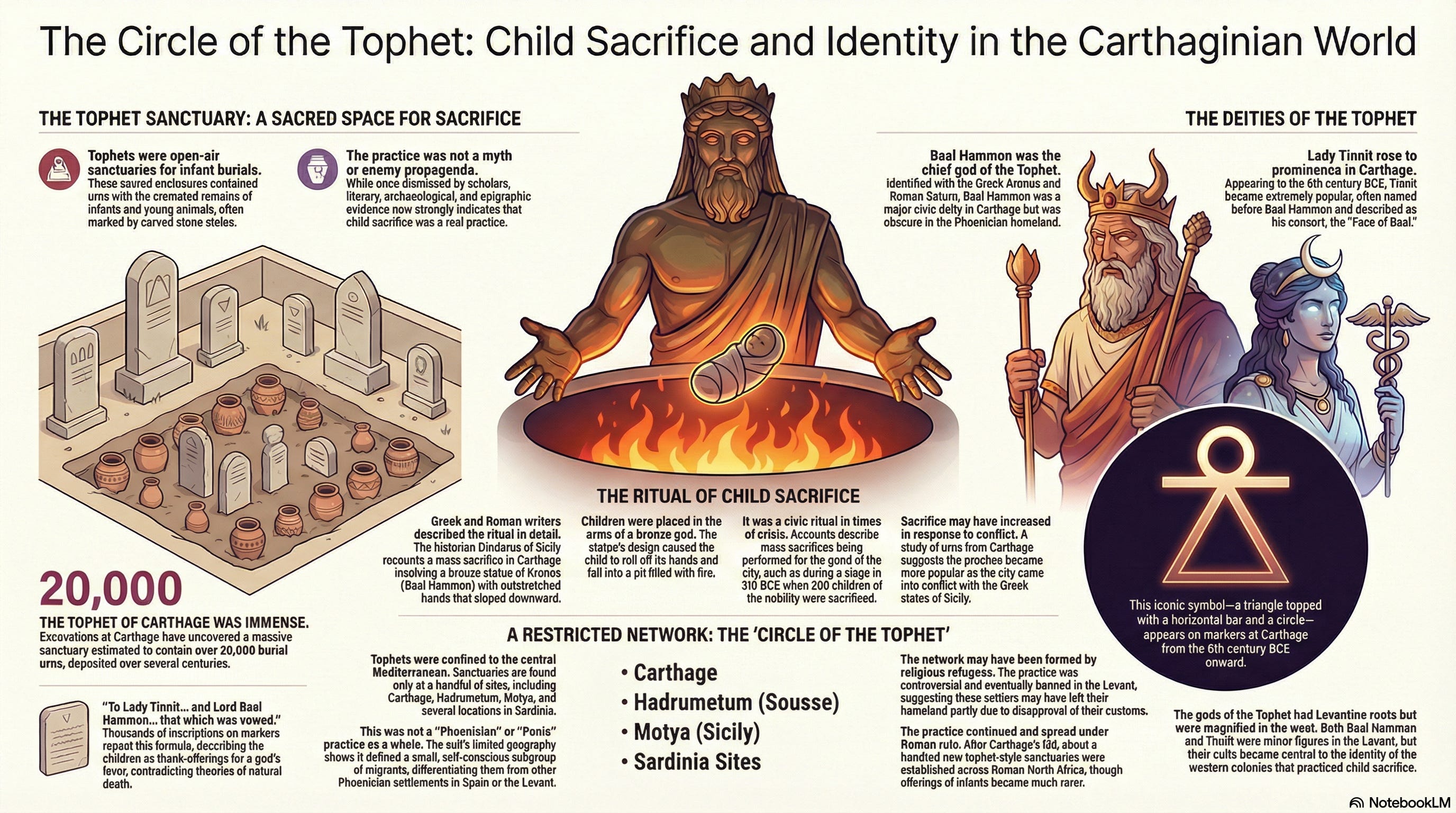
Quinn’s osteological analysis indicates that the remains are those of healthy children, ranging in age from weeks to several years. Inscriptions on stelae function as transactional records, stating fulfillment of a vow after a god “heard the voice” of the supplicant. Duke applies that framework to the Heritage statue’s inscription: “The heritage of the past is the seed that brings forth the harvest of the future.” Within Tophet logic, seed names the child, and harvest names the prosperity secured through sacrifice. The statue stages an exchange through posture and objects.
Markers of Divine Sanction
The base of the Heritage statue bears a winged solar disk. In Phoenician usage, this symbol marks supreme deities such as Baal Hammon or Tanit. The snake on the urn lid reinforces that identification. In Egyptianizing iconography adopted by Phoenicians, the cobra signifies divine protection and royal authority. Duke reads the snake as a seal that sanctifies the vessel and its contents. The composition forms a complete sentence in a visual language: deity enthroned, offering presented, ritual vessel prepared, fertility guaranteed.
Cohesion, Trade, and the Tophet Circle
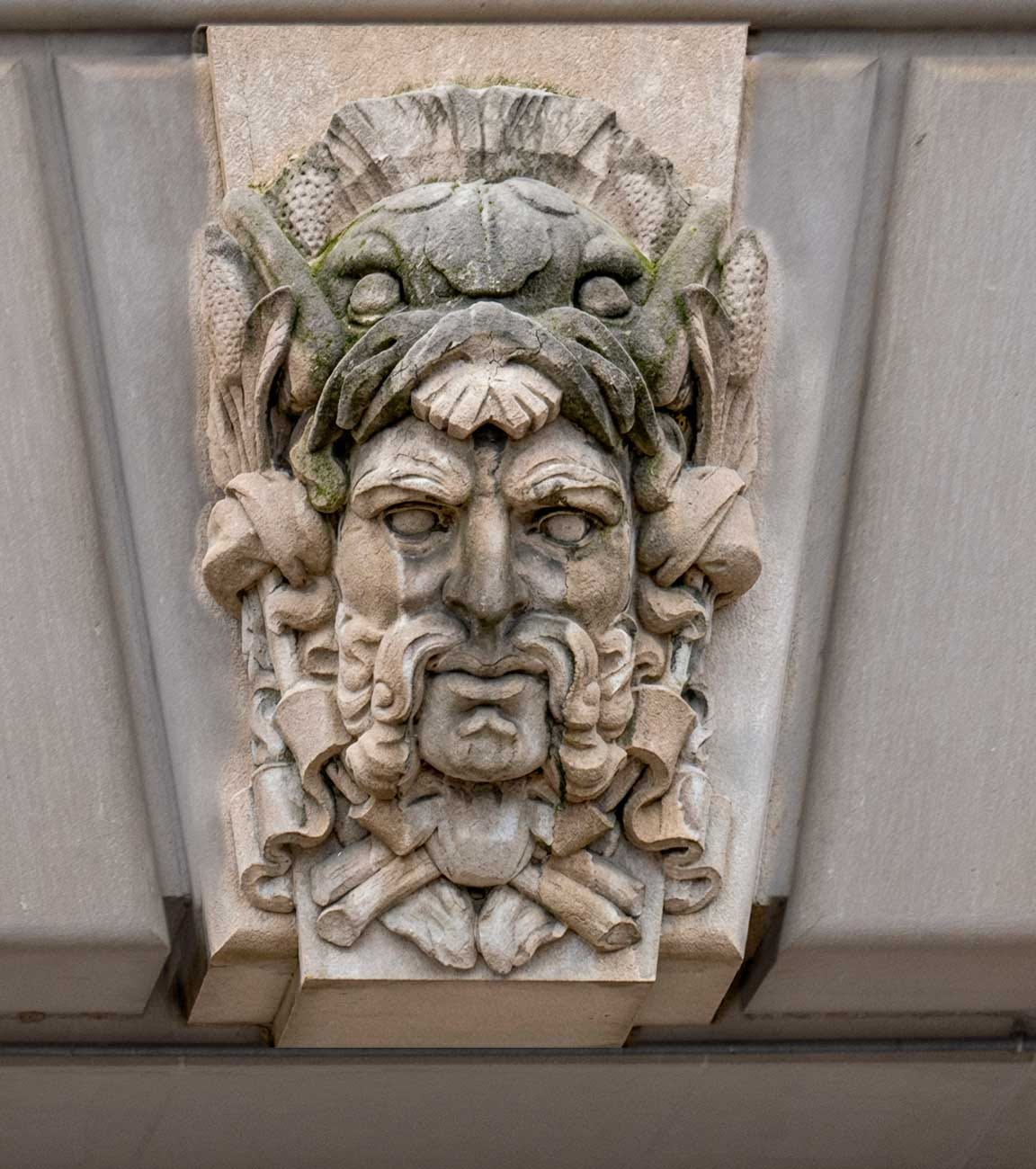
Quinn’s work also addresses why Carthaginian communities practiced child sacrifice. She describes the Tophet as a mechanism that produced internal cohesion through taboo. Participation bound elites together and created moral distance from surrounding cultures. Duke extends this analysis to modern Washington. He identifies the lion-headed figure above the Mellon Auditorium entrance as Melkart, the Phoenician god of trade and Mediterranean networks. Melkart mediated commerce across cultures through syncretism with Heracles. Duke sees a dual system encoded in stone: open networks of exchange alongside closed rituals that secure internal loyalty.
Justice as an Object
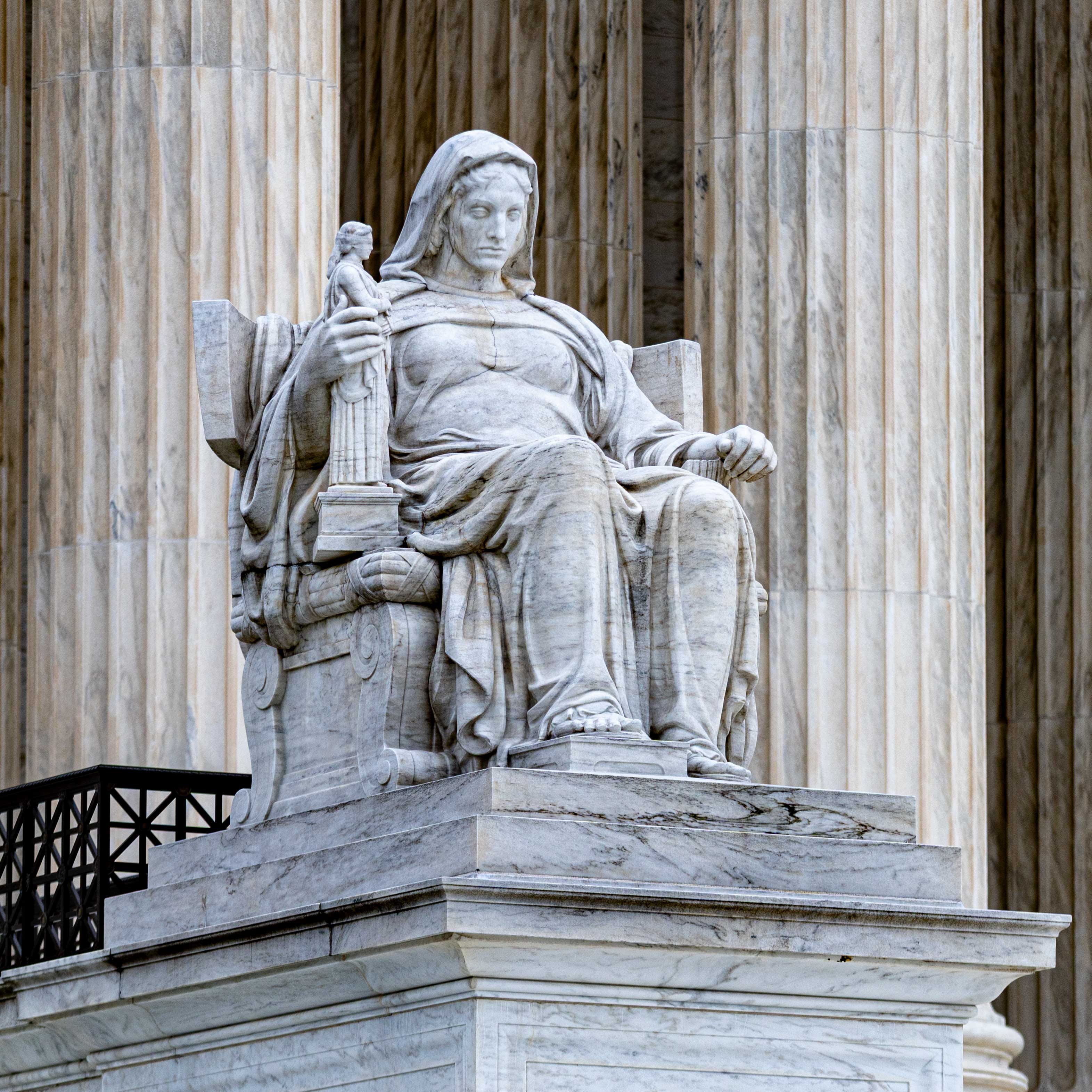
The walk concludes at the Supreme Court, where the statue Contemplation of Justice depicts a seated, muscular androgenous figure holding a smaller personification of Justice. Duke observes a visual rhyme with the Heritage statue. The larger figure studies the smaller one in her hands. The repetition of scale and grip suggests evaluation and offering. What happens when justice appears as an object held for decision? Duke treats this image as a continuation of the same grammar that governs the Archives and the Mellon Auditorium.
Architecture as Messaging
Throughout the episode, the hosts emphasize that these symbols persist in stone regardless of public awareness. Duke argues that the statues are not decorations; they declare the logic of the real power that occupies those spaces. On the eve of January 6, crowds fixated on ballots and speeches, and Duke read limestone. The argument culminates in a challenge grounded in observation: the urns, snakes, wheat, winged disks, and enthroned figures remain visible along Constitution Avenue. What kind of heritage do these images articulate, and what form of authority do they continue to stage?
Thanks to the generosity of my readers, all my articles are available for free access. Independent journalism, however, requires time and investment. If you found value in this article or any others, please consider sharing or even becoming a paid subscriber, who benefits by joining the conversation in the comments. I want you to know that your support is always gratefully received and will never be forgotten. Please buy me a coffee or as many as you wish.

The Duke Report - Where to Start
My articles on SubStack are all free to read/listen to. If you load the Substack app on your phone, it will read the articles aloud. (Convenient if you are driving).
Foundational Articles
Podcast (Audio & Video Content)
Palmerston’s Zoo Episode 01 - Solving the Paradox of Current World History (9 Episodes)
Oligarchic Control from the Renaissance to the Information Age
SoundCloud Book Podcasts
I’ve taken almost 200 foundational books for understanding how the world really works and posted them as audio podcasts on SoundCloud. If you load the app on your phone, you can listen to the AI robots discuss the books on your journeys across America.
Duke Report Books
Over 600 foundational books by journalists and academics that never made the New York Times Bestseller list, but somehow tell a history we never learned in school. LINK


