

The Invisible Empire
Freemasons and The City of London

Guest-post by Mrs. Heritage History
There is plenty of information about the origins of Freemasonry, but much of what is told is misdirection, partial truths, and bafflegab. This should not be surprising, since occult networks protect secrets by evasion and deception. But if one focuses on history and commercial interests rather than on esoterica, the origins and purposes of Freemasonry become clear. This is because the most politically powerful secret society in modern history did not arise haphazardly or mysteriously. It was created intentionally, according to a plan to serve particular interests.
It is helpful in understanding the philosophical side of Freemasonry to know something about Gnosticism, but no in-depth knowledge is necessary. And for learning of its origins, all that is needed is a basic knowledge of British history and straightforward investigative inquiries: Where, and when did speculative Freemasonry arise? How did it spread? Who benefited?
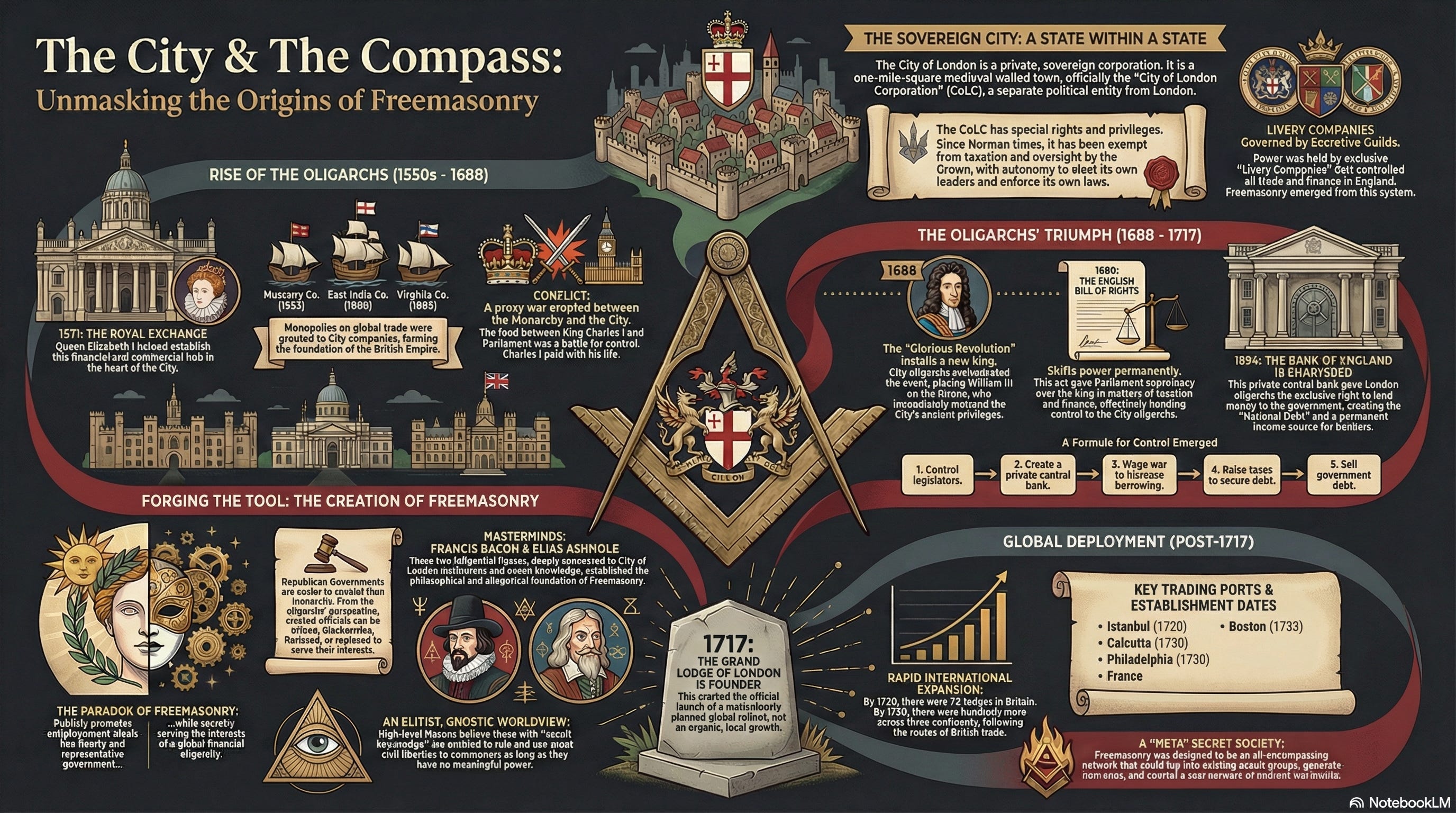
We should be able to clarify who established speculative Freemasonry and with what intent by investigating the London-based power brokers of the 16th and 17th centuries and “following the money.”
What is the City of London Corporation?
One of the essential truths about English history that is almost always omitted from school histories is that the City of London is a completely different political entity from London, the capital of the United Kingdom. The “City of London” corresponds to the “one mile square”, walled town of medieval London. It is a private corporation — officially, the “City of London Corporation” (CoLC) — and for 400 years it has been the financial and commercial hub of the British Commonwealth.
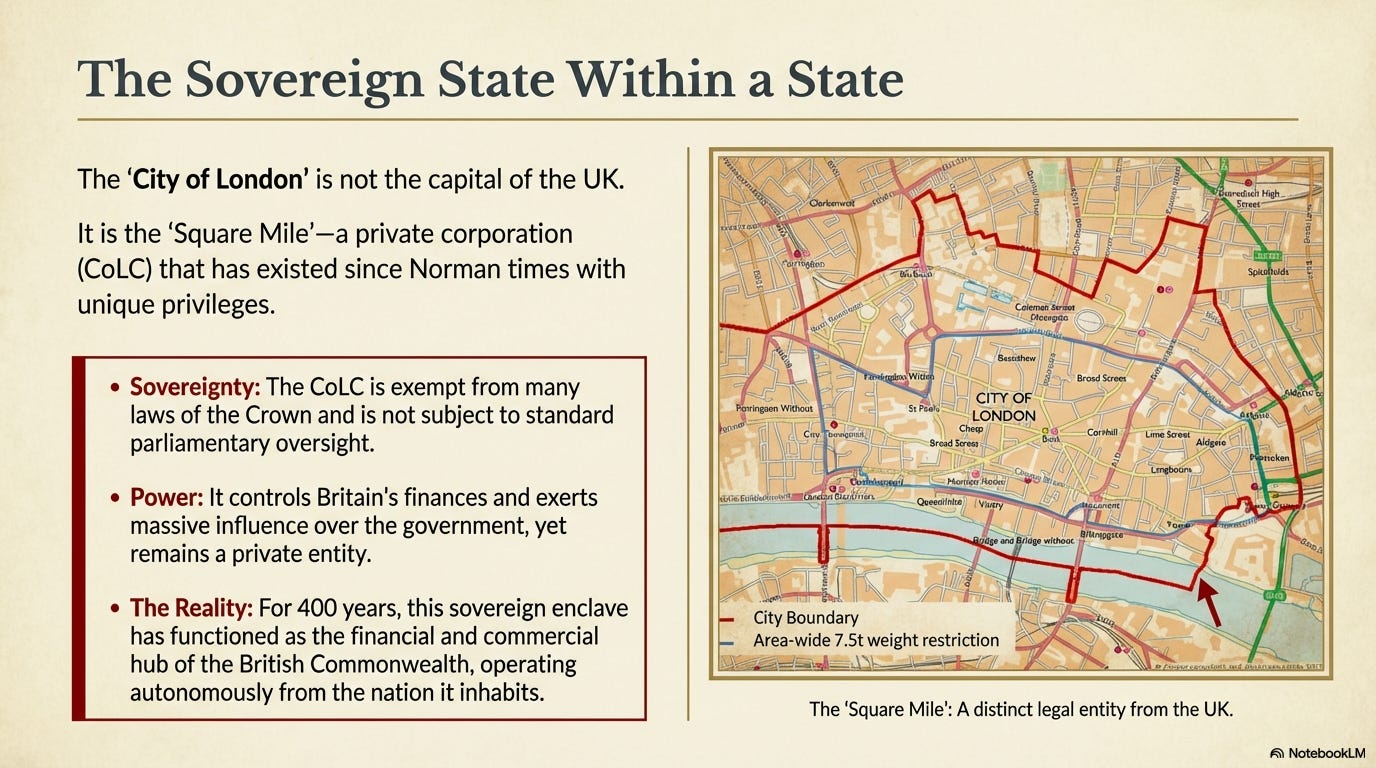
Since Norman times, the City of London has had special rights and privileges that exempt it from taxation or oversight by the Crown. Because of its enormous financial clout, the City of London has been granted autonomy to elect its own leaders and enforce its own laws.
It is a sovereign state-within-a-state.
In other words, the City of London Corporation controls Britain’s finances, governs its empire, and exerts enormous influence over its government, but it is not subject to the laws of Britain. And its special status is scarcely mentioned in most histories.
How is this possible?
CoLC’s privileges are based on its history as a trading and banking port. In medieval times, trade and money-lending were controlled mostly by foreigners (i.e., Italians, Hanseatic Germans, Sephardic Jews, etc.) who lived in London but were not subjects of the English crown. So to represent the interests of both foreigners and Englishmen involved in trade and finance, London’s commercial district was governed by a Lord Mayor and council elected by Livery Companies and merchants.
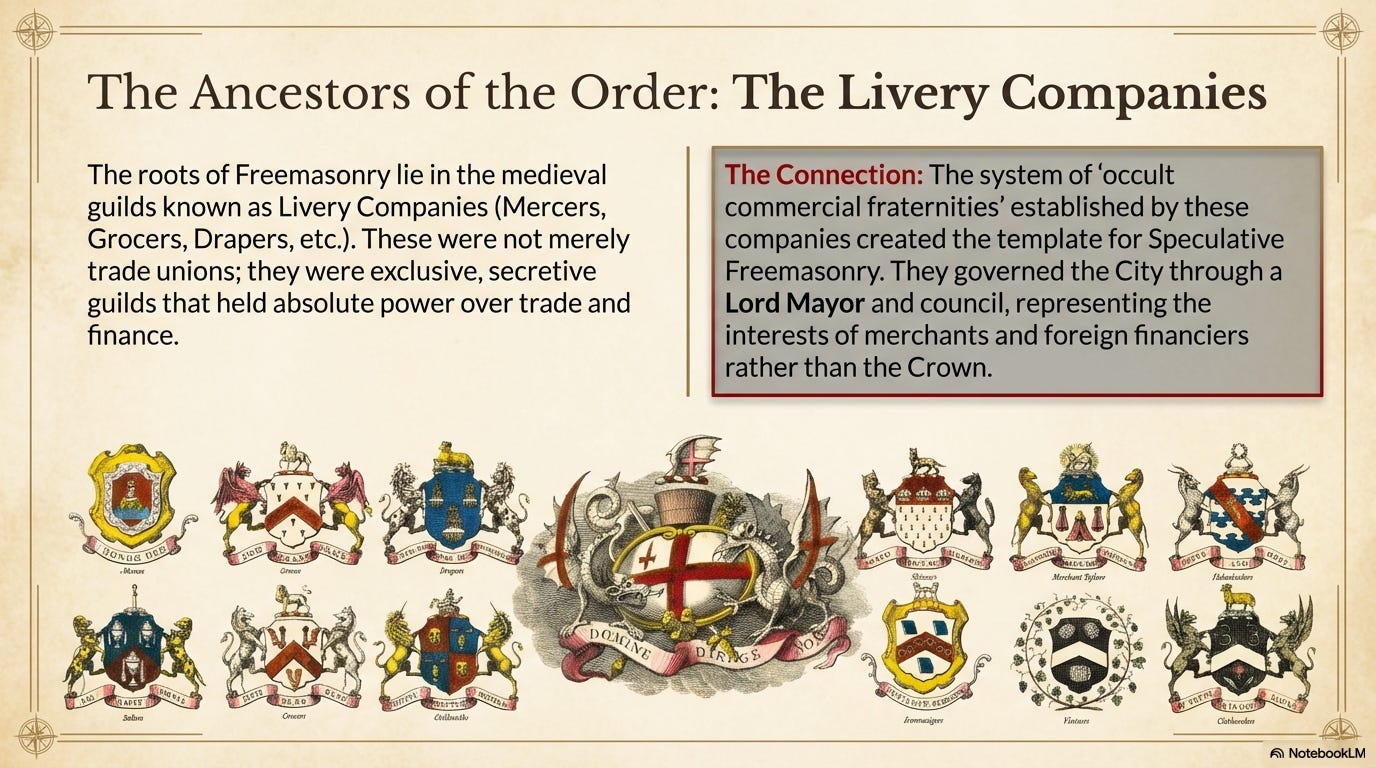
The Livery companies of London were exclusive, secretive guilds that held all power over trade and finance in England. And it was this medieval system of occult, commercial fraternities that speculative Freemasonry emerged from.
The City of London Under Tudors and Stuarts
To understand the purposes of Freemasonry and the hidden forces that control it, we begin by reviewing the history of the English monarchy and its relationship to the City of London, beginning with the reign of Queen Elizabeth.
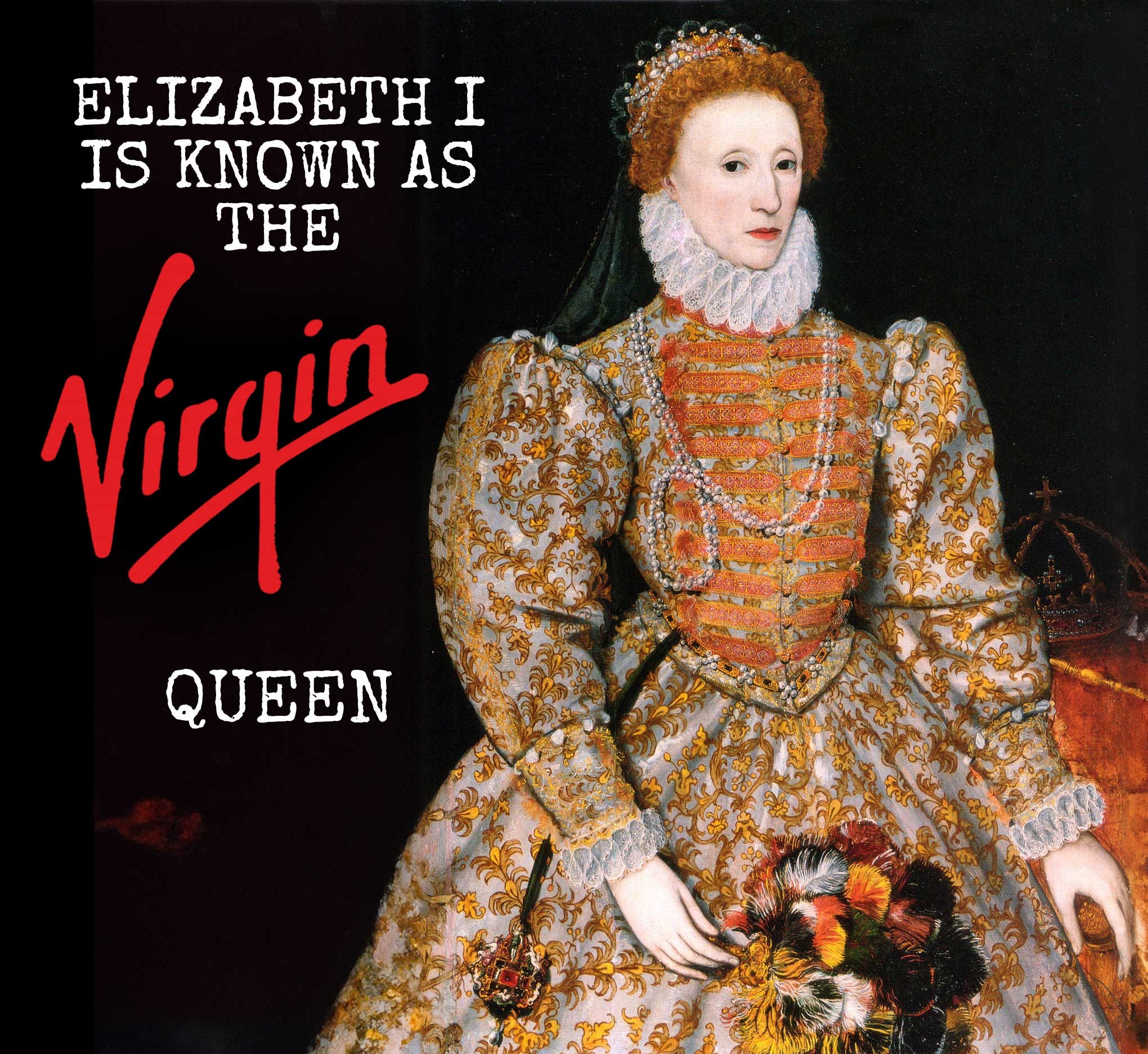
Elizabeth I was connected to the most powerful Livery Companies in London through her mother’s family, the Boleyns. Her London relations had been her strongest backers when her claim to the throne was in doubt, and as a result, Elizabeth promoted the interests of the London guilds and trading companies throughout her reign.
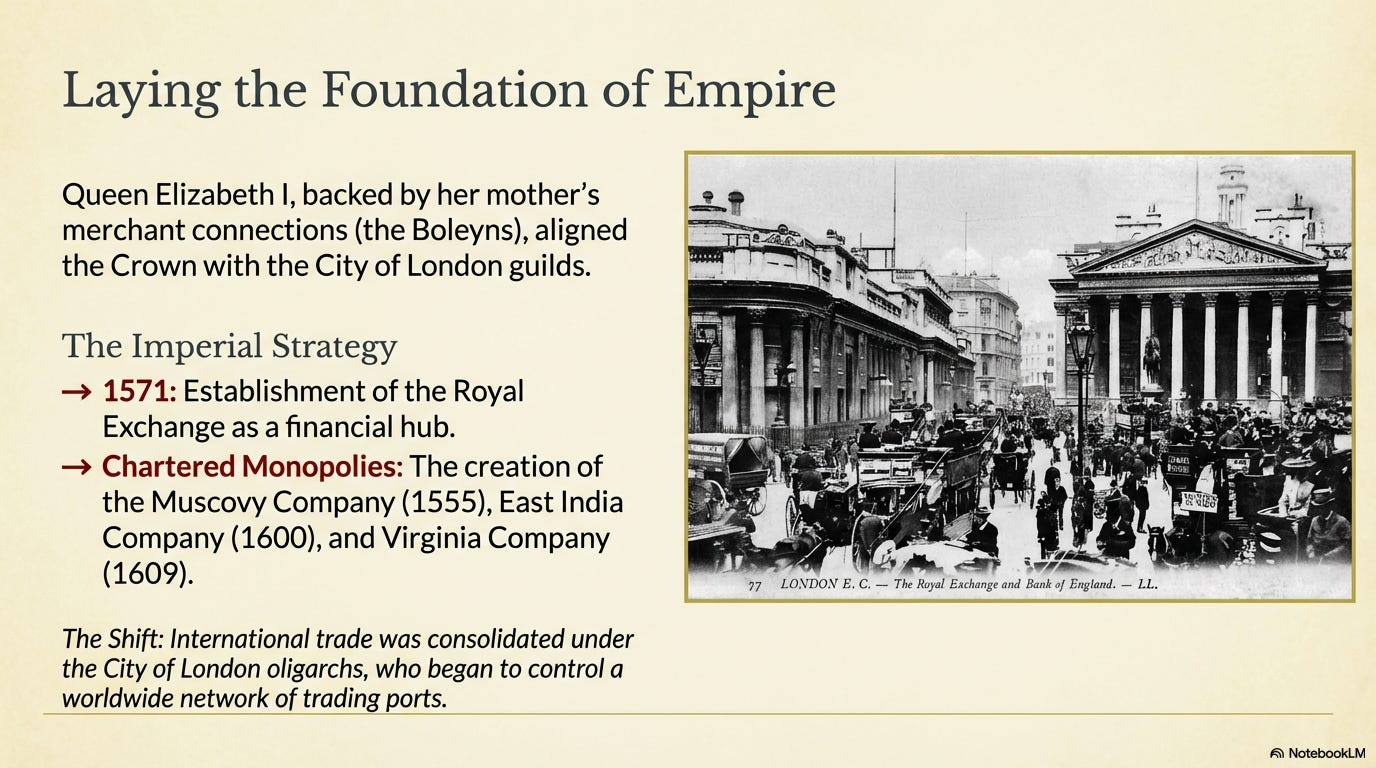
In 1571, Elizabeth helped establish London as a trading center by instituting the Royal Exchange, a financial and commercial hub in the heart of the City. And over the following decades, she chartered several important joint-stock trading companies, owned primarily by the wealthy London merchants. This was significant because in previous centuries, international trade with Britain was mostly controlled by foreign companies.
The City of London companies granted monopolies on foreign trade with Britain, and included: 1555 — Muscovy Company (trade with Russia), 1564 — Merchant Adventurers (wool trade with Netherlands), 1592 — Levant Company ( trade with Ottoman Empire), 1600 — East India Company (trade in East Asia), and 1609 — Virginia Company (trade and colonies in North America).
Conflict with Dutch and Spanish merchants made some of the early trading expeditions of these companies indistinguishable from piracy, but over time, they established profitable trading posts, and eventually, some were granted rights to raise armies, coin money, and make their own laws.
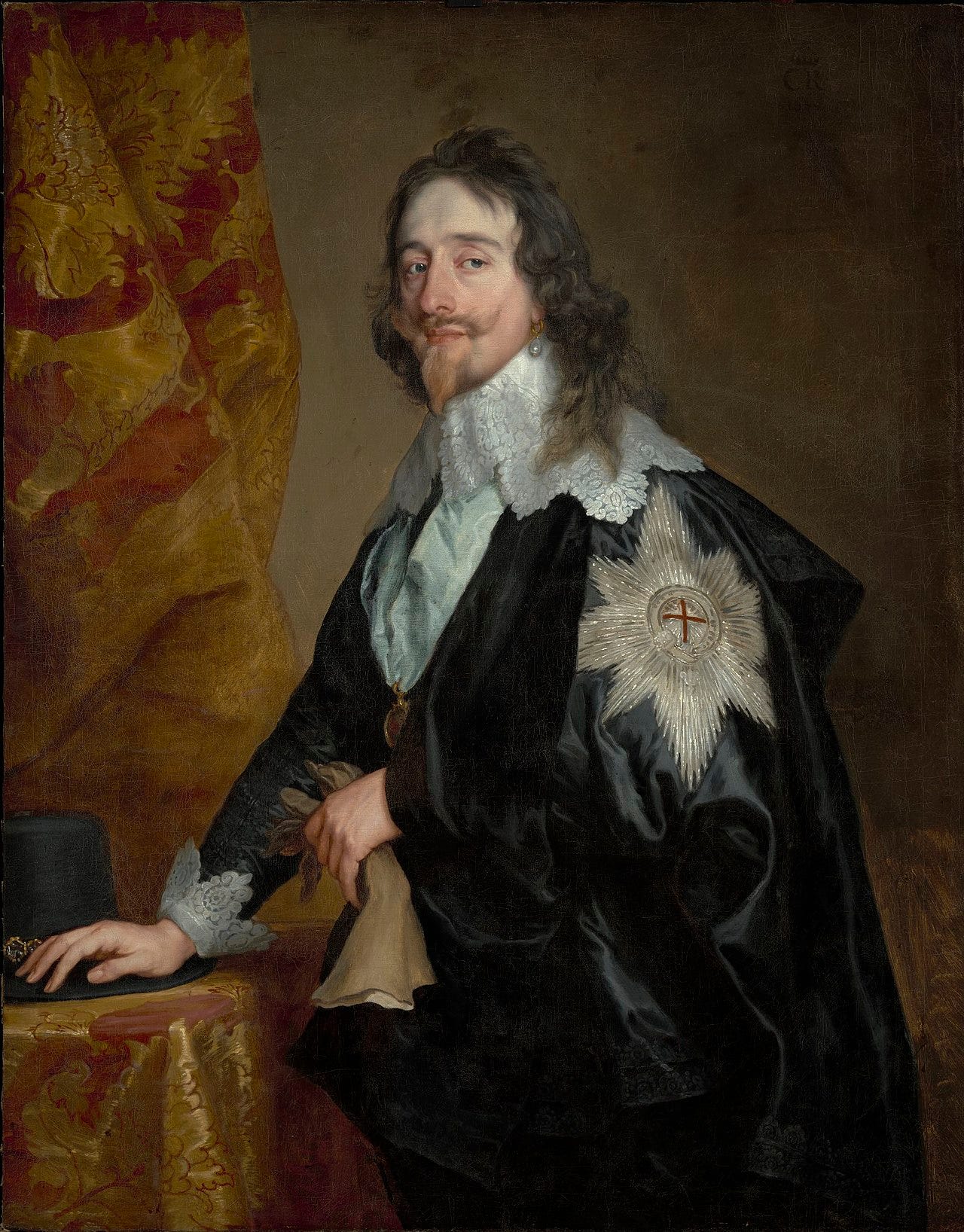
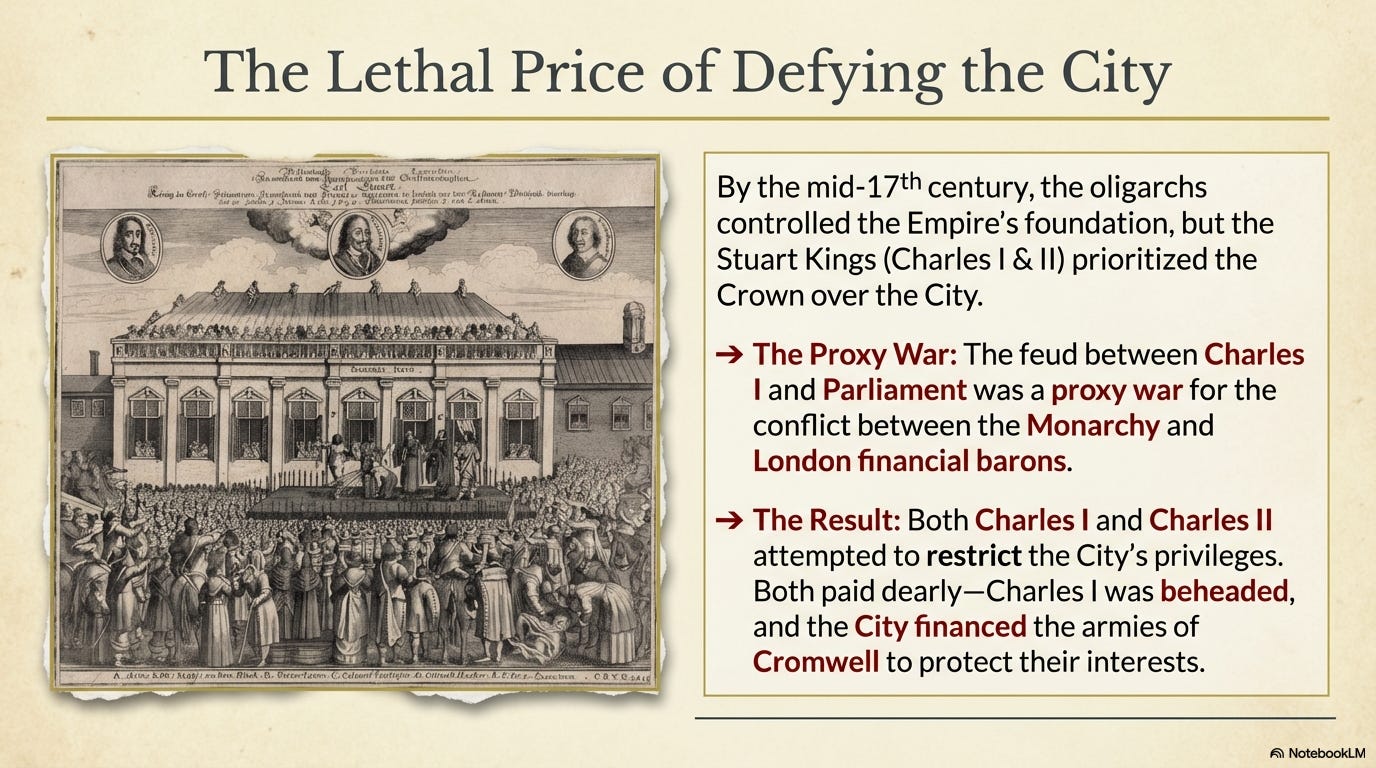
By the mid 17th century, City of London oligarchs controlled a worldwide network of trading ports that formed the foundation of the British Empire. But under Charles I, they no longer had a monarch who prioritized their interests above all other considerations. However, many members of the king’s Parliament had connections to the City, and the two-decade feud between Charles I and Parliament was a proxy war for the ongoing conflict between the monarchy and London financial barons. And it was a perilous feud. Both Charles I and Charles II tried to restrict the privileges of the City of London, and both paid with their lives.
Cromwell served the interests of London and delivered Ulster into the hands of his CoLC financial backers. But his Commonwealth was so unpopular that the oligarchs had to make peace with Charles II, while they plotted a permanent solution. This came in the form of the “Glorious Revolution” of 1688 and the installation of William III on the throne of England.
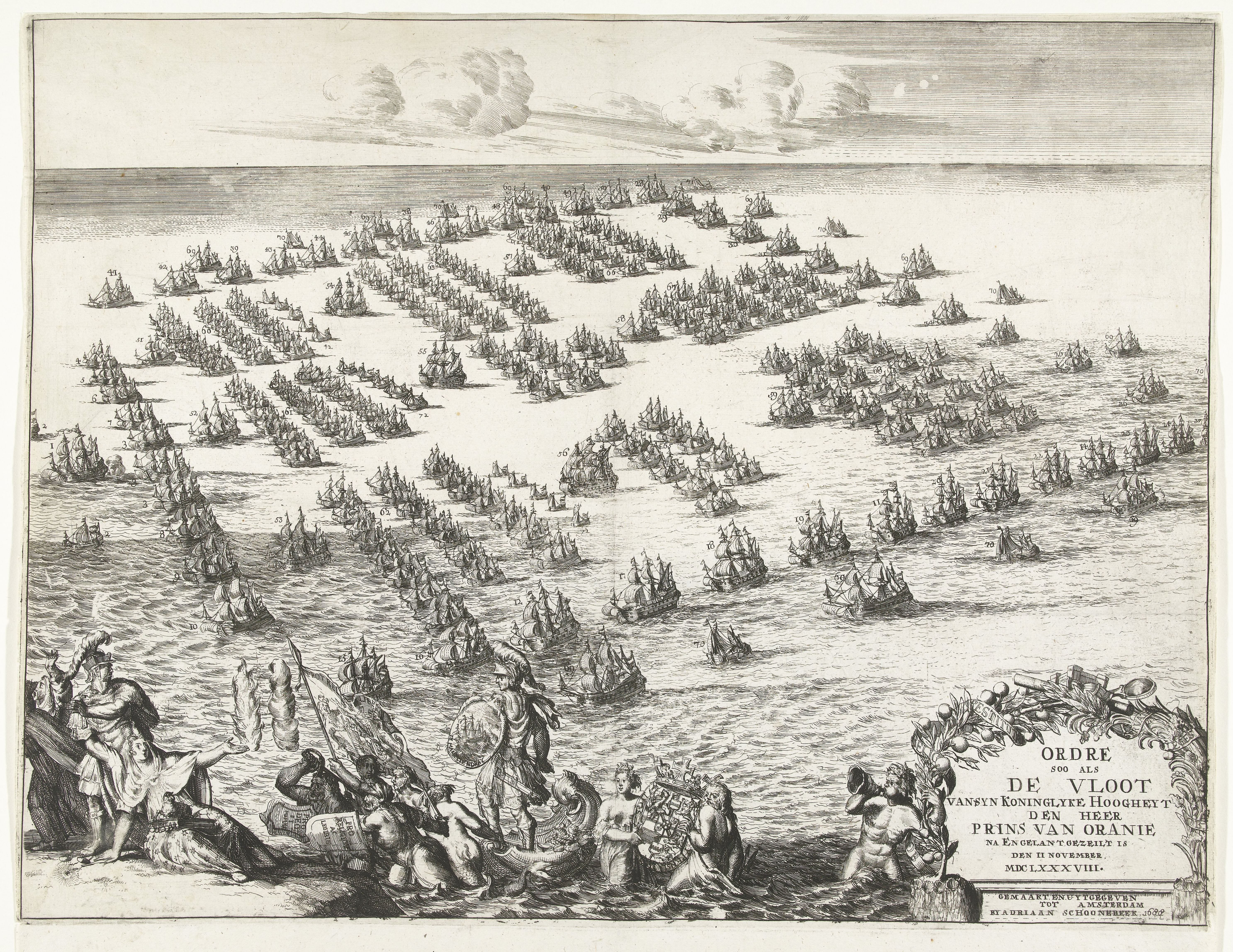
The first act of the new monarch was to restore the City of London’s ancient privileges (which Charles II had revoked shortly before his death). But his master stroke was signing the English Bill of Rights of 1689, a landmark act of Parliament that gave it permanent supremacy over the king in matters of taxation, legislation, and the right to raise armies.
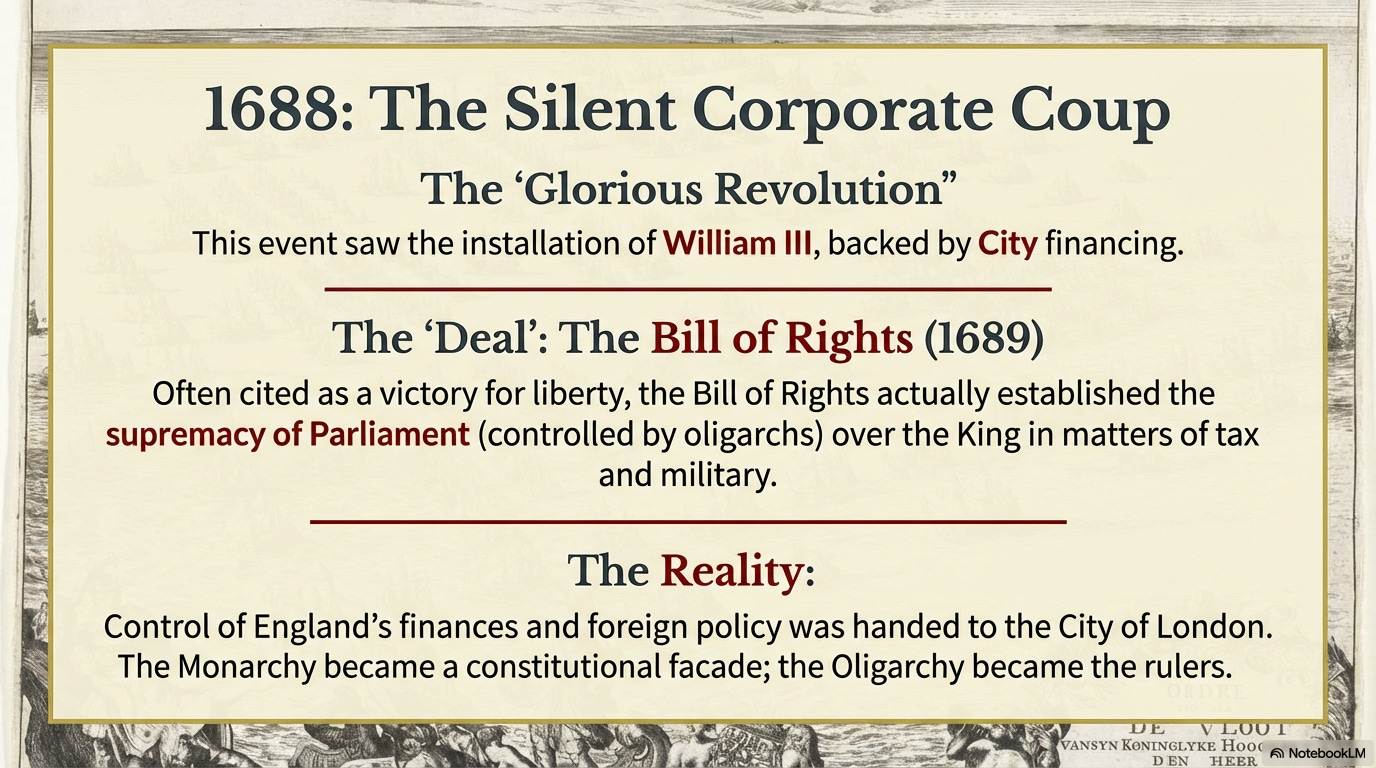
The bill removed all power over finances from the king and is presented in history books as a decisive blow against tyranny. But in reality, it handed over control of England’s finances and foreign policy to City of London oligarchs, who had already bought, bribed, or blackmailed most of Parliament.
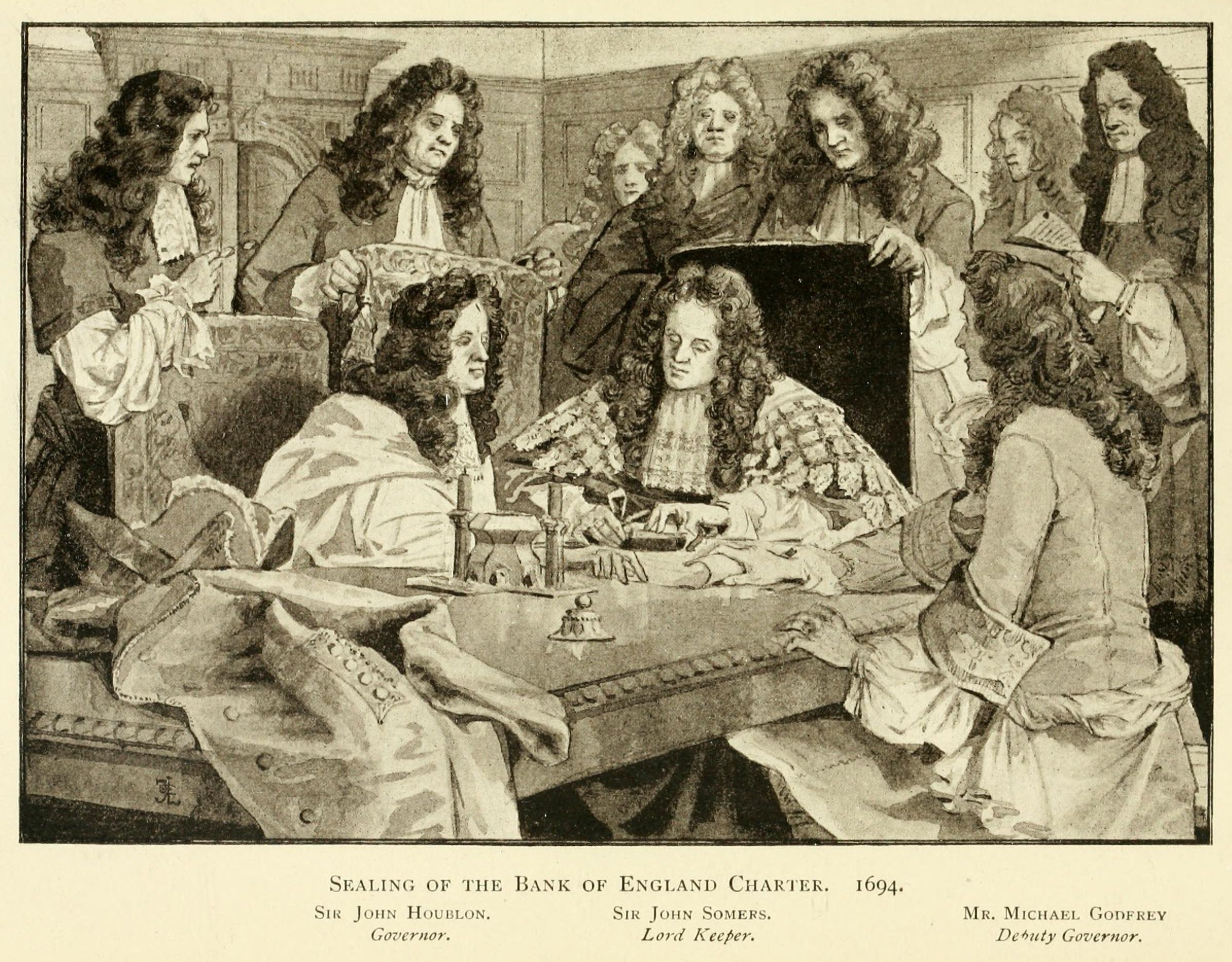
And the Bill of Rights was just the start. As soon as Parliament had the authority to raise taxes, William III secured financing to continue his War with France and put Parliament into debt. Then, in 1694, he chartered the Bank of England, giving London oligarchs the exclusive right to lend money to parliament.
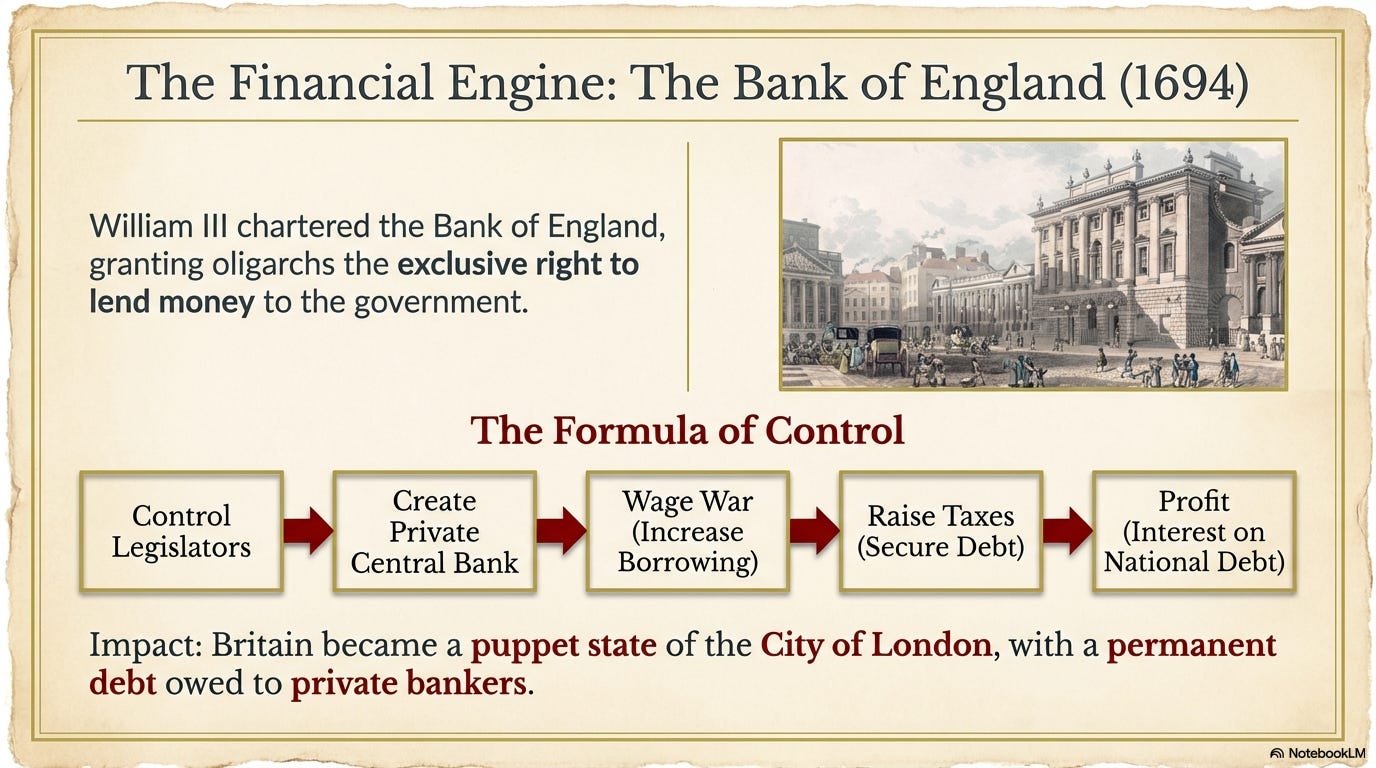
This gave Parliament a permanent credit line, enabling England to continue a twenty-five-year war with France (1688 to 1713). And it created the “National Debt” and a permanent source of income for British Bankers.
Take note of the formula:
Gain control of legislators,
Create a private central bank,
Wage a war to increase borrowing,
Raise taxes to secure the debt,
Sell government debt to raise more money to loan to the government. It has been repeated in dozens of countries worldwide.
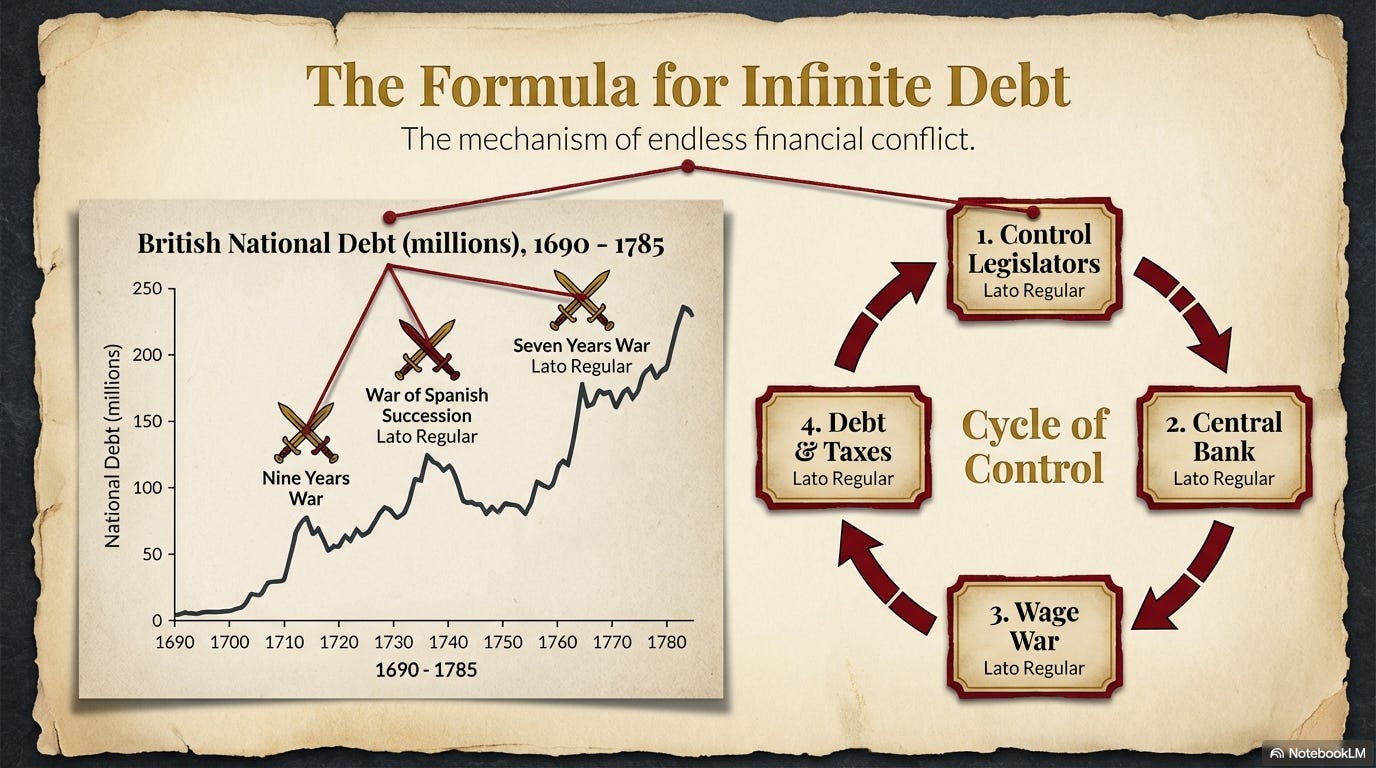
William III’s final tribute to the City of London was the 1701 Act of Settlement, with which Parliament asserted its right to control the succession to the English throne. Since that time, the CoLC oligarchs have controlled Parliament, the Crown, British Trade, British colonies, and the British money supply. For 300 years, Britain has existed as a puppet state of the City of London, masquerading as a constitutional monarchy.
And to assist them in ruling a world empire, the oligarchs of the City of London created Freemasonry.
The Paradox of Freemasonry
The “English Bill of Rights” has always been presented in English histories as a triumph of representative government over tyranny, a cornerstone of English liberty, and a model for rights-based, republican governments worldwide. Yet Parliament’s supremacy over the crown led immediately to the domination of England’s government by a merchant and financial oligarchy, bent on world empire.
And this paradox is key to understanding Freemasonry.
On the one hand, Freemasonry is known for promoting enlightenment ideals of representative government and civil liberties, including freedom of speech, freedom of religion, freedom of assembly, and free trade. On the other hand, the order is closely tied to a London-based financial and commercial oligarchy.
To the uninitiated, this appears to be a dilemma. How can a fraternal order dedicated to “free-thinking” ideals of liberal and republican government serve the interests of a globalist plutocracy?
But from inside the Masonic cult, there is no conflict:
Republican Government — Elected officials are more easily controlled than hereditary monarchs. They can be bribed, blackmailed, flattered, or if all else fails—replaced.
Freedom of Speech — The oligarchy controls nearly all newspapers, publishing companies, and media outlets, so they have nothing to fear from free speech. They even control “opposition” media to promote factionalism and maintain the illusion of choice.
Free Trade — The Livery companies, CoLC trading companies, and Bank of England were all created as monopolies. But that was then. Now their minions promote Free Trade, open borders, and low tariffs to maximize international commerce, lower labor costs, and undermine national sovereignty.
Freedom of Assembly — The London-backed Hanoverians brutally crushed rebellions in Ireland, Scotland, and Northern England while consolidating their power. But since the mid 1700s, their Masonic underlings have preached “free assembly”, while inciting wars and revolutions on every continent.
Fraternity — What Masons promote is not universal brotherhood, but favoritism, special privileges, and protection for brother Masons. It is the opposite of equality.
To a high degree, among Freemasons, there is no conflict between the ideals of representative government and oligarchy. Their philosophy is elitist and Gnostic, meaning that those who possess occult knowledge are above the fray and above reproach. The Masonic oligarchs and their minions believe they are entitled to rule, that they alone have the wisdom to rule, and that they do not begrudge civil liberties granted to commoners, as long as those commoners have no meaningful role in government. If the hoi polloi believe they are free from tyranny, all the better.
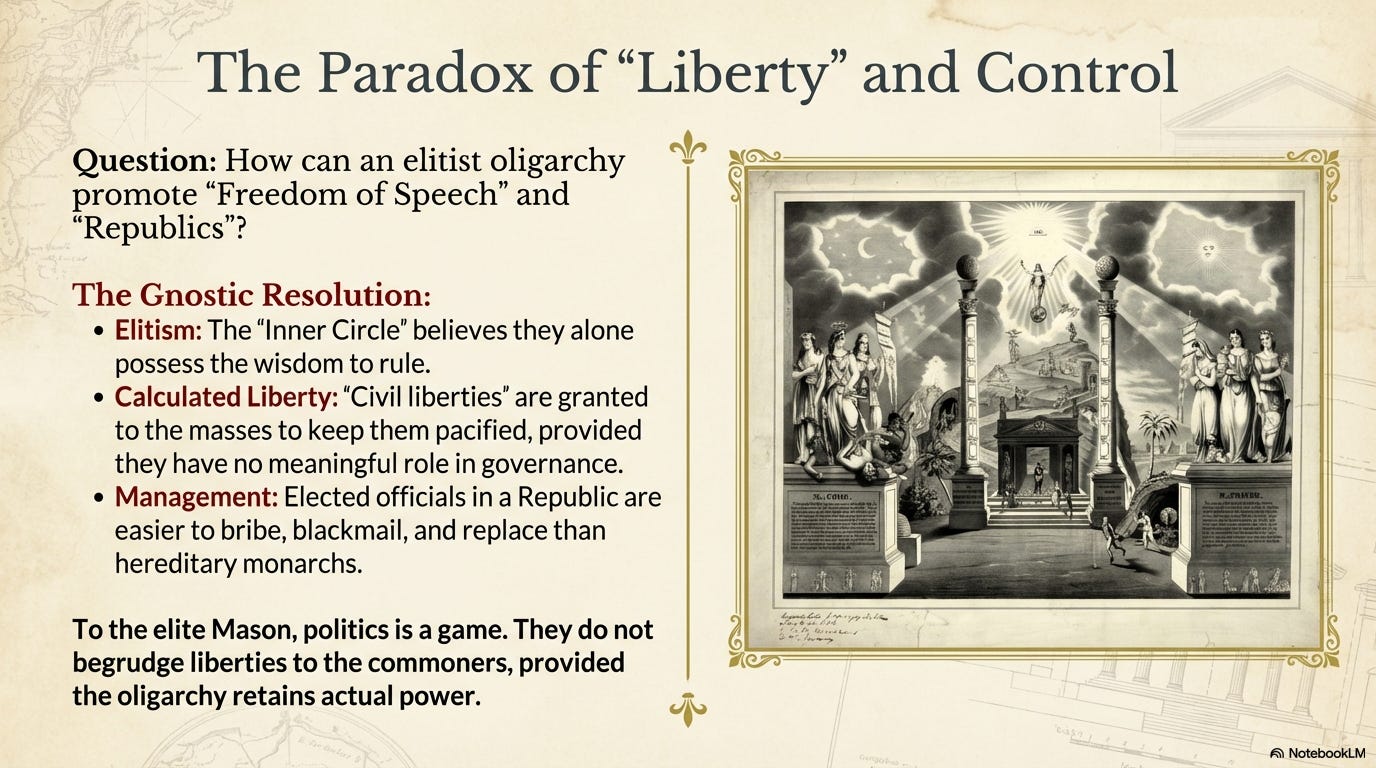
Of course, only the higher-level adepts in Masonry have a truly Gnostic outlook. Lower-level Masons may very well be “true believers,” but that just means they can be played like pawns by those who are running the chessboard. To elite Masons, politics is a game; they are entitled to rule; black can be white; the prime directive is cult-loyalty; and they will promote whatever ideals are expedient. And they consider this wisdom.

Who Established Freemasonry?
We have enough information to determine who created speculative Freemasonry and launched it in 1717, with such success that, within fifteen years, it had spread to over a hundred lodges in Britain and hundreds more on three continents.

In the following section, we will discuss its connections to Livery companies and other secret societies, but it is already clear that Freemasonry is closely linked to the City of London trading companies and that, from its inception, it was intended to spread internationally and further the aims of the oligarchs behind the worldwide British Empire.
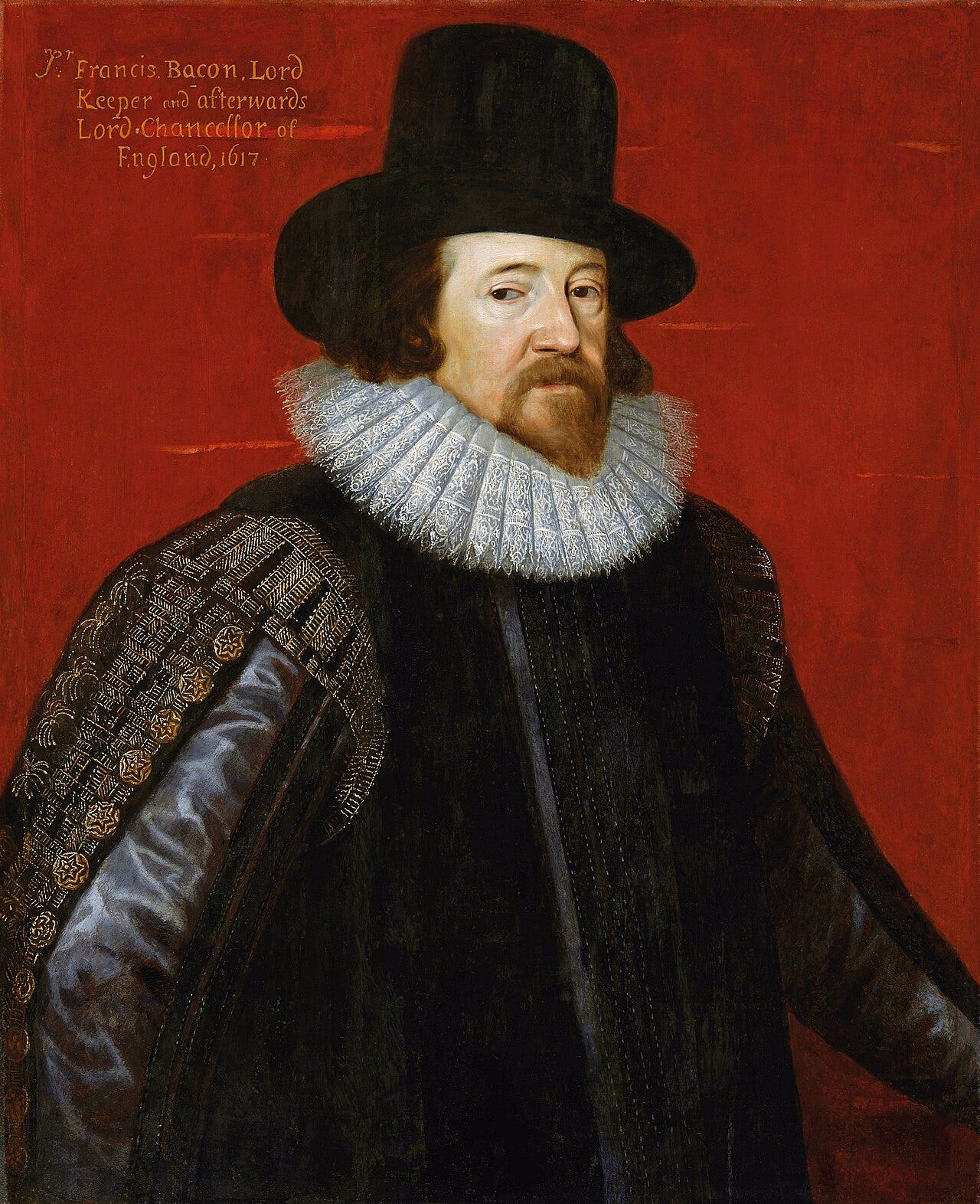
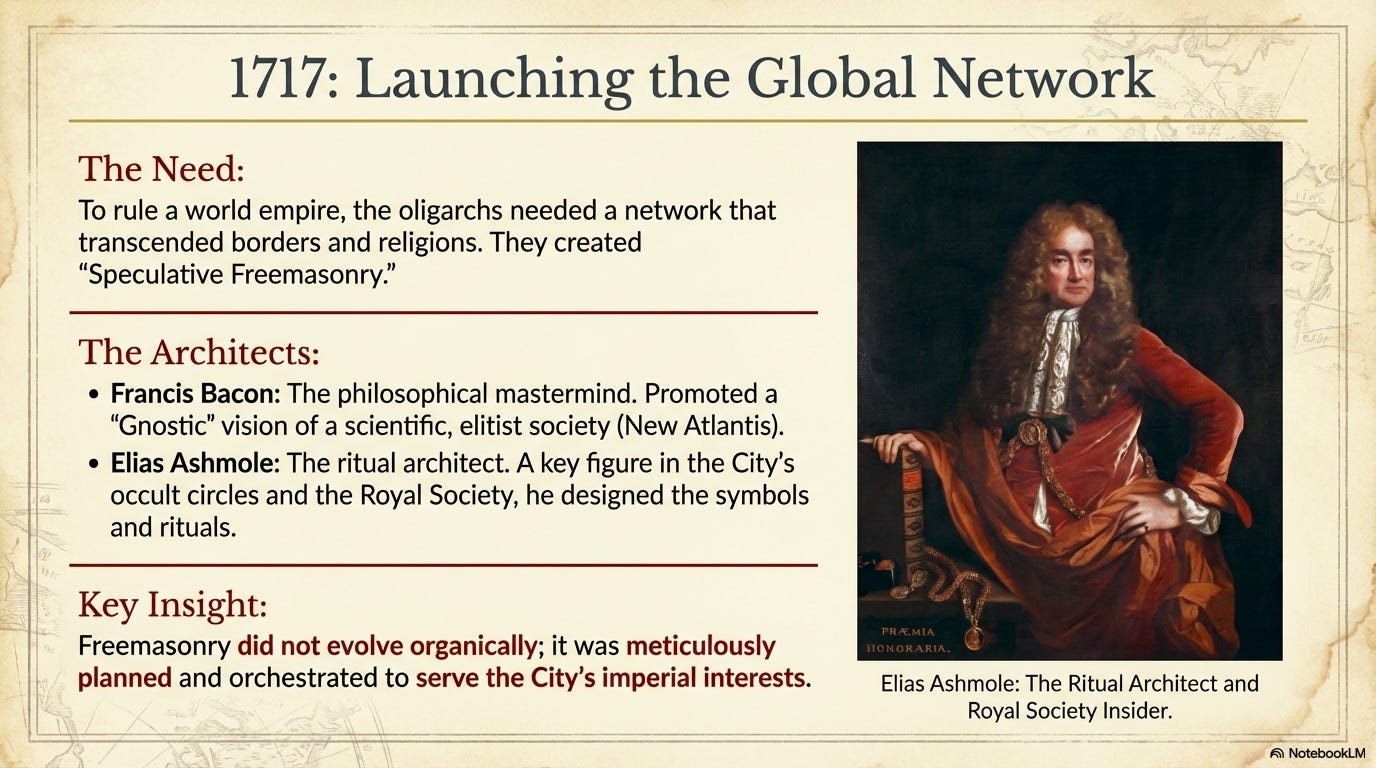
And we also know that the two masterminds most responsible for establishing the philosophical and allegorical foundation of Freemasonry, — Francis Bacon (1561-1626) and Elias Ashmole (1617-92) — were closely associated with prestigious City of London institutions, and that both were deeply inculcated with occult knowledge.
In New Atlantis, Bacon put forth the idea of a utopian, rationalist, scientific, philosophical society that used “secret knowledge” to influence society from behind the scenes. He is credited with championing the scientific method, but his writings were more Gnostic (meaning secretive and elitist) than is generally acknowledged, and his vision is key to understanding the condescending, oligarchic, arcane worldview of the “inner circle” members of secret societies. Bacon was also associated with the Virginia Company and is an important figure in both American and British occult circles.
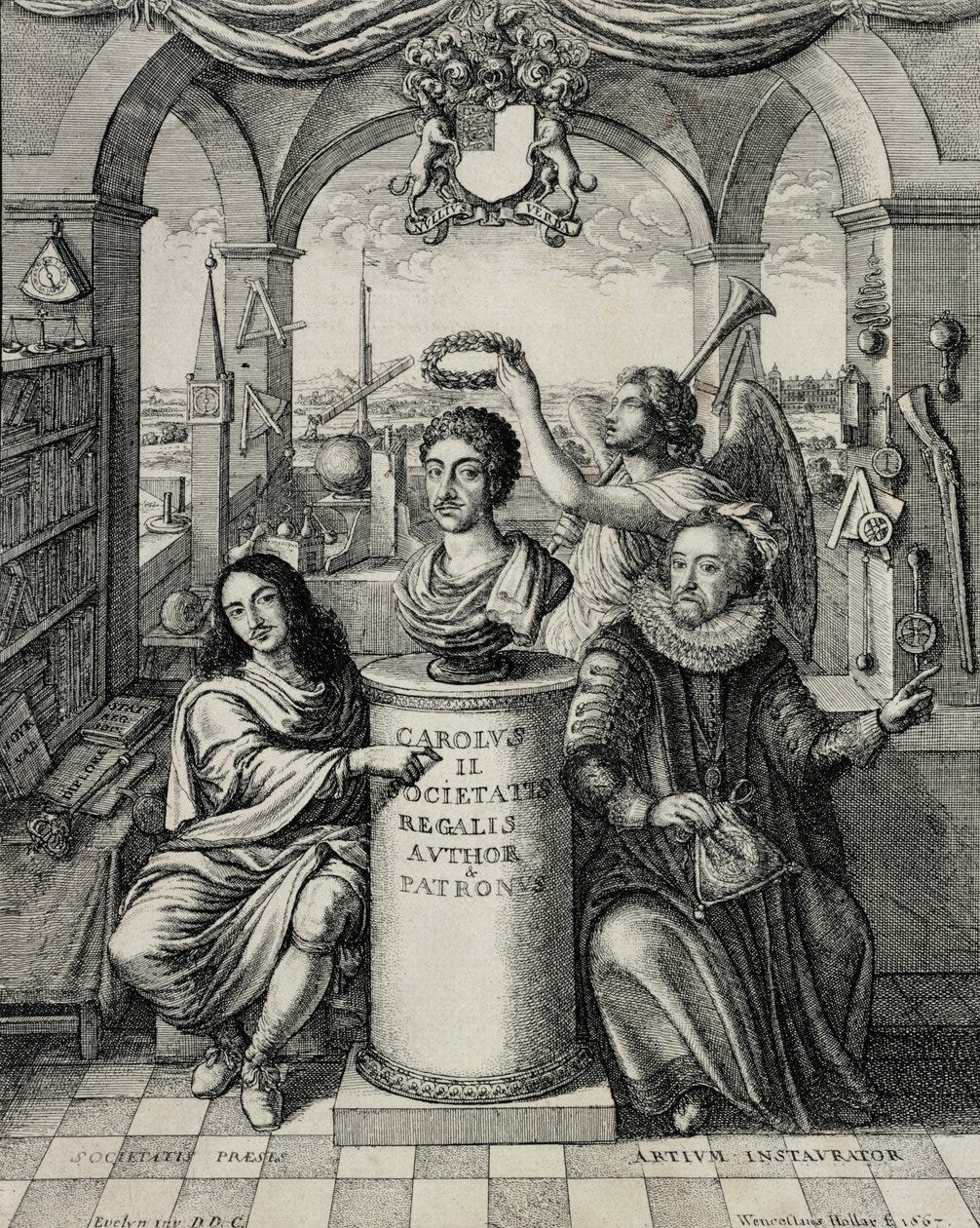
Ashmole was a scholar of the Hermetic arts and antiquities, and he was the one who linked Masonic rituals and symbolism to esoteric traditions and arcana. He was also connected to London’s “Inns of the Court”, the Royal Society, and the Excise office, and he served as the historian for England’s most prestigious secret society, the Noble Order of the Garter. Ashmole, more than anyone, was the grand architect of the secrets, symbols, and rituals of speculative Freemasonry, and he was up to his eyeballs in City of London occultism.
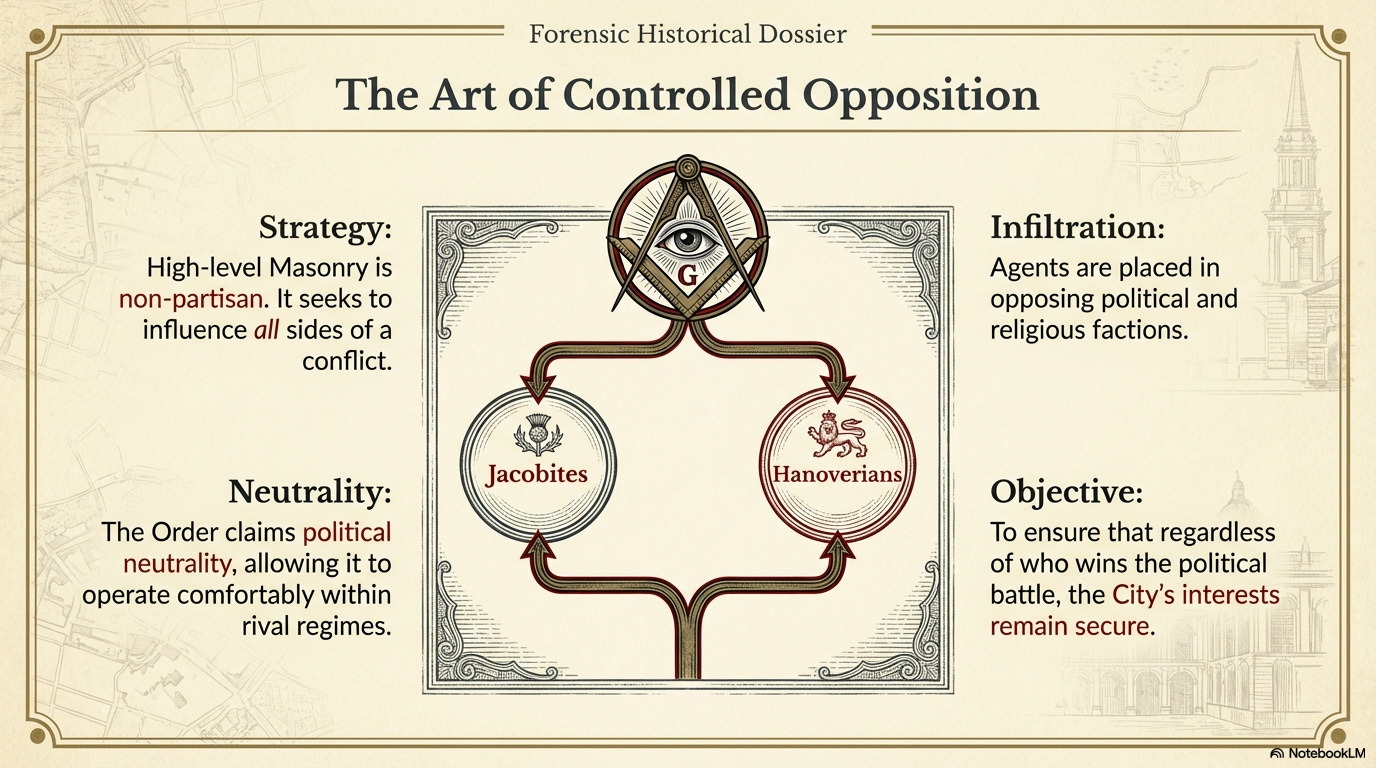
So we know that the founders of Freemasonry were enormously influential and connected to many different City of London institutions, and it is likely that many other City of London luminaries were involved in its development and promotion. But we also know that Ashmole was a Royalist during the Wars and many early Freemasons were Jacobites, who seemed to oppose the CoCL oligarchs.
However, there is no conflict between the Jacobite cause and Masonry because, as we have seen, higher-level Masons are Gnostics, not political partisans. The purpose of Masonry is to influence all sides of the political and religious spectrums, whether by affiliation, espionage, or “controlled opposition”—all the while serving the interests of the oligarchs. This is why Freemasonry presents itself as politically and religiously neutral. Sometimes the best way to promote the oligarchs' interests is to pretend to oppose them.
More evidence that Freemasonry was intended, from its inception, to influence British trade and geopolitics was that, following its launch in 1717, it spread almost immediately throughout Britain, to British trading ports, and even to France, Britain’s supposed rival. Instead of local, organic growth, the roll-out of Freemasonry appears to have been meticulously planned and orchestrated globally to promote a secret society that would assist London’s plans for the empire.
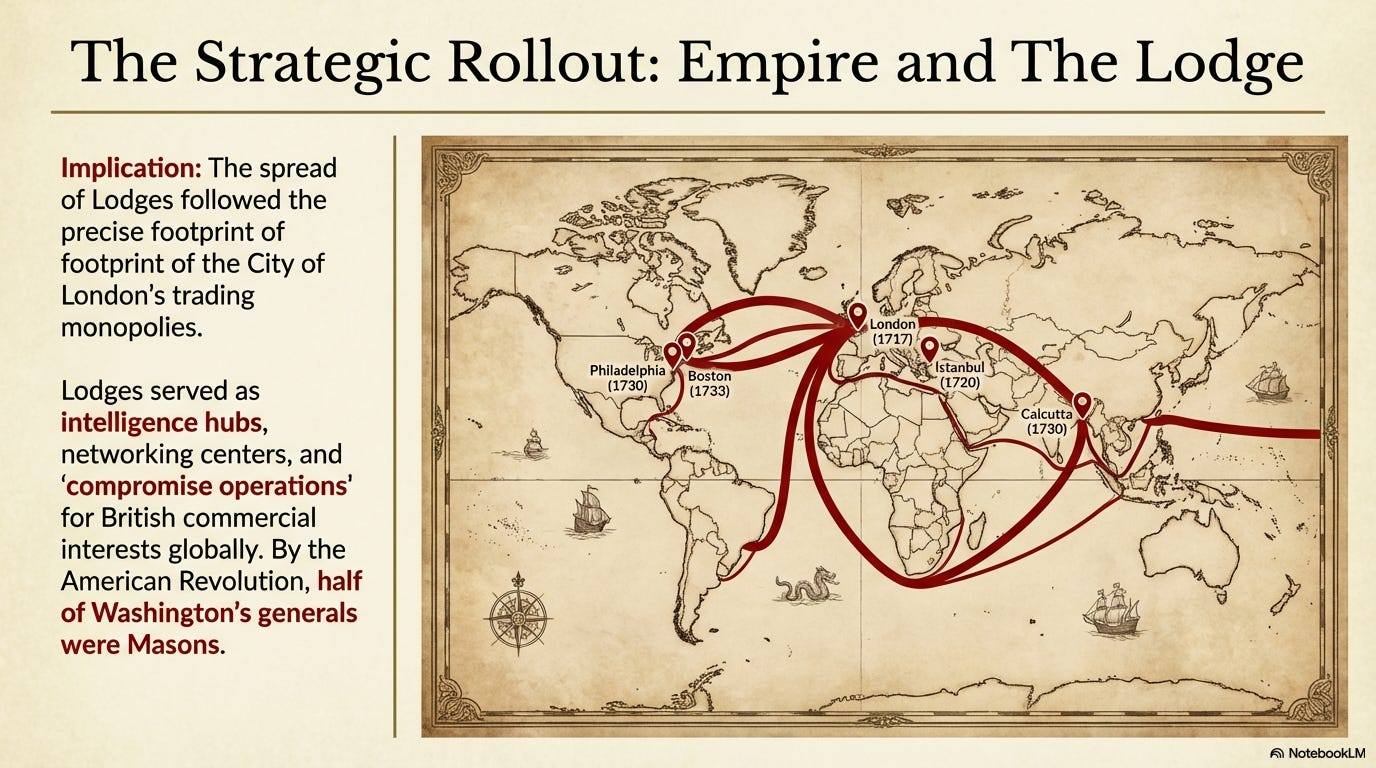
By 1725, just 8 years after the Grand Lodge of London was founded, there were 70 lodges in Britain (including Ireland and Scotland) with about 1,400 members.
Freemasonry arrived in the Ottoman lands as early as 1720 (the first lodge in Istanbul) and spread to the Levant's trading cities.
Freemasonry arrived in Calcutta, India, in 1730 and spread to Mumbai, Delhi, and Madras — the major ports of the East India Company.
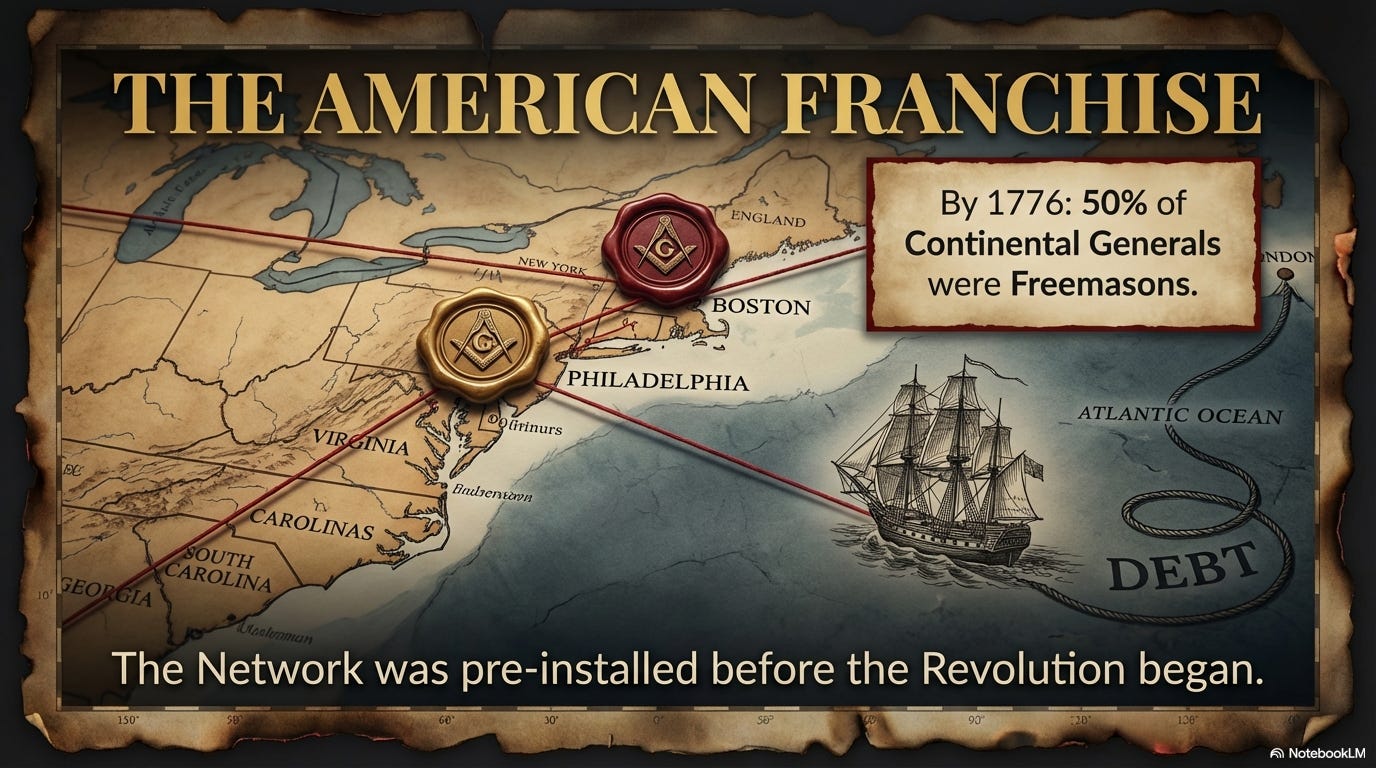
Freemasonry arrived in Philadelphia in 1730 and in Boston in 1733. By the 1750s, there were dozens of lodges, and by the time of the Revolutionary War, about half of Washington’s generals were Freemasons.
By 1750, there were at least 200 Freemason Lodges throughout France, from which emerged all the important leaders of the French Revolution (which greatly enriched international banks).
By the time Freemasonry was introduced to the world, it was already tied in to dozens of British and London-based secret societies, guilds, and fraternal orders.
It was already connected at the highest levels to an ancient and worldwide network of occult societies, and its doctrines promoted ancient pagan ideas of rationalism, dualism, and Gnosticism that were antithetical to Christianity.

Freemasonry was designed to be a worldwide occult network, and it served many purposes, from promoting wars and revolutions, to networking with other secret societies, to racketeering, to espionage, to compromise operations, to developing “assets”, to undermining Christian faith and morals, to controlling local governments, media, and education. With such a flexible, worldwide, interconnected network of minions, ranging from “illuminated” adepts at the top to an army of controllable assets, almost anything is possible.
Freemasonry and Secret Societies
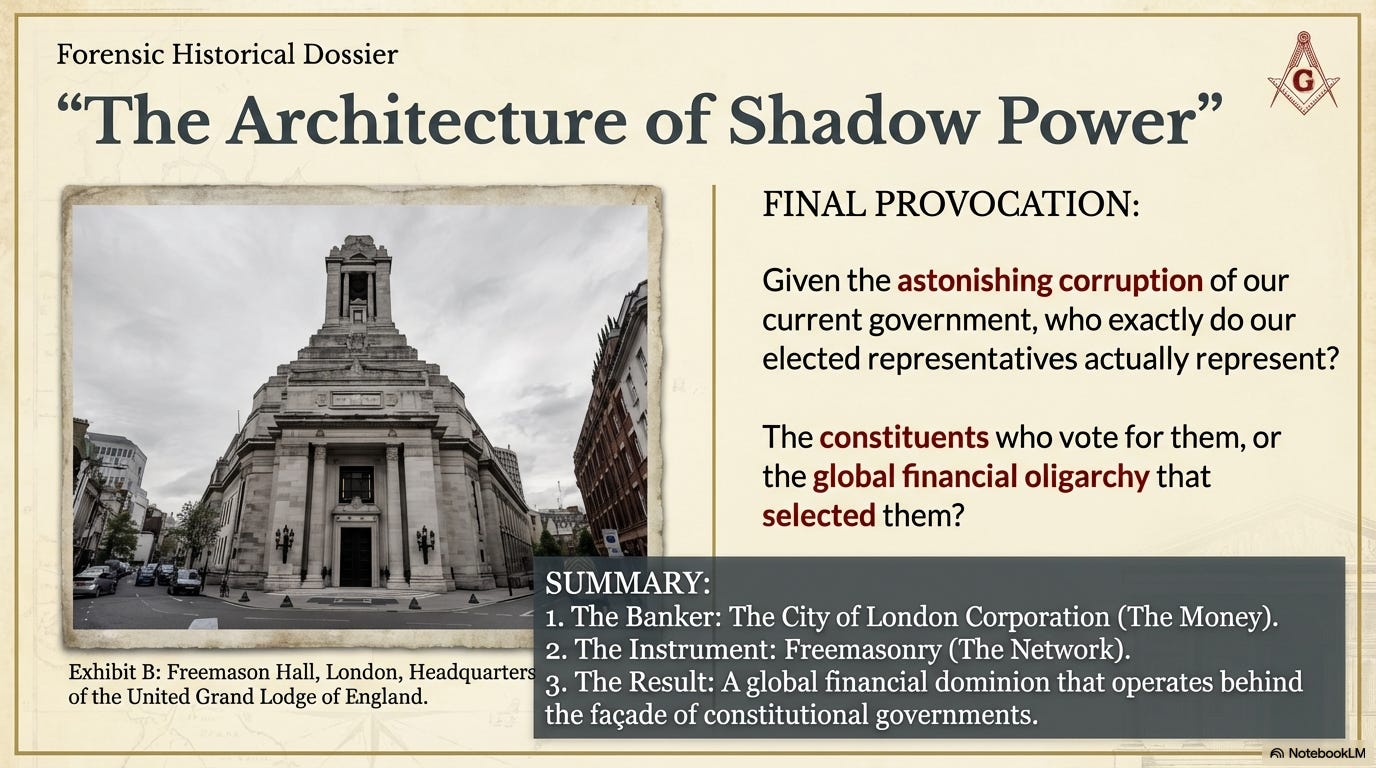
During the tour (of the Freemason Hall in London), I spotted many visual links with the Livery Companies and learned of the purpose, structure, and officers of Freemasonry, and much of that has close parallels with the Livery. Sadly, the guide on my tour was unable to answer any questions I raised about these apparent similarities.
This quote is taken from an essay comparing the London Livery Companies to Freemasonry. But after cataloging dozens of similarities and offering up pages of esoteric facts and blather, the author concludes they are unrelated. This is because both Freemasonry and the London Livery companies are secret societies, and members are required to protect secrets.
Much can be learned about how secret societies are organized, but not by asking members direct questions and expecting straight answers. The following information is based on research into a wide range of secret societies (Heckethorn, 1897; Nesta Webster, 1924) and focuses on organizational details rather than esoteric knowledge. It is important to know, however, that the mysteries, pagan philosophies, and psychological manipulation techniques that are common among occult societies extend back to ancient times.
Secret societies do not arise spontaneously. They are networked at the highest level, created for specific purposes, and have many commonalities:
All use signs and symbols to communicate, and many symbols are in common use.
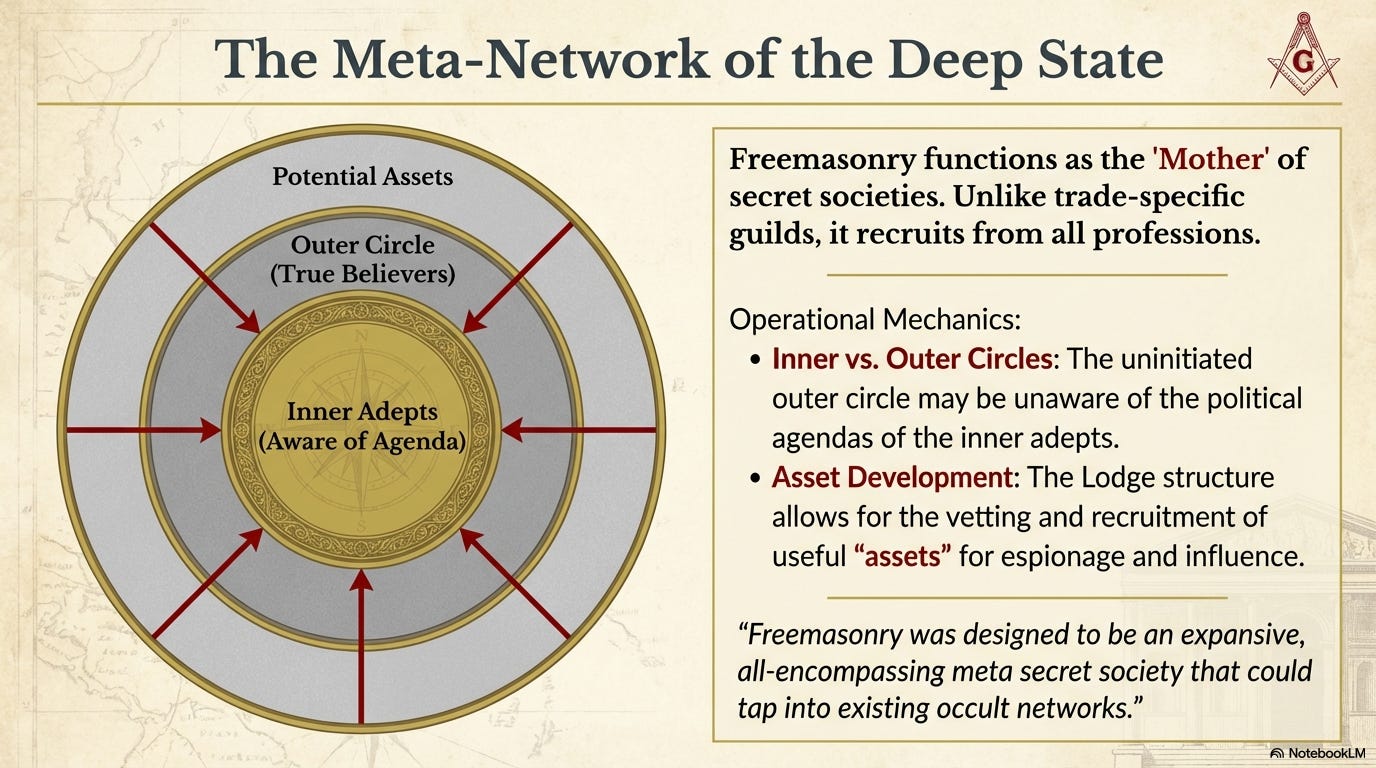
All have inner and outer circles, and sometimes the uninitiated outermost circle may be entirely unaware of the activities of the inner circles.
All share secret knowledge among members according to their seniority or degree. Some secret knowledge is esoteric, and some is operative.
All require oaths, enforce a code of silence, and justify deception to protect secrets.
All use initiation rituals, pageantry, strange ceremonies, and hocus pocus to promote cult loyalty.
All offer protection, favoritism, and other benefits to their members.
Most engage in espionage, compromise, and psychological operations at some level.
All intelligence agencies worldwide are, in some way, networked with secret societies.
Freemasonry shared all these characteristics, but it was unique among secret societies in several ways. Most other orders had some “operative” purpose (trade, religious, military, hermetic, criminal, judicial, political) and were exclusively limited to men of a certain occupation or class.
But Freemasonry was open to men of many different walks of life, and required a philosophical, rather than a vocational commitment. It could therefore sustain much larger memberships than other societies, and its many “levels” of mysteries provided a way to organize members and develop “assets”.
It seems that Freemasonry was designed to be an expansive, all-encompassing “meta” secret society that could tap into existing occult networks and generate new ones. Freemasonry, in fact, was notorious for spawning new secret associations, especially revolutionary political and military societies during the 19th century.
And it continued to spin off dozens of Masonic-linked civic organizations throughout the 20th century. Masonic networks still exist in every town, even those where lodges have closed and the number of actual Freemasons has declined.
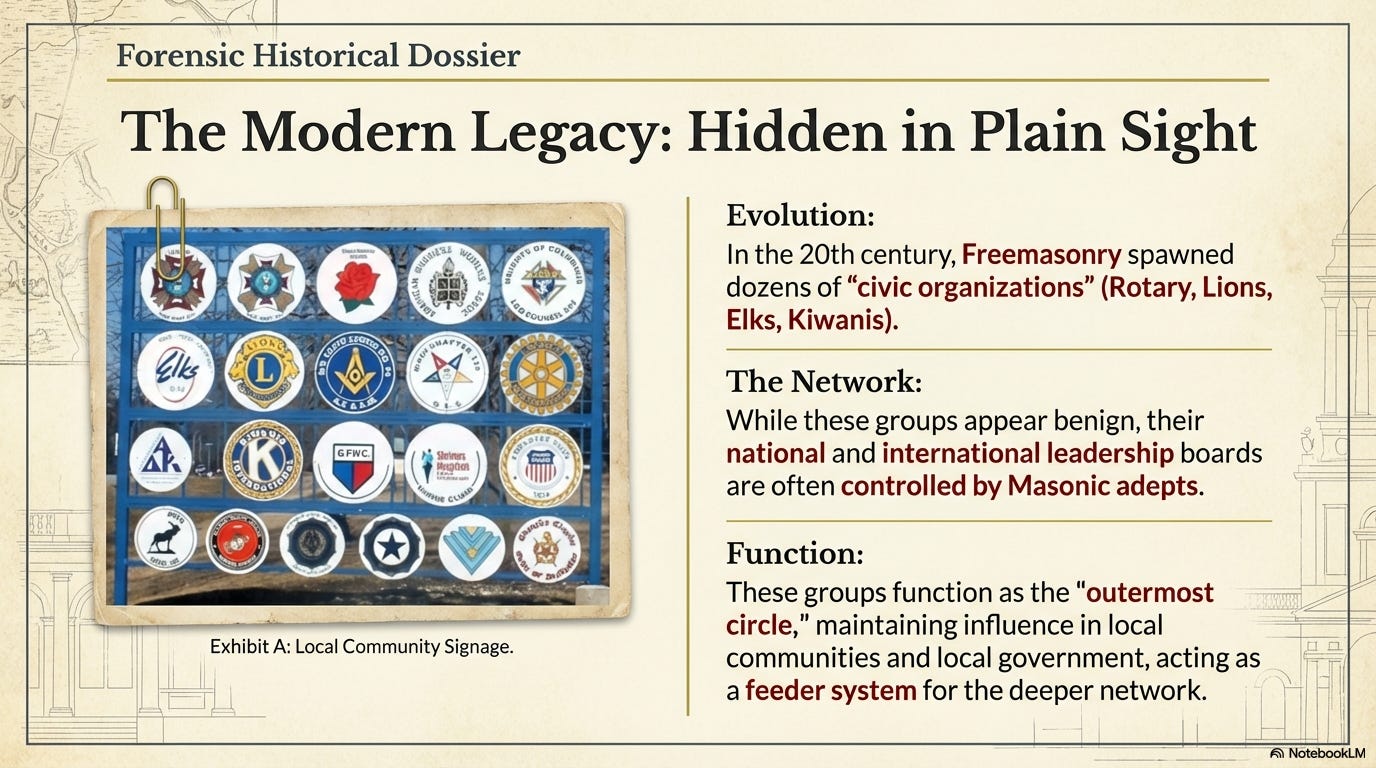
This is not to say that every community organization in every town in the USA is a full-fledged Masonic secret society. But many common civic groups with Masonic roots (Rotary Club, Lions, Elks, etc.) have national or international leadership boards that are almost certainly controlled by Masonic adepts.
So it is worth asking, given the astonishing corruption of our current government, who exactly do our elected representatives actually represent? How closely is Masonry and its vast network of spin-off organizations tied to the “Deep State”? Could it possibly be that even our locally elected leaders and party officials are somehow associated with Masonry and serve the interests of a global financial and commercial oligarchy, rather than those of their constituents?
It seems likely.
Thanks to the generosity of my readers, all my articles are available for free access. Independent journalism, however, requires time and investment. If you found value in this article or any others, please consider sharing or even becoming a paid subscriber, who benefits by joining the conversation in the comments. I want you to know that your support is always gratefully received and will never be forgotten. Please buy me a coffee or as many as you wish.

The Duke Report - Where to Start
My articles on SubStack are all free to read/listen to. If you load the Substack app on your phone, Substack will read the articles to you. (Convenient if you are driving).
Foundational Articles
Podcast (Audio & Video Content)
Palmerston’s Zoo Episode 01 - Solving the Paradox of Current World History (9 Episodes)
Oligarchic Control from the Renaissance to the Information Age
SoundCloud Book Podcasts
I’ve taken almost 200 foundational books for understanding how the world really works and posted them as audio podcasts on SoundCloud. If you load the app on your phone, you can listen to the AI robots discuss the books on your journeys across America.
Duke Report Books
Over 600 foundational books by journalists and academics that never made the New York Times Bestseller list, but somehow tell a history we never learned in school. LINK

 | A guest post by
|