


Trump’s Hidden Ties: What They Aren’t Telling You, hosted by Rich and featuring Duke Report author Peter Duke, examines Duke’s claim that Donald Trump serves a financial and geopolitical order centered in the City of London. Duke connects Trump’s public persona to Federal Reserve banking, British imperial strategy, Halford Mackinder’s geopolitical theories, reality television, intelligence networks, and systems of controlled political opposition.

The Federal Reserve and the American Empire
Duke defines three systems that shape modern power: the financial-industrial complex, the military-industrial complex, and the belief-industrial complex. He places the Federal Reserve at the center of the financial system and identifies December 23, 1913, when President Woodrow Wilson signed the Federal Reserve Act, as a decisive point in American history.

According to Duke, Federal Reserve banking helped convert the American republic into an empire by financing government expansion, war, and international intervention. He cites Ron Paul, Eustace Mullins, and G. Edward Griffin as researchers who identified the Federal Reserve as a central mechanism of financial control. From this premise, Duke argues that any reform program operating through the Federal Reserve preserves the institutional structure that empowers the City of London.

Mackinder, Eurasia, and the Land of Five Seas
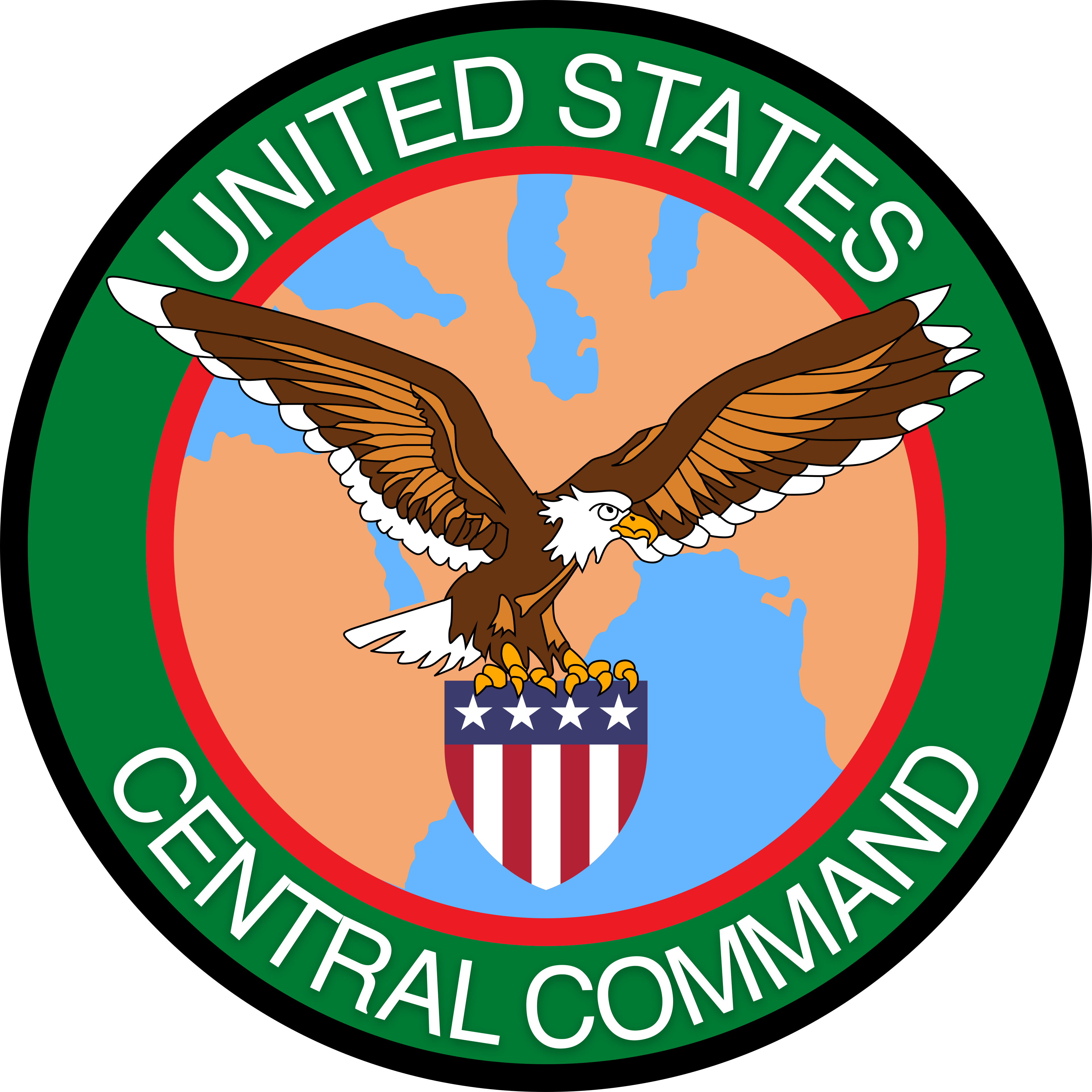
Duke places current events within Halford Mackinder’s 1904 Royal Geographical Society lecture, The Geographical Pivot of History. Mackinder, the first director of the London School of Economics, described Eurasia and Africa as a single “World-Island” whose population, resources, and geographic position could support a self-contained land power.

Mackinder identified Russia as the protected pivot area and described the region between Europe, Asia, and Africa as the weakest point in the world’s geographic girdle. Duke calls attention to Mackinder’s “Land of Five Seas” and argues that the United States Central Command emblem depicts this strategic region. Why would an American military command define its center through a British geographer’s map of Eurasian power?

Duke defines Anglo-American power as a thalassocracy: an empire that relies upon ocean routes to separate resources, manufacturing, and consumer markets. Rail connections linking Europe, Russia, Asia, and Africa could create a tellurocracy that moves resources across land. Duke therefore identifies the Middle East, North Africa, Egypt, Israel, and the Sinai Peninsula as crucial geographic corridors. Continued conflict across this junction prevents stable rail integration between Eurasia and Africa.

Trump, The Apprentice, and Political Conditioning
Duke attributes Donald Trump’s political construction to Rothschild banking interests and television producer Mark Burnett. He argues that The Apprentice and Survivor applied John Nash’s non-cooperative game theory to popular entertainment.

Survivor allows eliminated contestants to participate in the final decision, creating what Duke calls a “republic of the losers.” The Apprentice places authority in a sovereign figure who removes participants through the phrase “You’re fired.” Over fourteen seasons, Duke says, viewers learned to associate Trump with decisive personal authority and the power to remove incompetent subordinates.

Duke also discusses the July 2024 shooting in Butler, Pennsylvania. He presents his personal theory that Trump used a blood pack during a staged assassination attempt and states that Corey Comperatore died during the event. Rich repeatedly acknowledges uncertainty and describes Duke’s scenario as plausible. Duke explicitly identifies his proposed bargain offered to Trump as a guess, framing it as a choice between assassination and participation in a performance that would secure the presidency.

Putzi Hanfstaengl and Transnational Intelligence
To explain how powerful networks manage opposing political forces, Duke introduces Ernst “Putzi” Hanfstaengl, a Harvard-educated German-American who became an associate of Adolf Hitler and maintained connections with the Roosevelt family. Duke describes Hanfstaengl as Hitler’s handler and says Franklin D. Roosevelt later sheltered him near the White House.

Duke then points to 120 Broadway in New York, claiming that financial interests operating from that building supported the Soviet Union, the Third Reich, and Roosevelt’s New Deal. He uses this convergence to argue that elite financial networks sponsor competing political movements and preserve control through conflict. Within this structure, Duke treats the CIA, MI6, and Mossad as connected branches of a transnational intelligence system.

Parmenides’ Razor and the Test of Evidence
Duke urges listeners to apply what he calls “Parmenides’ razor,” expressed through the question “What is?” He pairs this method with Christ’s instruction to judge people by their fruits. Actions, institutional outcomes, transparency, and accountability provide the evidence.

Duke applies this scrutiny to himself. He recounts working for Rupert Murdoch, Steven Spielberg, Richard Branson, the United States Army, and the NSA. He also describes a former business partner as an American intelligence asset and recalls models accusing Jean-Luc Brunel of rape during Duke’s fashion-photography career in the 1980s. These associations, he says, give listeners grounds to investigate his history and evaluate his claims.

Prisoners, True Believers, Assets, and Handlers
Duke organizes political power as a pyramid. Plato’s prisoners of the cave occupy the base because media channels define their reality. Eric Hoffer’s “true believers” form the next level and act through shared political or religious convictions. Assets serve elite interests without recognizing their function; handlers understand the system and manage those assets. A power-elite oligarchy occupies the apex.
Duke identifies money, ideology, compromise, ego, and family as primary methods of control. He expands the intelligence acronym MICE by adding family and bloodline, citing Allen Dulles, John Foster Dulles, Avery Dulles, and Jeffrey Epstein as examples within his framework.
Duke closes by defining logos as innate discernment, meekness as controlled strength, and agape as choosing another person's good. He urges families, friends, and neighbors to recover these capacities through disciplined questions, direct observation, and local relationships.
Thanks to the generosity of my readers, all my articles are available for free access. Independent journalism, however, requires time and investment. If you found value in this article or any others, please consider sharing or even becoming a paid subscriber, who benefits by joining the conversation in the comments. I want you to know that your support is always gratefully received and will never be forgotten. Please buy me a coffee or as many as you wish.

The Duke Report - Where to Start
My articles on SubStack are all free to read/listen to. If you load the Substack app on your phone, Substack will read the articles to you. (Convenient if you are driving).
Foundational Articles
Podcast (Audio & Video Content)
Palmerston’s Zoo Episode 01 - Solving the Paradox of Current World History (9 Episodes)
Oligarchic Control from the Renaissance to the Information Age
SoundCloud Book Podcasts
I’ve taken almost 200 foundational books for understanding how the world really works and posted them as audio podcasts on SoundCloud. If you load the app on your phone, you can listen to the AI robots discuss the books on your journeys across America.
Duke Report Books
Over 600 foundational books by journalists and academics that never made the New York Times Bestseller list, but somehow tell a history we never learned in school. LINK

Great presentation. If only more people understood that we are all managed/administered/farmed at the planetary level. I think national governments are tools of distraction/mis-direction.
Simon Dixon is also good at analysing the competing power interests, including the financial-industrial complex which owns Trump:
https://www.simondixon.com/blog?tag=financial-industrial+complex
... "pediment" ...