


Peter Duke is joined by Mrs. Heritage History, who follows their examination of Duke’s effort to extract a governing playbook from The Protocols of the Learned Elders of Zion by removing its ethnic invective, theatrical rhetoric, and disputed attribution. Duke defines his project as epistemological analysis: identify who said what, examine how language directs an audience, and isolate the political methods described within the source.
He cites his work for Steven Spielberg’s Shoah Foundation Institute and the Simon Wiesenthal Center as preparation for handling an openly bigoted text. Mrs. Heritage History describes the document as a layered exercise in “revelation of method,” arguing that its racial provocations and contested provenance steer readers into managed disputes over authorship.
From Douglas Reed to Maurice Joly
Duke credits Douglas Reed’s The Controversy of Zion as his immediate inspiration. Reed removed racial and cultural epithets from two passages and preserved the operational ideas underneath them. Duke extended that procedure across the complete work with assistance from an early version of ChatGPT, smoothing the translated language and changing “protocols” to “principles.” He argues that plagiarism raises questions of authorship and leaves the accuracy of a political method open to separate examination.

The speakers compare a passage concerning proletarian political rights with Maurice Joly’s Dialogue in Hell Between Machiavelli and Montesquieu, then connect the same argument to Hoffer’s The True Believer. They also discuss the Russian publication, the British Museum copy, the 1920 English translation, Henry Ford’s The International Jew, and the collection of contemporary commentaries available through Heritage History.

Language and Boundary Conditions
Duke defines a boundary condition as the perimeter between knowledge gained through direct experience and knowledge acquired through language. He associates that perimeter with the Masonic compass, which draws a circle separating insiders from outsiders. Their linguistic discussion moves through Pharisee as “the separated ones,” Sephardim, Sardis, Phoenician phonetics, Baalzebub, and Beelzebub.

Mrs. Heritage History advances her broader thesis that Phoenician commercial networks continued through Sephardic merchants who operated across the Ottoman Empire, Amsterdam, Frankfurt, and London. She traces later banking connections through the Rothschilds, Oppenheimers, Loebs, Guggenheims, and related families. Duke focuses on the structural claim: gold acquires monetary authority through collective agreement, taxation, trade, and a ruling power’s capacity to enforce payment. Their discussion reaches Julius Caesar, the Pontifex Maximus, minting, assaying, and the relationship between money and organized force.

Might, Media, and Manufactured Reality
Duke identifies “might makes right” as the first principle and uses the Roman fasces to illustrate it. Lictors carried bundles of rods and axes beside Roman consuls, giving political authority a visible instrument of punishment and crowd control. Duke says elites interpret moral restraint as weakness because conscience limits a person’s willingness to use force.

Principles two and twelve concern control over public perception. Duke describes a media structure that circulates conflicting viewpoints, produces confusion, and guides audiences toward approved interpretations. He connects this mechanism to centralized finance, especially the Federal Reserve system established in 1913, and recalls Charles Lindbergh Sr.’s opposition to it. How can voters direct government when financiers can purchase media outlets, candidates, and administrative influence?
Distraction, Education, and Representation
Duke associates principles thirteen and fourteen with professional sports, cinema, celebrity culture, and fashion. The conversation cites Robert Kraft, the New England Patriots, Macklemore, Ed Sheeran, James Caan’s Rollerball, and nationally synchronized entertainment as mechanisms that absorb public attention.
Their discussion of education draws upon John Taylor Gatto, Charlotte Iserbyt, Richard Grove, and Antony Sutton. Mrs. Heritage History warns that centralized curriculum systems can shape homeschool education as effectively as public schools when families surrender their judgment to packaged programs and large conferences.
Duke then addresses the illusion of representation. He argues that financiers can fund politicians and media figures, shape the available choices, and use elections to ratify decisions formed elsewhere. Mrs. Heritage History applies this framework to Idaho, where governors appoint commissions that govern education and other public functions. Her research connects Idaho’s political history with Masonic networks and the Oppenheimer banking family.
Surveillance and the Debt Trap
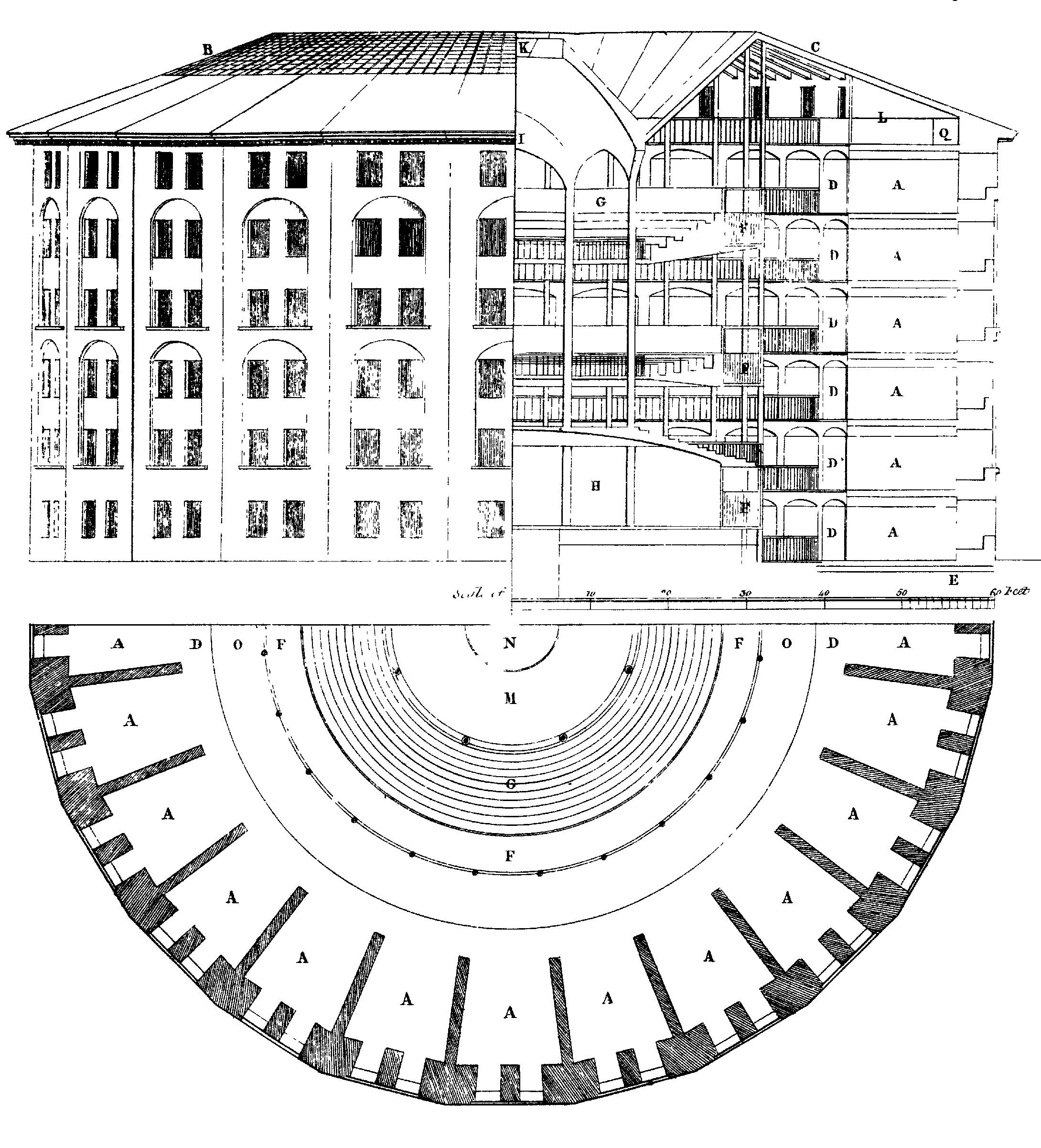
Jeremy Bentham’s panopticon supplies the model for modern surveillance. Duke treats the smartphone as a portable extension of that design and links proactive policing with preemptive arrest. He cites the release of old body-camera footage involving Tyler Robinson, the January 6 pipe-bomb footage, and Five Eyes data sharing as examples of institutional memory extending beyond public retention schedules.

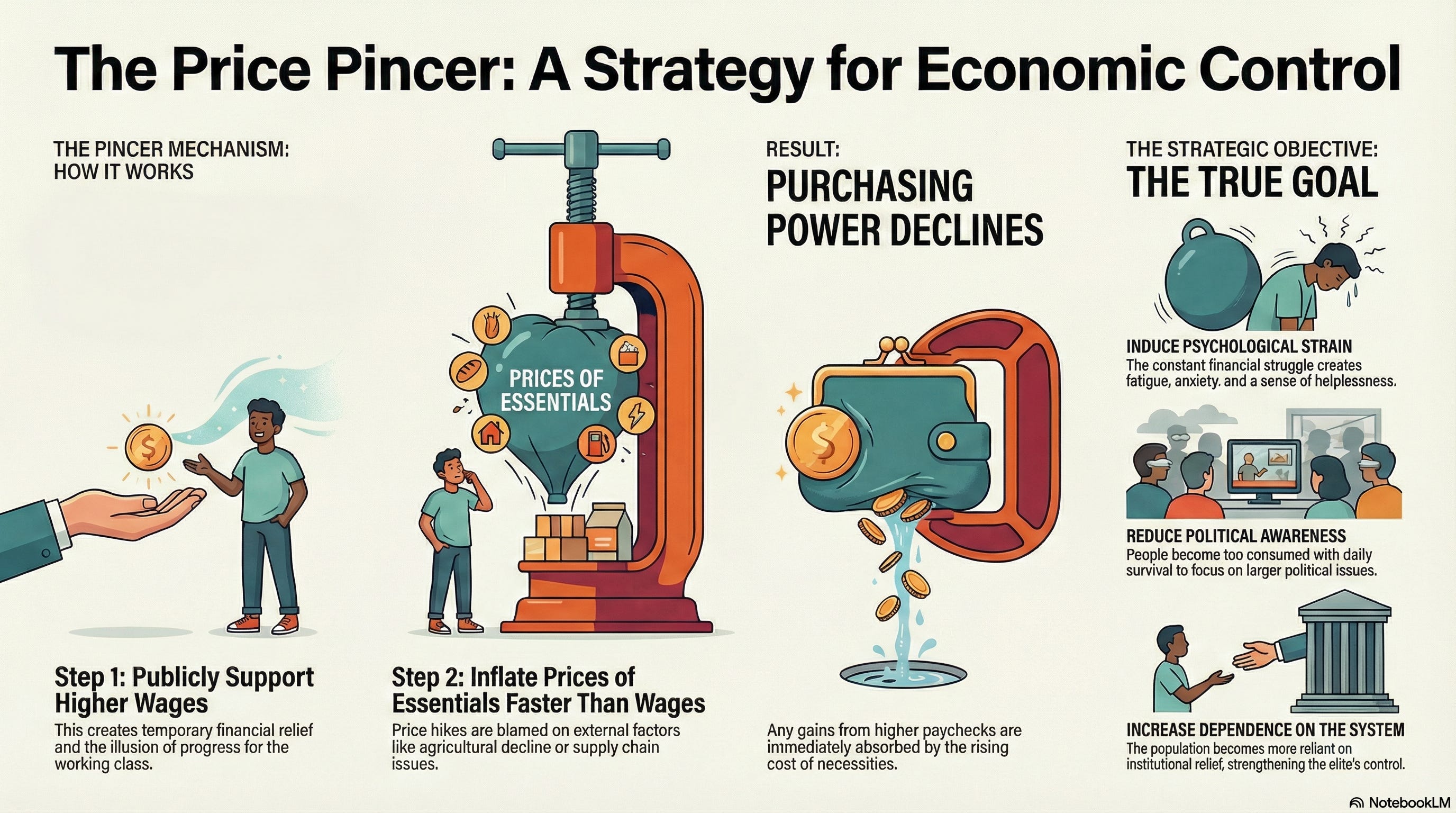
The economic section centers on the “price pincher”: authorities encourage higher nominal wages, increase prices faster, expand taxation and debt, and keep households occupied with survival. Duke and Mrs. Heritage History connect this process with recurring credit expansions, contractions, monopolies, J. P. Morgan, John D. Rockefeller, the Carnegies, Vanderbilts, Huntingtons, Civil War greenbacks, Ulysses S. Grant, and Napoleon’s financial policies.
Duke closes with Lord Northcliffe, whose opposition to the emerging international program preceded confinement in Switzerland, exclusion from his newspaper offices, and severed telephone lines at his London home. Through Northcliffe, the speakers sharpen their central claim: status offers limited protection when an insider challenges the institutions that sustain concentrated power.
Thanks to the generosity of my readers, all my articles are available for free access. Independent journalism, however, requires time and investment. If you found value in this article or any others, please consider sharing or even becoming a paid subscriber, who benefits by joining the conversation in the comments. I want you to know that your support is always gratefully received and will never be forgotten. Please buy me a coffee or as many as you wish.

The Duke Report - Where to Start
My articles on SubStack are all free to read/listen to. If you load the Substack app on your phone, Substack will read the articles to you. (Convenient if you are driving).
Foundational Articles
Podcast (Audio & Video Content)
Palmerston’s Zoo Episode 01 - Solving the Paradox of Current World History (9 Episodes)
Oligarchic Control from the Renaissance to the Information Age
SoundCloud Book Podcasts
I’ve taken almost 200 foundational books for understanding how the world really works and posted them as audio podcasts on SoundCloud. If you load the app on your phone, you can listen to the AI robots discuss the books on your journeys across America.
Duke Report Books
Over 600 foundational books by journalists and academics that never made the New York Times Bestseller list, but somehow tell a history we never learned in school. LINK


