


Bots React to The Phœnician Origin of Britons, Scots and Anglo-Saxons examines L. A. Waddell’s theory that ancient Phoenician seafarers helped form the peoples, languages, religious traditions and national symbols of Britain. The podcast presents Waddell’s 1924 book as a radical reconstruction of British antiquity, built from inscriptions, comparative linguistics, archaeology, coins, mythology and medieval chronicles. Its two hosts organize the discussion around the Newton Stone in Aberdeenshire, which Waddell treats as a bilingual key connecting Scotland with Cilicia, Phoenicia, Anatolia and Sumer.
Original Post

Britannia and the Forgotten Phœnician Connection
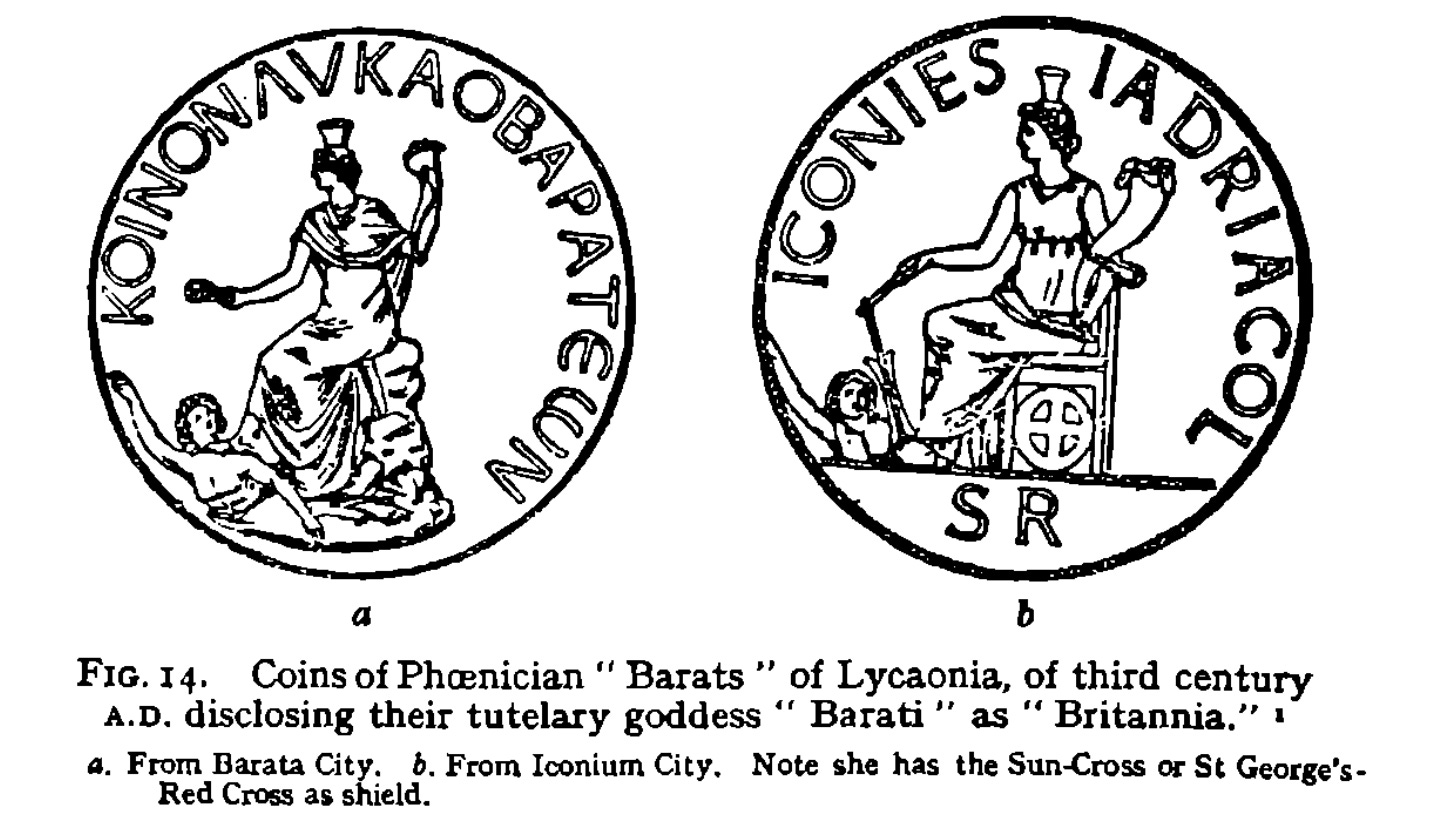
The episode opens with Britannia, the familiar robed woman seated beside the sea with a shield, trident, or rudder. Conventional accounts associate this figure with Rome’s personification of its British province. The podcast follows Waddell into an earlier history, pointing to comparable images on coins from Asia Minor. These coins depict a maritime goddess seated among waves, carrying a rudder, cornucopia, and cross-marked shield.
This visual connection introduces the podcast’s main question: could Britain’s defining symbols descend from a Phoenician maritime culture that reached the islands centuries before Roman rule? Waddell answers through the figure of Bharati or Barati, a tutelary goddess connected with the Phoenician Barats. The episode also follows related forms through Byarthi in Egypt and Britomartis in Crete, creating a chain of religious iconography that reaches Britannia.
The discussion uses this example to establish Waddell’s method. He places similar names, images, and functions side by side, then reconstructs the movement of peoples and cults along ancient trade routes. Britain consequently emerges as a western station within a maritime system connecting the Near East, the Mediterranean, Iberia, Ireland, and Scotland.
Phoenicians, Hittites and the Aryan Thesis
Waddell classified the Phoenicians as Aryans. They explain that Waddell used “Aryan” for a northern, Indo-European-speaking population whom he describes as tall, fair, and long-headed. In his framework, the Phoenicians belonged to the same people as the Khatti or Catti of Anatolia and Syria, later called Hittites.
Waddell attributes the name “Hittite” to layers of transliteration. According to the podcast, the original Khatti or Catti became Heth or Hit in Hebrew records, after which European translators added the suffix “-ite.” Waddell uses this proposed shift to reunite the Hittites with the maritime Phoenicians. He also links the name Ari to “noble ones” and draws on the Mahabharata, which he interprets as preserving dynastic memories of early Aryan rulers.
Rock sculptures from Boğazköy in Cappadocia strengthen the podcast’s presentation of this theory. The figures wear long cloaks, turned-up boots, and Phrygian caps. Waddell identifies this clothing as an early Gothic style suited to mountainous northern terrain. The episode describes these people as a highly mobile ruling and trading population that entered Asia Minor, formed the Hittite world and expanded through Phoenician navigation.
The Newton Stone as Scotland’s Rosetta Stone
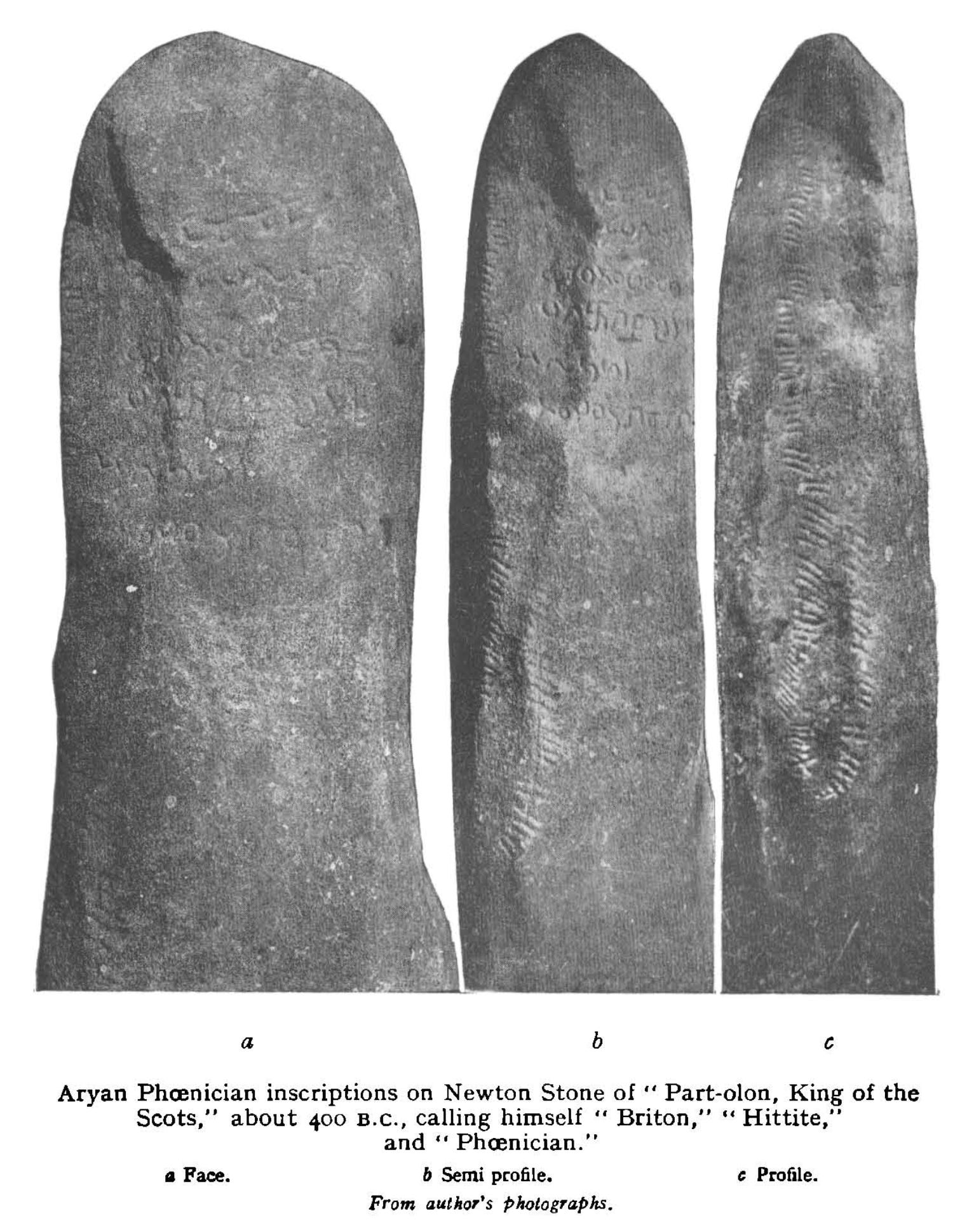
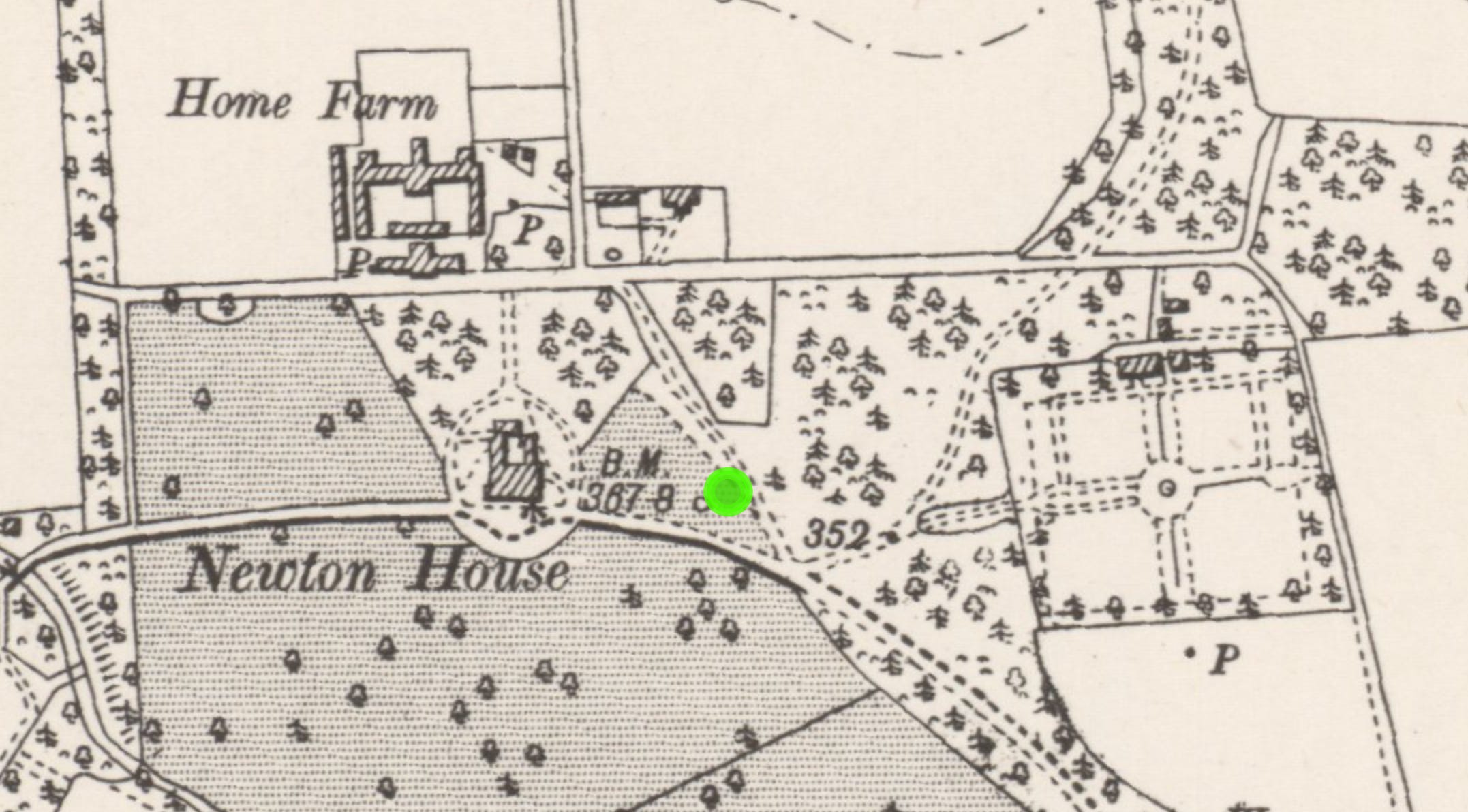
The Newton Stone provides the podcast’s central evidence. The six-and-a-half-foot quartzose gneiss boulder stands in the upper Don Valley near Mount Bennachie and the Gadie Rivulet. Antiquarians have studied it since the early nineteenth century, chiefly because it carries two separate inscriptions.
The main inscription contains flowing characters arranged around a central swastika or rotating sun-cross. A second inscription follows the stone’s edge in Ogam, the linear script formed from groups of strokes extending from a stem line. Scholars including John Rhys, Whitley Stokes and William Bannerman attempted to decipher the monument through Celtic, Pictish and related languages. Their readings produced incompatible names and sentences, including a proposed memorial to “Ete Forar’s daughter.”
The podcast credits Waddell with changing the interpretive frame. He compares the principal inscription with early Phoenician, Cilician, and related Mediterranean scripts and reads it from left to right. He identifies its flowing forms as an Aryan Phoenician hand derived from writing with ink on parchment or skin.
Waddell then uses the Ogam inscription to test his reading. The episode calls the stone a Scottish Rosetta Stone because Waddell interprets the two scripts as parallel versions of one dedication. He groups the crowded Ogam strokes according to the names identified in the Phoenician text and compares their phonetic values with Sumerian signs. The podcast emphasizes his claim that several Ogam stroke counts correspond with Sumerian characters carrying the same sounds.
The Dedication to Bel
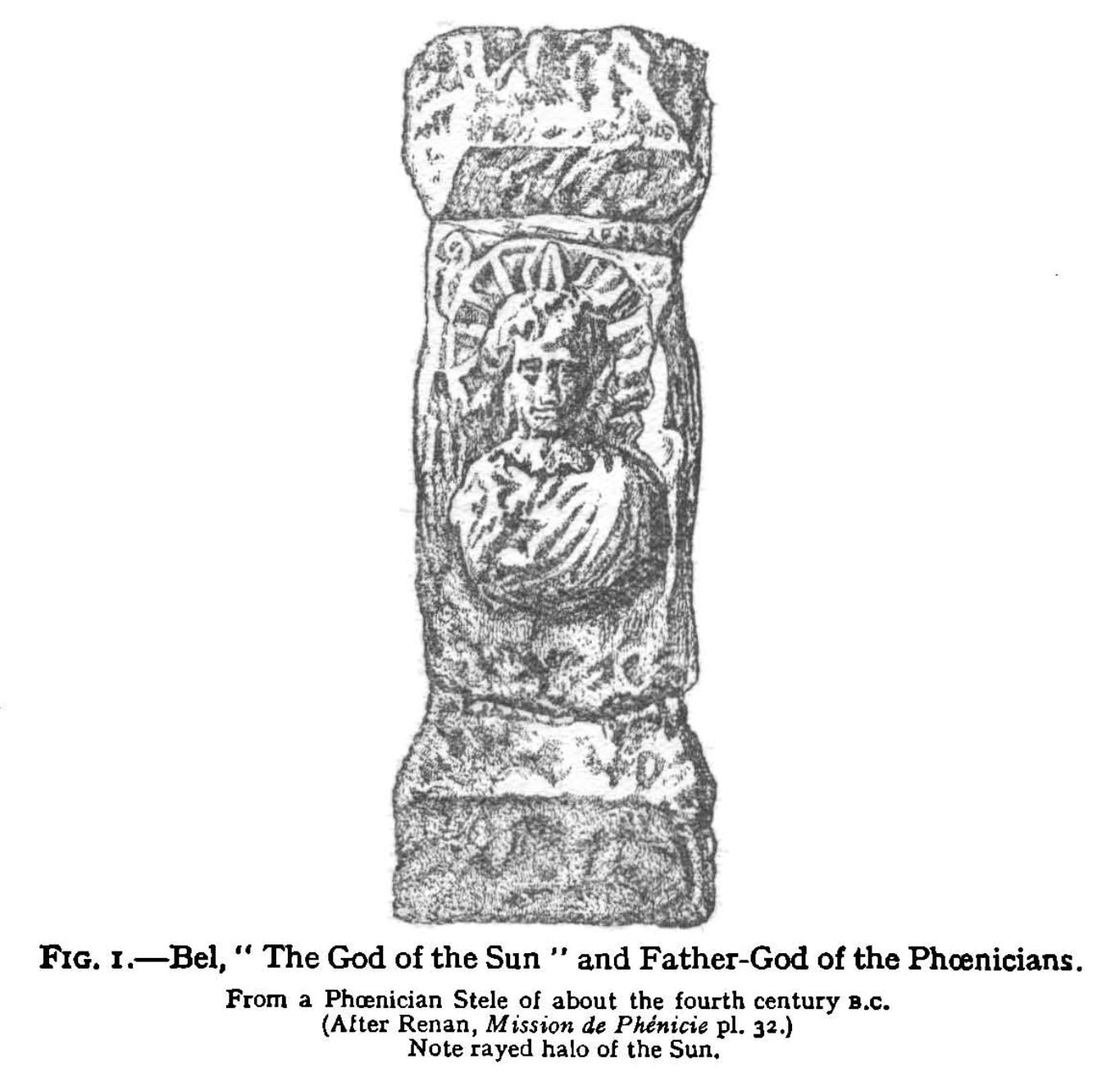
The resulting translation reads: “This Sun-Cross was raised to Bel by the Kassi of Kast, of the Siluri of the Khilani, the Phoenician Ikar of Cilicia, the Prwt or Brit.” The podcast breaks this dedication into its religious, ethnic and geographic components.
Bel represents the solar Father God. The central swastika expresses the sun’s rotating power and victory over darkness. The hosts place the symbol within its ancient solar setting and describe its appearance on Phoenician religious objects and ceremonial clothing.
Waddell associates the Ogam strokes with the sticks of a fire drill. Friction fire produced an earthly image of the sun, which gave the act of kindling fire a sacred function. The podcast connects this interpretation with British Bel-fire and Beltane customs, including seasonal bonfires and rites involving passage over flames. Ogam therefore carries both language and ritual meaning within Waddell’s reconstruction.
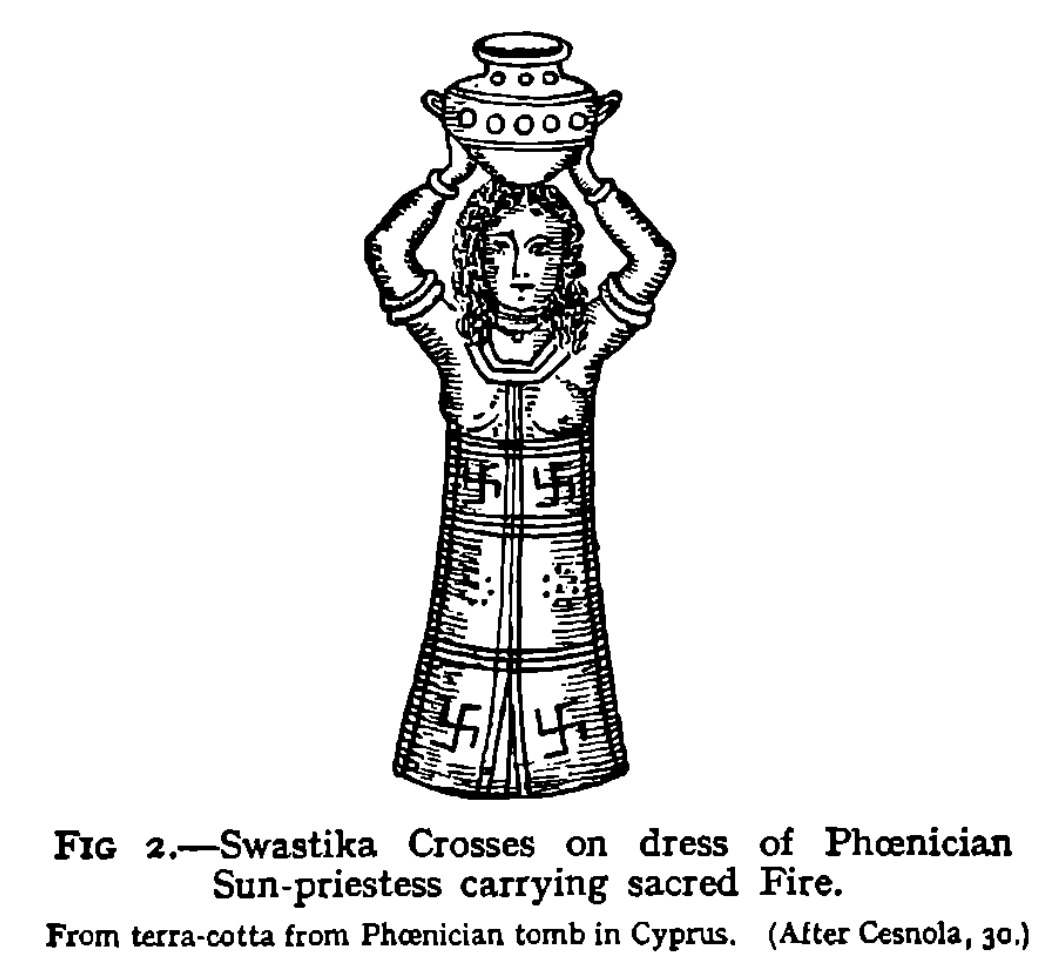
Ikar, Prat-Gioln and Part-olon
The personal and clan names on the Newton Stone lead into the Irish and British chronicles. Waddell identifies Ikar as a Phoenician from Cilicia and reads his titles as references to the Kassi, Kast or Castabala, the Siluri and the Khilani. The podcast defines Khilani as a wooden-palace dweller, associating the title with an aristocratic building tradition based on large timber halls, pillars and arches. Waddell connects this architecture with the remote ancestry of the Gothic style.
The crucial name appears as Prat-Gioln or a related form. Through changes in pronunciation and spelling, Waddell connects Gioln with the Geleoin clan in Irish tradition and develops Prat-Gioln into Part-olon. The chronicles of Nennius, Geoffrey of Monmouth and Irish writers identify Part-olon as an early king and civilizer associated with the Scots.
According to the podcast’s account, Part-olon left the Mediterranean, passed through Spain, sailed with thirty ships to the northern British islands and later established settlers in Ireland. The chronicles place these events near 400 BC, which corresponds with Waddell’s date for the Newton Stone. The inscription consequently becomes Part-olon’s surviving personal monument and supplies a historical identity for a figure preserved through medieval tradition.
Migration, Tin and the Western Trade Routes
The episode places this migration within Mediterranean conflict. Around 390 BC, Spartan military activity disrupted the Phoenician cities and trading networks of Cilicia. Merchant rulers moved westward to established stations such as Gades, modern Cádiz, before continuing along the Atlantic coast.
Britain offered a powerful economic attraction: tin. Bronze production required copper and tin, making Cornwall and its associated islands strategically valuable. The podcast calls tin the oil of the ancient world because whoever controlled its supply gained influence over weapons, tools, shipping and trade. Part-olon’s journey therefore becomes an organized transfer of capital, maritime skill, religious institutions and political authority into a region already linked with Phoenician commerce.
Barat, Britain and Britannia
The title Prat or Prut leads the hosts into Waddell’s derivation of “Briton.” He connects these forms with Barat, a hereditary Phoenician title traced to an ancestral King Barat. The episode explains Barat-ana as a form meaning “one of the Barats,” which later pronunciation contracted into Briton.
This name also explains Britannia within Waddell’s system. Bharati or Barati served as the divine patroness of Phoenician mariners. Coins from Lycaonia near Cilicia show a seated maritime goddess with waves, a rudder, cornucopia and shield. The podcast interprets the continuity between this image and British Britannia as evidence that settlers carried the goddess and her name from Asia Minor to Britain.
The hosts add the old expression “Oh, my eye and Betty Martin,” which Waddell derives from the Latin invocation “O mihi Britomartis.” Sailors once appealed to Britomartis for protection; repeated pronunciation preserved the sounds after speakers lost the original religious meaning. The example illustrates the podcast’s larger claim that ordinary language can preserve traces of forgotten ritual.
Pre-Roman Coins and the Solar Cross
Pre-Roman British coins supply the next category of evidence. The podcast discusses a hoard from Selsey whose coins bear the letters SSIL, which Waddell connects with Cilicia. He reads these marks as a reference to the settlers’ ancestral homeland.
The coins also display horses, crosses and solar emblems. Waddell interprets the sun horse as a Phoenician religious symbol and the cross as the sign of the universal Father God. The episode cites a Babylonian seal from approximately 1350 BC that shows agricultural figures working beneath a cross, demonstrating the symbol’s use within an ancient Near Eastern setting.
This interpretation carries into the traditions of Britain’s patron saints. St. George came from Cappadocia, the same Anatolian region associated with the Khatti. Waddell traces George’s dragon combat and red cross to a Phoenician heroic and solar tradition. He connects St. Andrew’s saltire with Indara or Indra, whose X-shaped weapon represented divine protection.
The British coin name Tascio receives a similar treatment. Waddell links Tascio with the Hitto-Sumerian Tashub, a harvest and corn divinity also called Mikal. The podcast follows Mikal into Michael the Archangel and interprets the transition as the absorption of established agricultural and solar figures into Christian culture.
A Connected History of Ancient Britain
The episode closes by assembling Waddell’s inscriptions, coins, place names, chronicles, divine names, trade routes and national emblems into one historical pattern. It presents ancient Britain as a literate and economically important western territory connected with the civilizations of Anatolia, Phoenicia and Mesopotamia.
Within this reconstruction, the Newton Stone records a specific migration led by Ikar or Part-olon. Ogam preserves a sacred solar script. British coins retain Cilician names and Phoenician symbols. Britannia continues the maritime goddess Bharati. The crosses of George and Andrew preserve older divine emblems, and local names near the Newton Stone retain memories of Bel-fire worship.
The hosts end with the image of the Newton Stone standing through two millennia of Scottish weather while generations of scholars struggled to read it. The monument becomes a symbol for the podcast’s final question: how many stories classified as mythology contain records of actual people, migrations and political events whose material keys remain unrecognized?
Thanks to the generosity of my readers, all my articles are available for free access. Independent journalism, however, requires time and investment. If you found value in this article or any others, please consider sharing or even becoming a paid subscriber, who benefits by joining the conversation in the comments. I want you to know that your support is always gratefully received and will never be forgotten. Please buy me a coffee or as many as you wish.

The Duke Report - Where to Start
My articles on SubStack are all free to read/listen to. If you load the Substack app on your phone, Substack will read the articles to you. (Convenient if you are driving).
Foundational Articles
Podcast (Audio & Video Content)
Palmerston’s Zoo Episode 01 - Solving the Paradox of Current World History (9 Episodes)
Oligarchic Control from the Renaissance to the Information Age
SoundCloud Book Podcasts
I’ve taken almost 200 foundational books for understanding how the world really works and posted them as audio podcasts on SoundCloud. If you load the app on your phone, you can listen to the AI robots discuss the books on your journeys across America.
Duke Report Books
Over 600 foundational books by journalists and academics that never made the New York Times Bestseller list, but somehow tell a history we never learned in school. LINK


