



At the request of Mrs. Heritage History:
The podcast walks through a seven-hour and forty-four-minute interview with Kay Griggs and treats her account as a source document whose internal structure, motives, and logistical claims deserve close reading.
The hosts frame the hook as a domestic discovery that turns into an intelligence-world dossier: Griggs says she found her husband’s handwritten field diary and that its entries read as operational notes, including a time-stamped log of a shooting and a final line that signals enforced silence inside a security system (“sentry … saw and heard nothing”). From the start, the hosts emphasize method over verdict: they focus on how her story illuminates power, secrecy, intimidation, and control, leaving listeners to assess the claims.
They begin with Griggs herself, building a portrait of someone shaped by military and Virginia political culture, educated in archival research, and trained to track networks. The episode highlights her upbringing in Norfolk’s Navy world, her family ties to military medicine and intelligence, and her academic focus on Scottish history and court politics. The hosts argue that this background matters because it gives her habits that fit document work: she reads primary sources, tracks relationships, watches incentives, and notices coded behavior in elite rooms. They connect that temperament to her professional life in trade and diplomacy circles, where she worked with international visitors and moved through NATO-adjacent social networks. In the hosts’ telling, she initially trusts institutions, only to be shocked when private life pulls her toward classified stories and coercive behavior.
The Kay Griggs Explainer:

The narrative then centers on her marriage to Marine Corps Colonel George Raymond Griggs and her account of the courtship. The hosts recount her claim that he used mirroring and fast commitment to gain access, including shared elite markers such as Princeton networks, social affiliations, and carefully matched personal details. After marriage, she says he pushed her to step back from her career to support his advancement. The episode treats this section as a study of recruitment and isolation tactics used in domestic life, with the spouse serving as an access point to someone moving through high-level military intelligence channels.
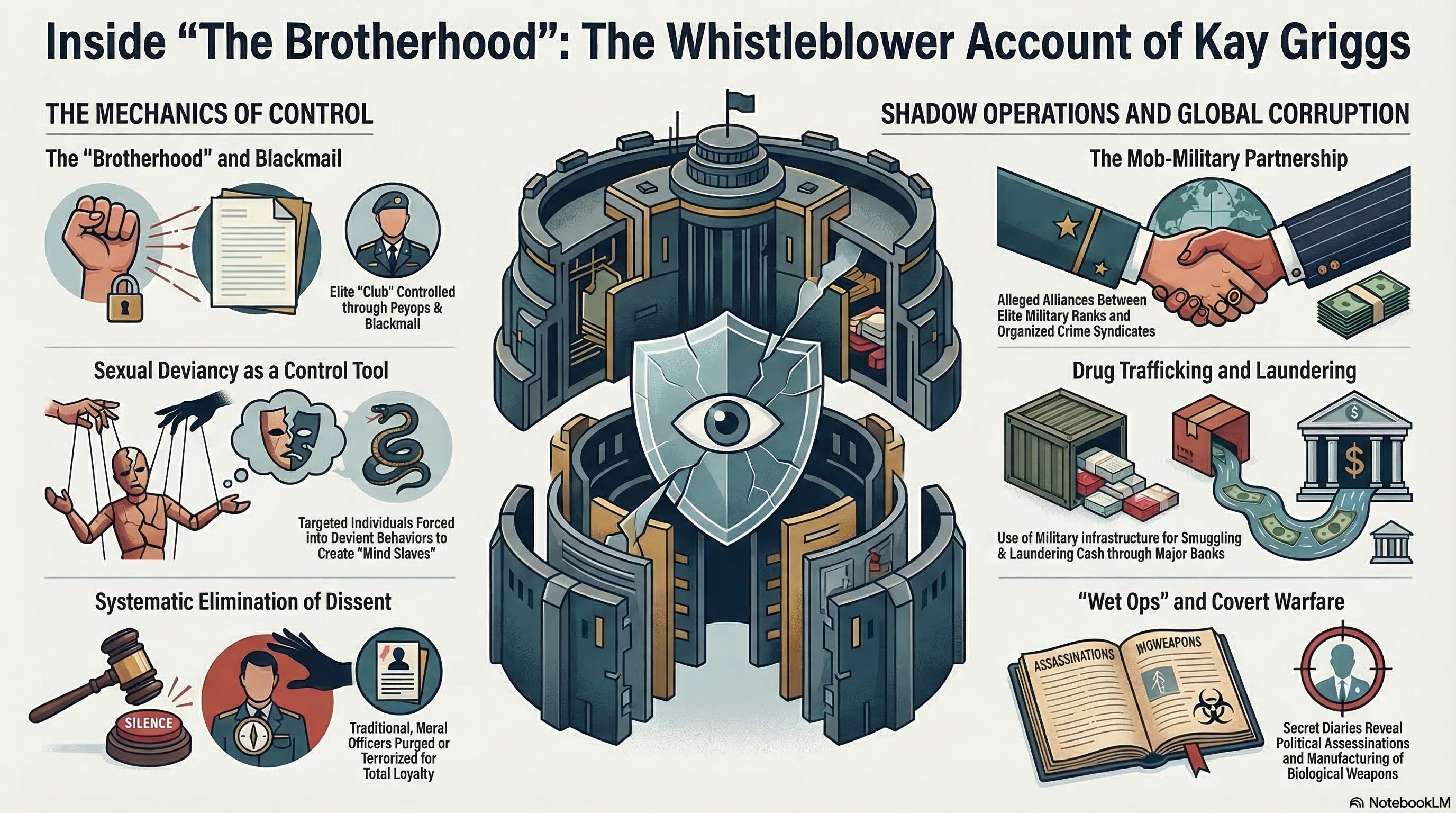
The hosts then outline her depiction of her husband’s professional resume and private conduct. She portrays him as someone who held roles connected to special operations and high-level liaison work, including NATO-related assignments and proximity to senior leadership. Alongside that, she describes severe alcoholism, emotional volatility, and violence at home. The hosts pause on the operational implication: a compromised operative can still function if an organization shields him, routes work through compartmentalization, and rewards obedience. They also raise questions about the story's reliability, since she attributes many of the disclosures to drunken “confessions” at home. In her account, alcohol lowers inhibitions and pushes classified talk into the open, with her serving as the listener who can retain details and cross-check them later.
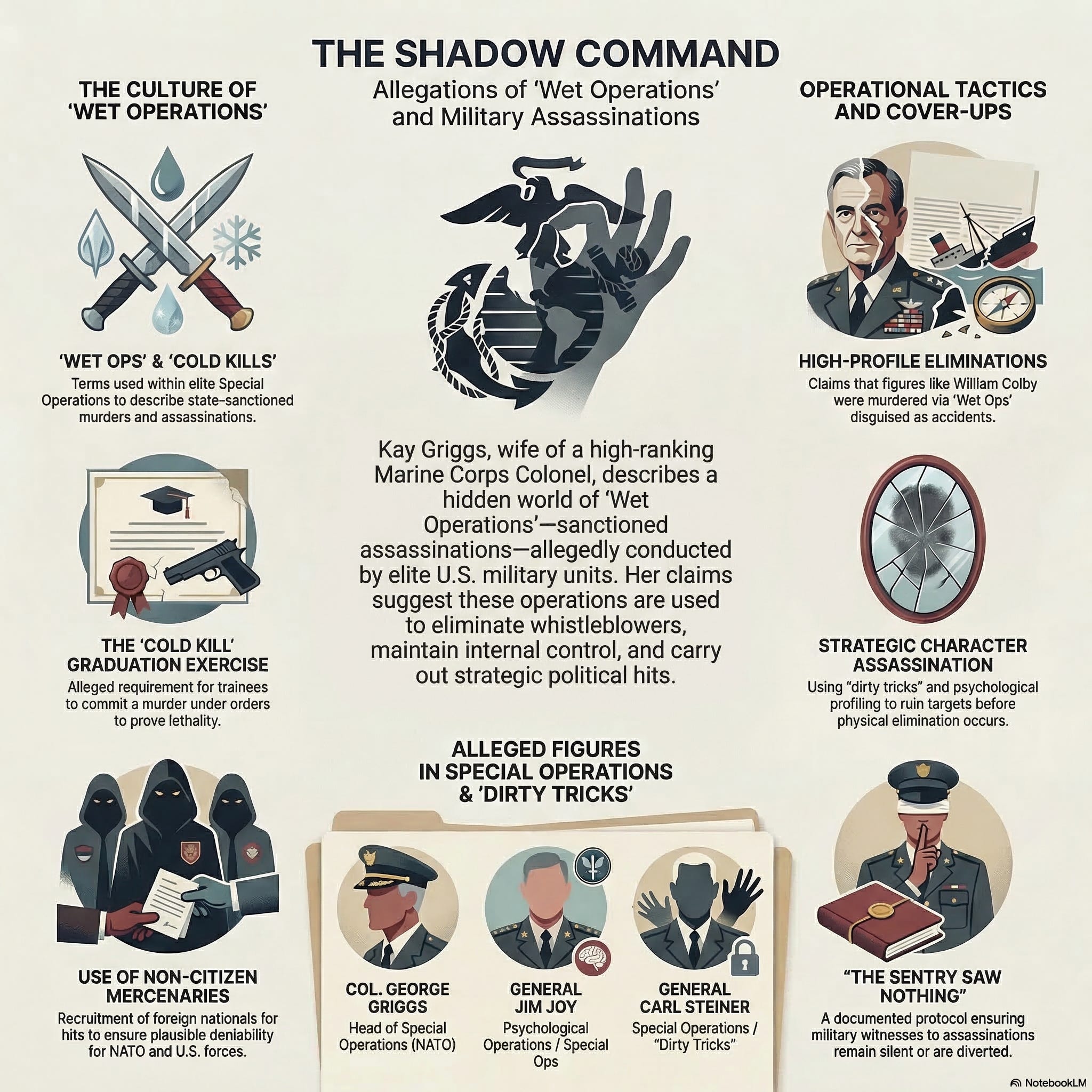
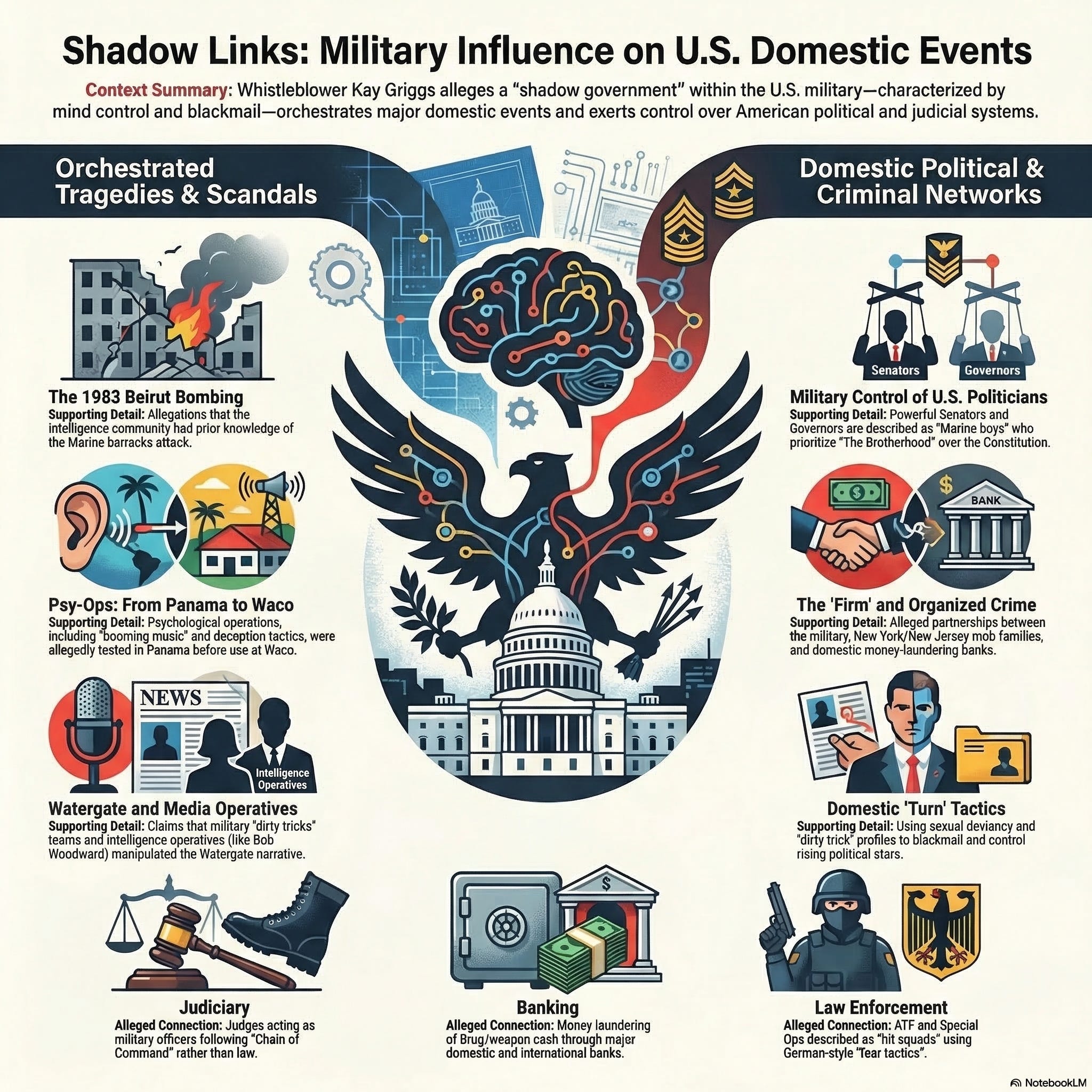
The diary becomes the centerpiece because it shifts the episode from verbal recollection to an alleged physical record. The hosts describe one diary passage she reads aloud: time-coded notes about a shooting near the Riviera Hotel involving a man named Dale Dorman, shots fired, injuries, a medevac timeline, and then the line about the sentry reporting nothing. The hosts treat that line as a compact description of discipline inside a cover-up culture, since an armed post can hear gunfire and still report compliance with a silence requirement. They also retell a scene in which Griggs calls General Jim Joy while recording the call, confronts him with diary references to meetings in Beirut, and hears his tone change when she signals that she possesses documentary detail. The hosts present this as her proof moment: her evidence forces an institutional reflex to shift from denial to recognition.
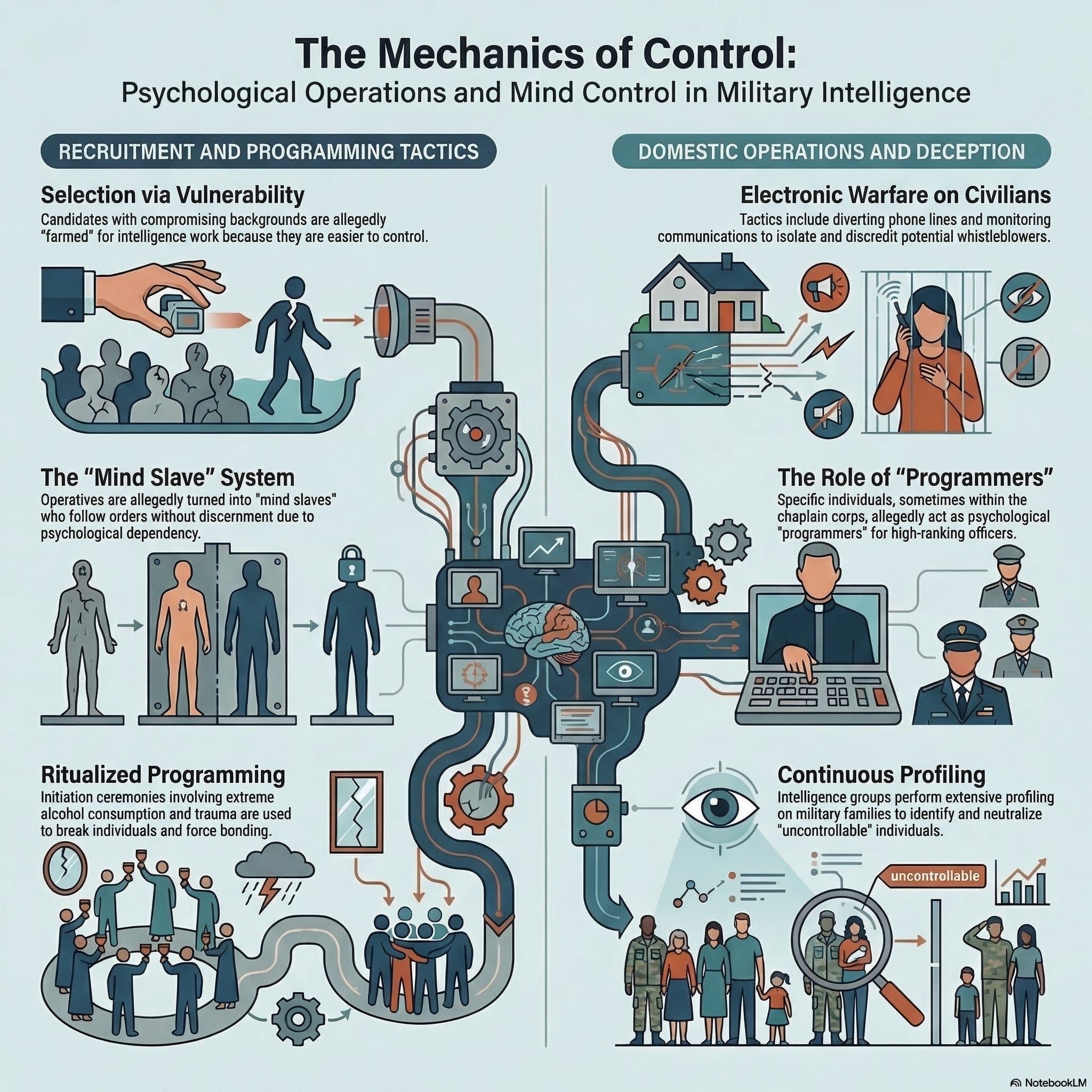
From there, the episode expands on Griggs’ “Brotherhood” thesis: she claims that a tight internal syndicate operates within senior military and intelligence ranks, binding members through shared transgression and blackmail. The hosts recount her emphasis on sexual compromise as a control mechanism, with initiation rituals that create mutual exposure and lifelong leverage. They explain the logic as she frames it: a person who fears exposure obeys handlers who hold proof, and group participation locks members into silence because disclosure destroys everyone in the circle. The podcast treats this as an organizational control model that prioritizes enforceable loyalty over formal ethics and civilian oversight.
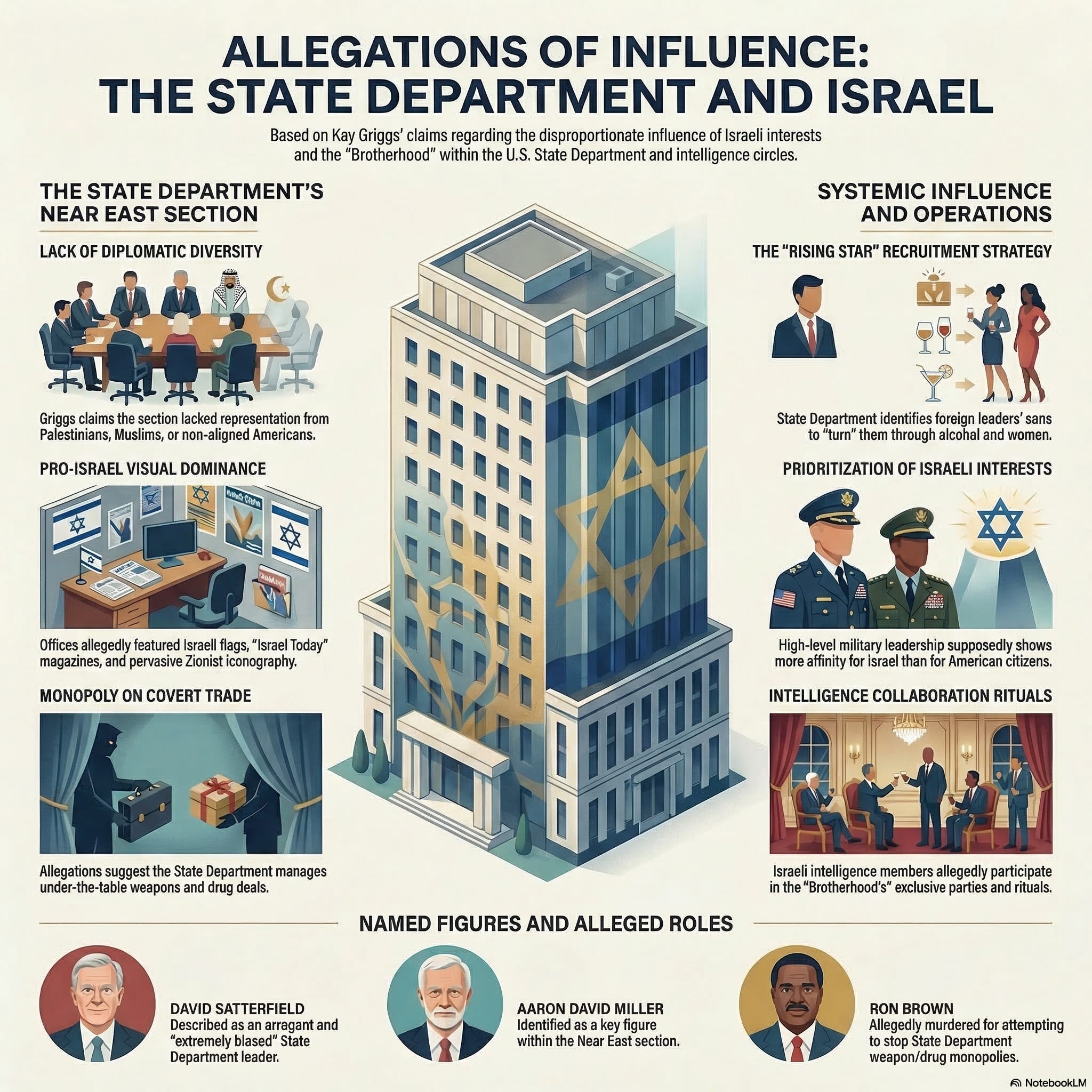
The episode then covers her alleged “business portfolio” for this network. She claims drug trafficking uses military transport and base access to bypass customs enforcement, and she names laundering pathways through banks in places such as Panama and Mexico, along with local conduits. She also claims covert chemical and biological weapons production inside the United States, including a facility disguised as civilian industry, and she ties that claim to a story about a lieutenant colonel (Randy Hebert) who allegedly encountered contaminated zones in Iraq after superiors ordered his unit forward. The hosts highlight the detail that canisters reportedly carried American flags, and they present this as her template for “zigzag wars,” in which leaders manipulate both supply and battlefield exposure for profit and control.
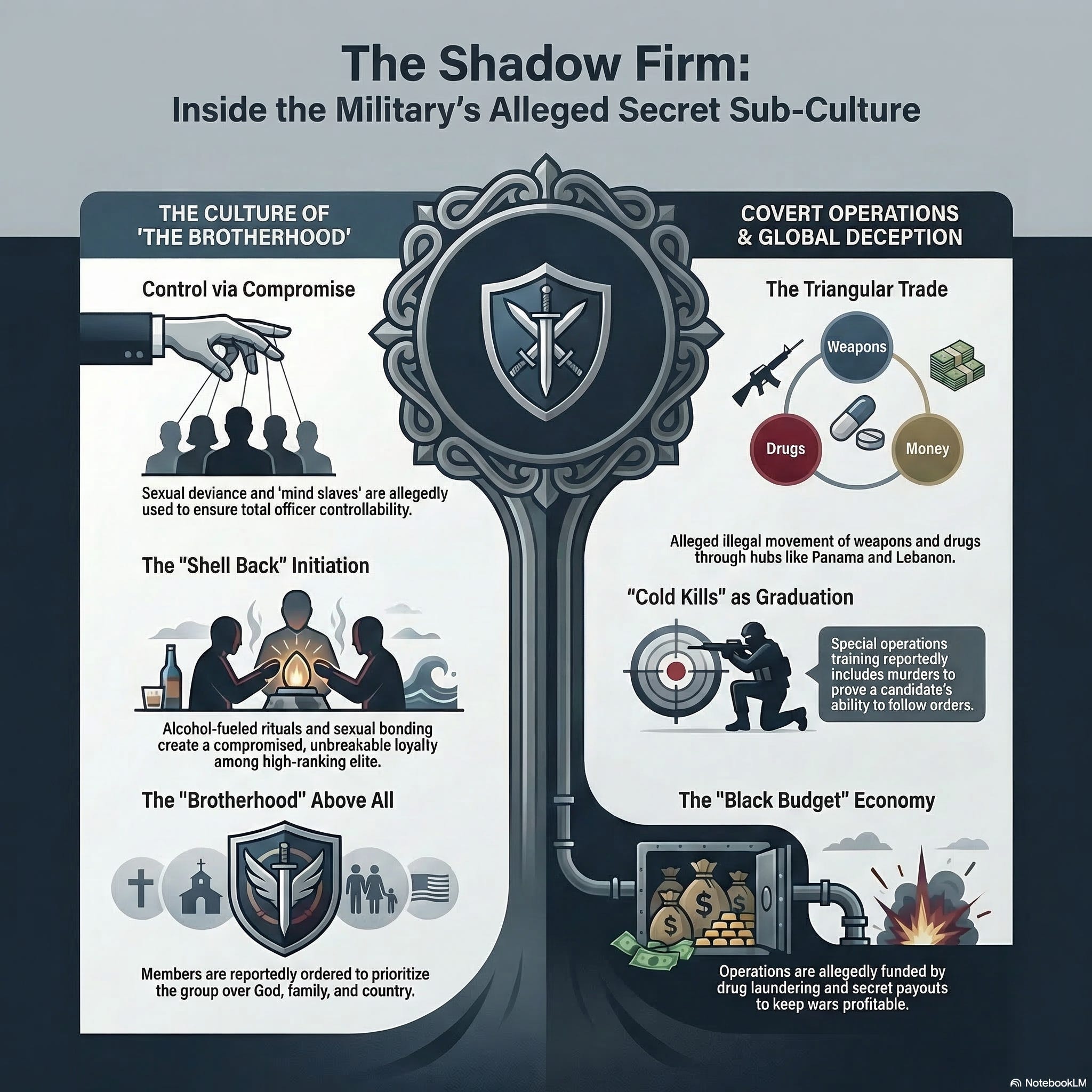
A final arc focuses on retaliation and domestic intimidation. Griggs describes a climate of fear among military spouses, social enforcement inside wives’ networks, and direct interference with communications. The hosts retell her claim that calls from journalist Sarah McClendon to Griggs’ home got intercepted and diverted by military operators, isolating her from press contact. They also recount an alleged long con involving a man named Earn Reynolds, who presented himself as a Marine JAG ally, gained trust, stole documents, and sabotaged a legal hearing while humiliating her in public. The hosts read these episodes as a coherent intimidation playbook aimed at seizing evidence, destroying credibility, and fostering long-term distrust.
Thanks to the generosity of my readers, all my articles are available for free access. Independent journalism, however, requires time and investment. If you found value in this article or any others, please consider sharing or even becoming a paid subscriber, who benefits by joining the conversation in the comments. I want you to know that your support is always gratefully received and will never be forgotten. Please buy me a coffee or as many as you wish.

The Duke Report - Where to Start
My articles on SubStack are all free to read/listen to. If you load the Substack app on your phone, Substack will read the articles to you. (Convenient if you are driving).
Foundational Articles
Podcast (Audio & Video Content)
Palmerston’s Zoo Episode 01 - Solving the Paradox of Current World History (9 Episodes)
Oligarchic Control from the Renaissance to the Information Age
SoundCloud Book Podcasts
I’ve taken almost 200 foundational books for understanding how the world really works and posted them as audio podcasts on SoundCloud. If you load the app on your phone, you can listen to the AI robots discuss the books on your journeys across America.
Duke Report Books
Over 600 foundational books by journalists and academics that never made the New York Times Bestseller list, but somehow tell a history we never learned in school. LINK


